On August 13, 2026, the White House Office of Trade and Manufacturing Policy released a report naming more than 40 countries as elevated risks for illegal transshipment, which is routing goods through a third country to disguise where they were made. The report estimates the practice costs about $25 billion a year in lost tariff revenue.¹
The report followed a June 3 executive order that directed U.S. Customs and Border Protection (CBP) to set a minimum penalty of 50% of the assessed amount for customs violations and to raise requirements for importers.² CBP has already started acting on it. Since September 18, CBP can void an importer’s number when registration details are inaccurate.³ Forced labor enforcement is growing too, with 43 companies added to the Uyghur Forced Labor Prevention Act (UFLPA) Entity List on August 3.⁴
The rules CBP uses to decide where a product comes from haven’t changed. What’s changing is how closely CBP pays attention and what a mistake can cost. Below, we break down how CBP determines origin, which country of origin documents you need to support your claim, and what to do when CBP asks questions.
Quick Reference
Key Takeaways
- Country of origin is the country where a product was last substantially transformed, which isn’t always the country it shipped from.
- A certificate of origin states a claim. Production, purchasing, and shipping records need to support that claim.
- Forced labor rules also examine where a product’s materials were sourced, so an origin declaration alone doesn’t always settle whether the goods can enter.
- The importer of record answers to CBP for every origin claim on the entry, including claims that came from a supplier.
What Are Country of Origin Documents?
Country of origin documents are the records that show where an imported product was made and where its key materials came from. They support the origin you declare on your entry and the country printed on the product.
Rules of origin serve two different purposes.⁵ Non-preferential origin decides which duty rates and trade remedies apply and what the product’s marking must say. Preferential origin decides whether a product qualifies for reduced duties under a free trade agreement such as USMCA. This post focuses on non-preferential origin, since it applies to nearly every entry.
Does CBP Require a Certificate of Origin?
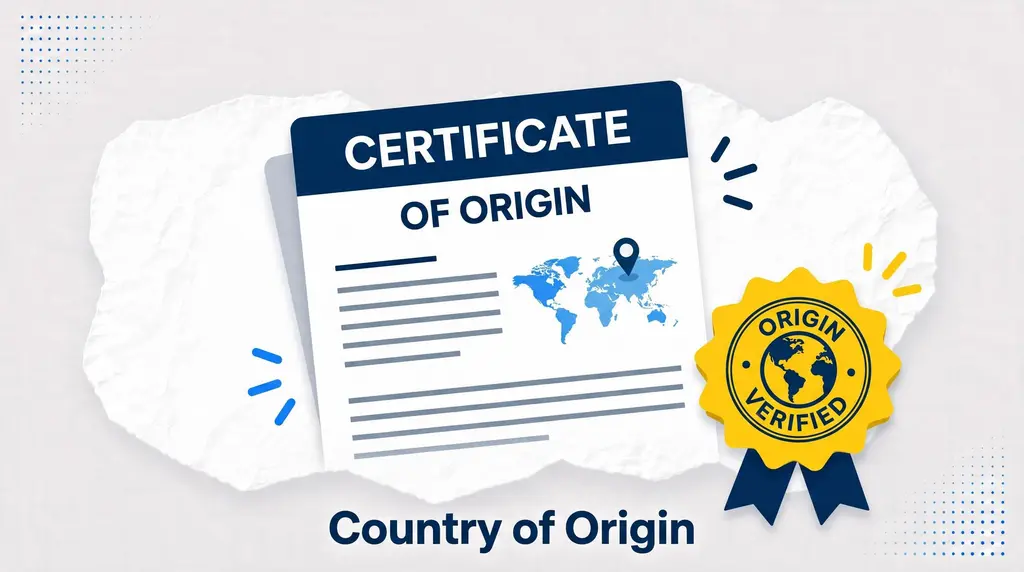
For most imports, no. A certificate of origin generally comes into play when you claim preferential treatment under a trade agreement. Under USMCA, for example, you must provide a certification of origin if CBP requests it.⁶
When your supplier provides a certificate of origin on an entry that doesn’t require one, keep it on file. It records what your supplier told you about where the goods were made. If CBP questions your origin, though, it asks for production and sourcing records showing how and where the product was made.
How Does CBP Determine Country of Origin?
Origin is simple when a product is made start to finish in one country. Once materials, parts, or production steps cross borders, CBP has to look closely at where components were sourced and what happened in each place.
Substantial Transformation
When a product is made in more than one country, its country of origin is the last country where it underwent a substantial transformation. CBP defines that as processing that turns materials into a new article with a new name, character, or use.⁷
Manufacturing a finished part from raw materials generally qualifies. Repacking, relabeling, simple assembly, and minor finishing generally don’t. Those light-touch operations are the same methods the White House report lists as signs of illegal transshipment.¹ Because these standards come mostly from court decisions, each determination depends on the specific product and process.
If you’ve moved a final production step to a new country, CBP’s question is whether that step transforms the product, and your records need to show what happens there. Before you plan around that test, confirm it applies to your product. Textiles, apparel, and goods from Canada and Mexico follow their own defined rules instead.⁵
Origin Marking
Federal country of origin marking rules require most imported goods, or their containers, to show the English name of their country of origin in a conspicuous place, as legibly and permanently as the product allows.⁸
Your product marking, commercial invoice, and entry should all name the same country. When they don’t, CBP has good reason to ask questions. Goods that arrive unmarked owe an additional 10% duty on top of regular duties unless they’re marked under CBP supervision, exported, or destroyed before the entry liquidates.⁸
Why Forced Labor Rules Look Past Country of Origin
It’s easy to assume that once a product is legitimately made in a third country, concerns about Xinjiang sourcing no longer apply. The UFLPA doesn’t work that way.
The law presumes that goods made wholly or in part in China’s Xinjiang region, or by a company on the UFLPA Entity List, were made with forced labor and can’t enter the U.S.⁹ “In part” is the phrase that can make things tricky. A shirt might be properly declared as made in Vietnam under substantial transformation rules and still be detained because its cotton traces back to Xinjiang. Forced labor rules ask what a product is made of and who made those materials.
CBP’s June 2026 guidance for importers expects supply chain records traced back to the raw material stage, and it lists the documents CBP wants for each high-priority sector, including copper and lithium.¹⁰ The Entity List now names 187 companies after the August expansion.⁴
What Records Back a Country of Origin Claim?
As the importer of record, you must use reasonable care on every entry, including the origin information your supplier gives you.¹¹ A complete origin file shows how the product was made and where its inputs came from. It usually includes:
- A bill of materials that lists where each input came from. It shows which materials went into the product and is the starting point for any forced labor review.
- Production records from the factory that transformed the product. Work orders, process descriptions, and the factory’s address show that the transforming step happened where you say it did.
- Purchase orders, invoices, and payment records for inputs. These tie each material to a specific supplier and shipment.
- Transport documents for inputs and finished goods. Shipping records show how materials reached the factory and how the finished product reached the U.S.
- A manufacturer’s declaration that matches the records. A signed statement naming the producer and location of each input helps validate the documents above.¹⁰
Keep all files for five years from the date of entry,¹² but also expect requirements to grow. The executive order directs CBP to require more supply chain detail at entry, such as model numbers, and CBP is taking comments through December 1 on also collecting the export filings your supplier makes abroad.² Neither requirement is final yet.
How to Respond to a CBP Form 28 or Form 29
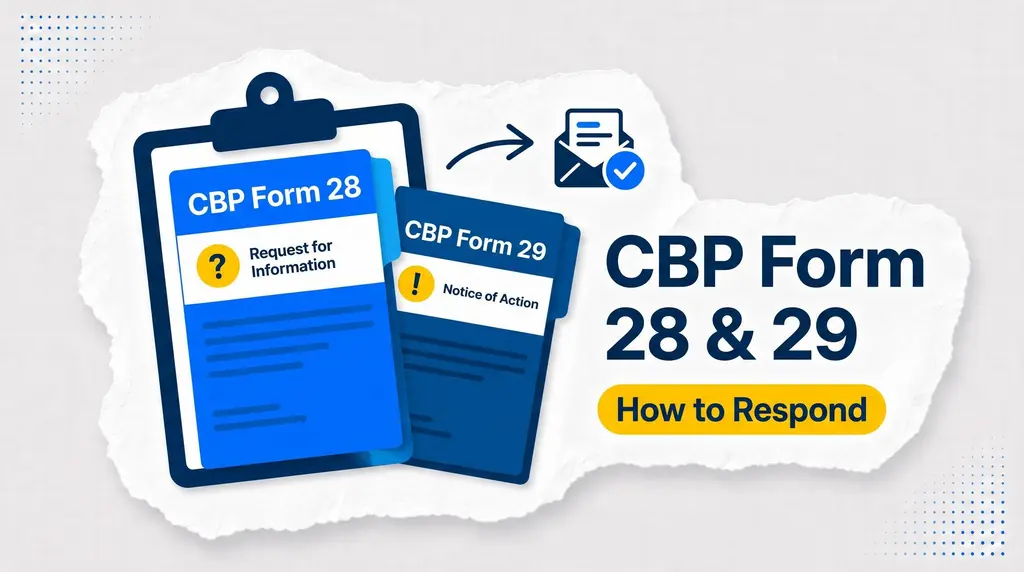
When CBP has questions about an entry, it usually sends a CBP Form 28, a Request for Information.¹⁴ The form explains what CBP wants and gives a response date. A complete, organized answer built from the records above can close the matter.
A CBP Form 29, a Notice of Action, means CBP plans to change the entry or already has, for example by changing the declared origin and the duty owed.¹⁵ A proposed action gives you a window to respond. Once CBP takes the action, you generally challenge it by protest after the entry liquidates.
If your own review turns up an origin error, filing a prior disclosure before CBP opens an investigation can reduce the penalty.¹⁶ If CBP finds the error first, your room to negotiate the penalty down is shrinking. The executive order directs CBP to keep penalties at no less than 50% of the assessed amount and to stop reducing them for repeat violators.²
What the June Executive Order Means for Importers of Record
The executive order raises the bar for acting as importer of record. Most directives require CBP rulemaking first, with a 180-day target that falls at the end of November.² Here’s where each stands as of October 2026:
- Form 5106 accuracy is in effect. Since September 18, CBP can void an importer number if the details on file through CBP Form 5106 are inaccurate or incomplete. A voided number can’t be used to make entry.³
- Higher bond or asset requirements are pending. The order directs CBP to require a minimum level of U.S. assets, bonding, or both, and to raise minimum customs bond amounts.²
- A “good standing” requirement is pending. CBP is directed to define good standing based on an importer’s compliance and payment history. Importers without it couldn’t import.²
- The 50% penalty floor is directed. The order gave CBP 90 days to revise its penalty standards.²
At Dedola, we watch these changes and revisions closely. When a client adds a supplier or moves production to a new country, we ask for the production and input records before the first shipment to stay ahead of CBP requests. We check that the product marking and commercial invoice name the declared country, and we confirm the client’s Form 5106 details are current. If a Form 28 comes in later, the answers are already in the file.
What We’re Advising Importers to Do Now
With so much changing and so much at stake, here’s what we’re advising clients to do:
- Test supplier origin claims against the records. Ask for the production and input documents behind a supplier’s statement, and compare the factory’s stated capacity with the volume it ships you. A factory shipping more than it can produce points to transshipment.
- Screen suppliers and their material sources against the UFLPA Entity List. Rescreen whenever the list changes, as it did on August 3.⁴ For high-risk materials, map suppliers past your direct vendor.
- Require suppliers to share origin records on request. Put that requirement in your supplier contracts so you can pull production and input documents quickly when CBP asks for them.
- Review your Form 5106 details now. Confirm your legal name, addresses, phone number, email, and tax ID match what CBP has on file.³
- Decide who handles a CBP request before one arrives. CBP gives importers 30 days to respond to a forced labor detention.¹⁰ Assign who is responsible for responding in advance.
Building origin files takes time, especially for products with many inputs. It becomes more manageable when you work through one product and one supplier at a time, starting with your highest-volume or highest-risk goods. Dedola has been family-owned and operated since 1976, and we help importers work through origin, classification, and documentation questions as the rules develop. If you’d like a second set of eyes on your origin files or supplier documentation, talk to our team.
FAQs
What documents prove country of origin for U.S. imports?
No single document proves origin. CBP looks for records that show where the product was substantially transformed and where its inputs came from, such as a bill of materials, production records, input invoices, and shipping documents. A certificate of origin or manufacturer’s declaration helps when it matches those records.
Does CBP require a certificate of origin?
Not for most imports. A certification of origin generally applies when you claim reduced duties under a trade agreement such as USMCA, and CBP can ask you to provide it. Your declared country of origin still needs supporting records on every entry.
What counts as substantial transformation?
Substantial transformation is processing that turns materials into a new product with a new name, character, or use. Repacking, relabeling, and simple assembly usually don’t qualify. Because the outcome depends on the specific product and process, you can request a binding ruling from CBP to settle an uncertain case before you import.
How long should I keep country of origin records?
Keep entry records, including your origin documentation, for five years from the date of entry. Store them so you can pull a complete file for a single product quickly if CBP asks.
Sources
- White House Office of Trade and Manufacturing Policy, “The Great Transshipment Scam.”
- The White House, Executive Order 14411, “Strengthening Customs Enforcement.”
- U.S. Customs and Border Protection, “Accuracy of Importer of Record Data Submitted to CBP,” 91 FR 53627.
- U.S. Department of Homeland Security, “Notice Regarding the Uyghur Forced Labor Prevention Act Entity List,” 91 FR 48913.
- Congressional Research Service, “International Trade: Rules of Origin” (RL34524).
- 19 CFR § 182.12, Certification of origin (USMCA).
- U.S. Customs and Border Protection, Headquarters Ruling 734186, citing 19 CFR § 134.1(b) and § 134.35.
- 19 U.S.C. § 1304, Marking of imported articles and containers.
- U.S. Department of Homeland Security, “UFLPA Frequently Asked Questions.”
- U.S. Customs and Border Protection, “Forced Labor Enforcement Operational Guidance for Importers.”
- 19 U.S.C. § 1484, Entry of merchandise (reasonable care).
- 19 CFR § 163.4, Record retention period.
- Thompson Hine SmarTrade, “CBP Seeks Comments on Implementation of Executive Order 14411.”
- 19 CFR § 151.11, Request for information (CBP Form 28).
- 19 CFR § 152.2, Notification to importer of increased duties (CBP Form 29).
- 19 CFR § 162.74, Prior disclosure.