
Key Takeaways
- A record month: The Port of Los Angeles moved 1,042,652 TEUs in September, the busiest month in its 118-year history, on resilient consumer demand, inventory replenishment, and cargo rerouted around Suez and Panama disruptions.
- The outlook attached: Tariffs remain the central source of uncertainty, Seroka says. Asia purchase orders are solid, but November and December are difficult to forecast.
- Early stock can backfire: Cargo you pulled forward still has to sit somewhere, and you pay to hold it until it sells.
- Your move now: Stress-test Q4 to Q1 order timing, line up bonded or warehouse capacity, and audit every demurrage and detention invoice.
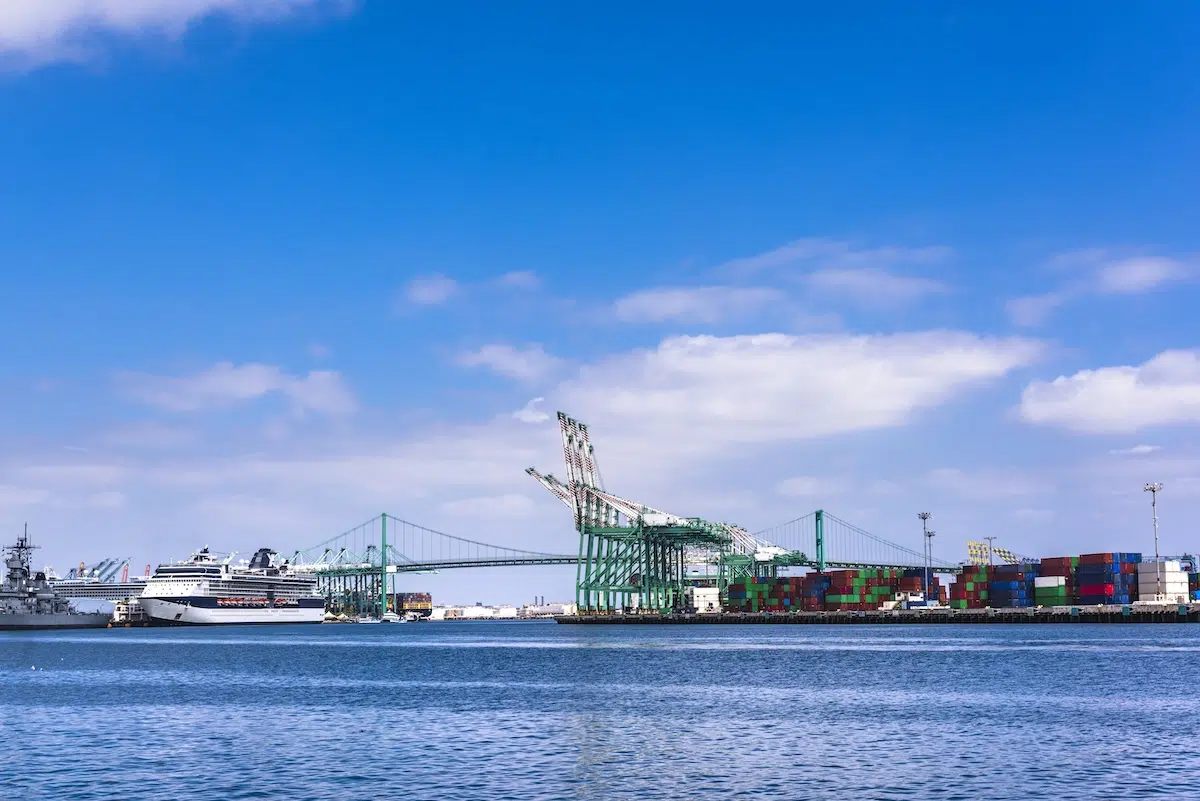
The record itself. The Port of Los Angeles moved 1,042,652 TEUs in September 2026, the highest month in its 118-year history [1]. Executive Director Gene Seroka credited resilient consumer demand, importers replenishing inventories, and cargo being reallocated to Los Angeles as shippers work around continued disruption on the Suez and Panama Canal routes.[2].
Tariffs and the outlook. Tariffs remain the central source of uncertainty, Seroka said, with importers making rapid decisions based on cost, demand, and policy deadlines. Purchase orders in Asia remain solid, but November and December are difficult to forecast. If your Q4 plan assumes a stable tariff timeline, that’s the assumption to stress-test.
Front-loading cuts both ways. Buying early protects you only if the tariff timeline holds. If the dates or rates shift again, you’re sitting on inventory you paid to accelerate for a reason that no longer exists.
Where it bites hardest. Consumer electronics, apparel, sporting goods, automotive aftermarket parts, and musical instruments all depend on tight seasonal sell-through windows. Stock that lands early and then stalls ties up cash and floor space right through the holiday quarter.
Cargo diversions. Confirm that your drayage, storage, and customs plans still work if a carrier routes your boxes to a different gateway than you booked.
Duty exposure. Price every pending purchase order against the current Section 301 actions before you commit more seasonal stock, because USTR can modify them [4].
Entry accuracy. File complete, accurate CBP Form 7501 entry summaries so a rush of front-loaded entries doesn’t turn into post-entry corrections [3].
Demurrage and detention. Check every demurrage and detention invoice against the FMC’s OSRA-22 billing requirements, and dispute any that fall short [5].
Carrier Surcharge & Landed Cost Impact Matrix
| Trade Corridor | Carrier Surcharge Type | Impact per FEU | Effective Date |
|---|---|---|---|
| Transpacific Eastbound to USWC | Peak season surcharge | Not published in source; confirm with carrier advisory | Per carrier notice |
| Transpacific to alternate gateways | Diversion or rerouting charges | Not published in source; confirm with carrier advisory | Per carrier notice |
| Southern California warehousing | Overflow and bonded storage | Quote-dependent | At booking |
| Port of Los Angeles terminals | Demurrage and detention | Per carrier or terminal tariff; FMC billing rules apply [5] | Per invoice |
3-Step Shipper Mitigation Action Plan
Recommended Next Steps for Logistics Managers:
- Line up storage before you need it. Confirm bonded and overflow warehouse capacity now, including space outside your primary Southern California sites, so early arrivals don’t strand you without a place to put them.
- Stress-test Q4 to Q1 orders. Run your open purchase orders against a few tariff-timing scenarios, and decide which ones you’d pull forward, hold, or push back if the dates shift.
- Audit every D&D invoice. Keep timestamped records of gate appointments and container availability, and dispute any demurrage or detention invoice that doesn’t meet the FMC’s billing requirements.
References
- FreightWaves, Port of LA hits historic monthly cargo volume amid tariff concerns
- Port of Los Angeles. Port of Los Angeles sets all time monthly record
- U.S. Customs and Border Protection, Entry Summary Instructions (CBP Form 7501)
- Office of the United States Trade Representative, Section 301 Investigations
- Federal Maritime Commission, Ocean Shipping Reform Act of 2022 (OSRA-22)