
Key Takeaways
- Tariffs deferred, not dropped: The White House chose negotiations over immediate Section 232 duties on robotics, industrial machinery, and their components.
- 180-day deadline: Commerce Secretary Howard Lutnick and U.S. Trade Representative Jamieson Greer must report to the president on the negotiations within 180 days, by April 26, 2027.
- Third deal-first outcome: Wind turbines and commercial aircraft got the same treatment, while semiconductors got talks plus a narrow 25% tariff.
- 2027 orders carry the most risk: Automation equipment ordered now may land after the April 2027 progress report, when tariffs, quotas, or fees could follow.
White House Orders Section 232 Talks on Robotics and Industrial Machinery
Agency: Department of Commerce & USTR | Signed: October 28, 2026; progress report due within 180 days, by April 26, 2027 | Authority: Section 232, Trade Expansion Act of 1962 (19 U.S.C. § 1862)
No new Section 232 duty applies to robotics or industrial machinery today, so your entries clear at current rates while talks run. Tariffs, duties, quotas, and fees remain possible remedies depending on how the talks go.
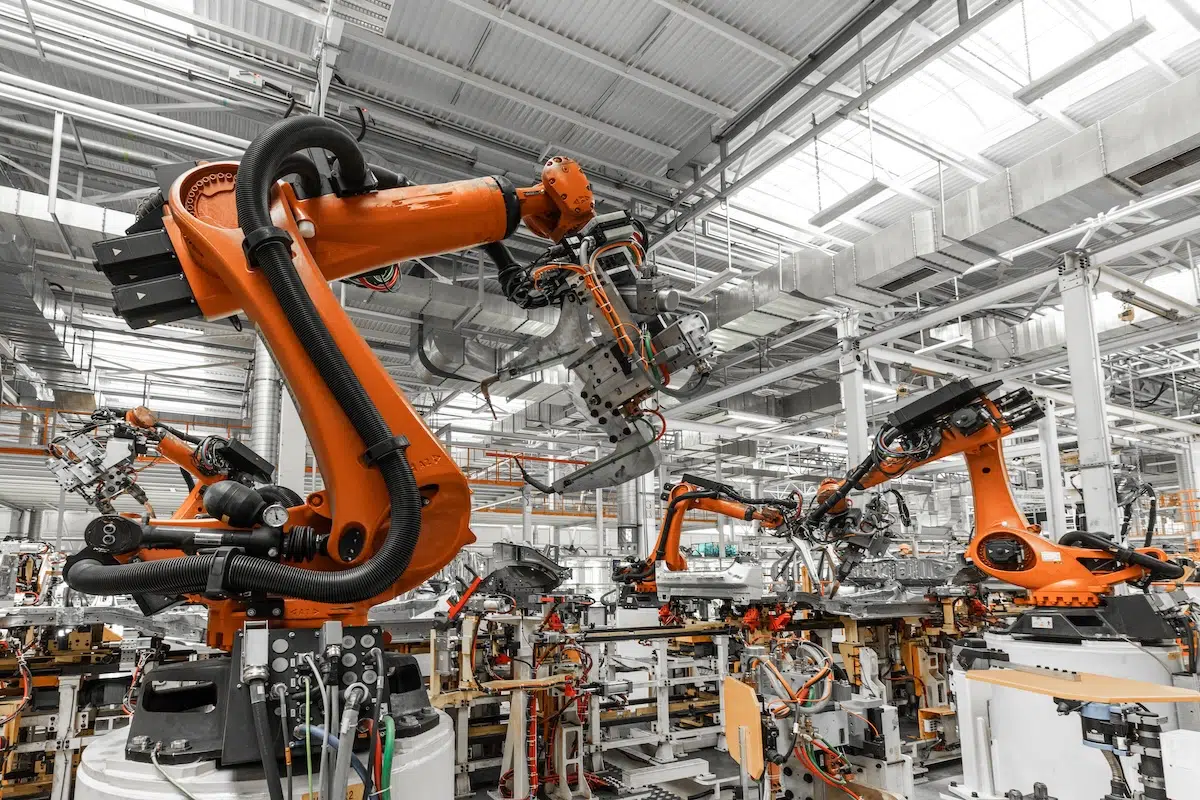
What the proclamation does. On October 28, President Donald Trump directed Commerce Secretary Howard Lutnick and U.S. Trade Representative Jamieson Greer to pursue or continue negotiations with trading partners over U.S. reliance on imported robotics, industrial machinery, and related parts [1]. For now, nothing changes at the border for customs clearance of automation equipment. The two officials must report progress to the president within 180 days, which falls on April 26, 2027 [4].
Why the sector was flagged. The talks follow a Section 232 probe Commerce opened on September 2, 2025 [2]. The resulting report found the U.S. relies on imports for most types of robotics and industrial machinery and their components, and that import values have risen over the past decade and are projected to keep rising [4]. It tied that reliance to risks for the industrial base, national security, and long-term competitiveness.
This import reliance poses risks to the United States industrial base and threatens the long-term competitiveness of the United States in a sector that is increasingly vital to national security.
Presidential proclamation on robotics and industrial machinery, October 28, 2026 [4]
A pattern, not a one-off. This is the third time in three months the White House has picked negotiations over immediate tariffs after a Section 232 probe. Wind turbine imports got a similar order on October 22. Commercial aircraft, jet engines, and parts got one in July [1].
Semiconductors show the split path. Talks don’t guarantee a duty-free result. In January, the administration opened semiconductor negotiations while imposing a 25% tariff on a narrow set of advanced computing chips, with a negotiation update due within 90 days and a market update due by July 1 [3]. Machinery talks could end the same way, with a tariff on a narrow set of products and negotiations continuing on the rest.
Tariffs remain an option. Section 232 already carries tariffs on cars and auto parts and on drones and components, and polysilicon duties take effect on December 4, 2026 [1]. The proclamation says the president “may consider alternative remedies in the future,” including imposing or modifying tariffs, duties, quotas, and fees, based on how the talks go [4]. Build your contingency budget around that line.
Scope is still open. The proclamation sets no product list, partner countries, or HTS scope, and names tariffs, duties, quotas, and fees only as remedies the president may consider later [4]. Nothing published so far says what the negotiators are asking for, so treat every outcome as possible until a scope list appears.
Map exposure by HTS code. With no scope list out, you should currently map exposure by classification. Industrial robots generally fall under HTS 8479.50, handling equipment under 8428, metalworking machine tools under 8456 through 8463, and control panels under 8537 and 8538. Confirm each line on your entry summaries now, so you’re not reclassifying against a deadline.
Components count too. The probe and the talks cover related parts, not only finished machines [1]. If you import spare parts, controllers, or subassemblies for automation lines, assume they sit inside the negotiation until a scope list says otherwise.
Country of origin determines which deal applies. Bilateral deals hit goods by country of origin, so your exposure turns on where each machine was substantially transformed. Get supplier records showing where frames, drives, and controllers are made and assembled before you need them at entry.
Long-lead orders carry the most risk. Automation lines are long-lead capital purchases, so equipment you order in the coming months may land after the 180-day report. Write price-adjustment or duty-sharing clauses into purchase contracts that cover a new tariff, a quota, or a modified rate.
Model three cases. Run landed cost at current duties, under a quota with an over-quota penalty, and under a new Section 232 tariff. The 25% chip tariff is the only sourced reference point from this run of decisions, so use it as a stress case, not a forecast [1].
Keep classification and origin records ready. Spec sheets, component breakdowns, and origin records lower the risk of holds and exams if CBP increases scrutiny of these entries. Make sure valuation and origin on CBP Form 7501 match your commercial invoice line by line.
Importer of Record Liability & Exposure Matrix
| Machinery Group (HTS) | Current Treatment | Section 232 Exposure | Importer Action |
|---|---|---|---|
| Industrial robots (8479.50) | MFN rate, plus Section 301 if Chinese origin and listed | Not set; quota or tariff possible if talks stall | Document component origins and functions |
| Handling and automation equipment (8428, 8479) | MFN rate, plus Section 301 where applicable | Not set; covered by talks on machinery and parts | Verify where substantial transformation occurs |
| Machine tools (8456 to 8463) | MFN rate | Not set; quota or concession outcome possible | Seek binding rulings on multi-function cells |
| Control panels and parts (8537, 8538) | MFN rate | Possible inclusion as related components | Break out controllers on commercial invoices |
5-Point Importer Compliance Action Checklist
Immediate Risk Mitigation Steps for Trade Compliance Officers:
- Audit your HTS classifications for robots, machinery, controllers, and spare parts before any scope list is published.
- Add tariff, quota, and rate-change clauses to the 2026 and 2027 equipment contracts you haven’t signed yet.
- Require suppliers to document where frames, drives, controllers, and final assembly originate.
- Model landed cost at current duties, under a quota, and under a new Section 232 tariff.
- Have your customs broker flag any Federal Register notice on this action the day it publishes.
References
- Supply Chain Dive, “Trump opts for trade talks over tariffs for robotics, industrial machinery“, October 29, 2026
- Federal Register, Notice of Request for Public Comments on Section 232 National Security Investigation of Imports of Robotics and Industrial Machinery, September 26, 2025, docket BIS-2025-0257
- The White House, Adjusting Imports of Semiconductors, Semiconductor Manufacturing Equipment, and Their Derivative Products Into the United States, January 14, 2026
- The White House, Adjusting Imports of Robotics, Industrial Machinery, and Their Parts and Components Into the United States, October 28, 2026