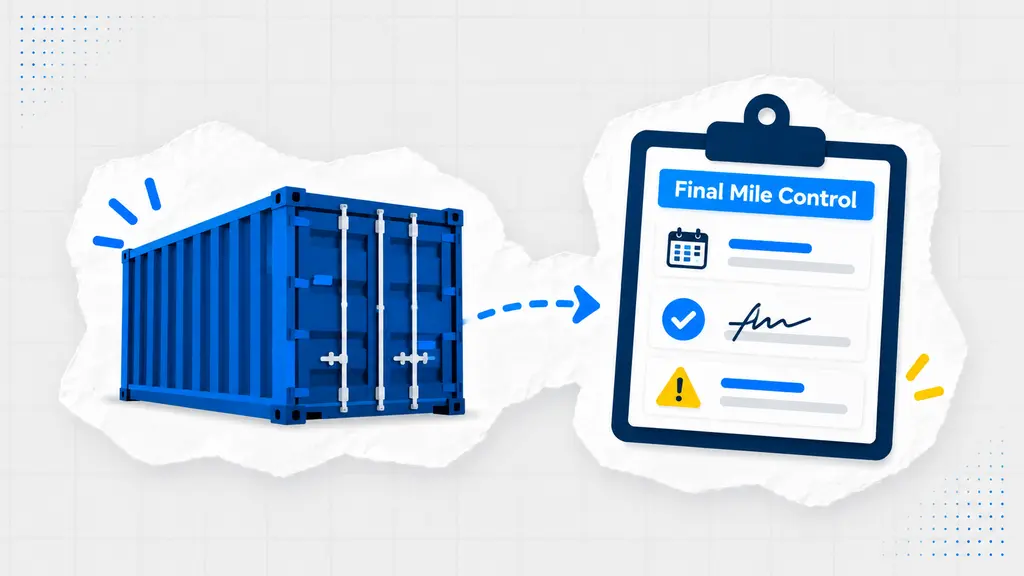
Intermodal shipping is the movement of freight using two or more transport modes, such as truck, rail, and ocean, while keeping the cargo in the same container or loading unit throughout the journey. Because the freight is not unloaded and reloaded at each transfer point, intermodal shipping can reduce handling, damage risk, and cost. It is commonly used for long-distance domestic and international freight where containers move between ports, rail ramps, terminals, and final truck delivery. Domestic water legs between U.S. ports can also be affected by the Jones Act, which reserves those moves for U.S.-built, U.S.-flagged, U.S.-crewed vessels.
Common Intermodal Combinations
- Ocean + rail: containers discharged at a U.S. port and moved by rail to inland distribution centers
- Ocean + truck: containers discharged at the port and moved by drayage truck to nearby warehouses
- Air + truck: air cargo transferred to trucks at the destination airport for final delivery
Benefits
- Lower cost than pure trucking for long inland movements
- More fuel-efficient than trucking per ton-mile
- Reduces truck driver shortages on long-haul lanes
Learn more about Dedola’s global logistics services. Related terms: FCL, LCL.