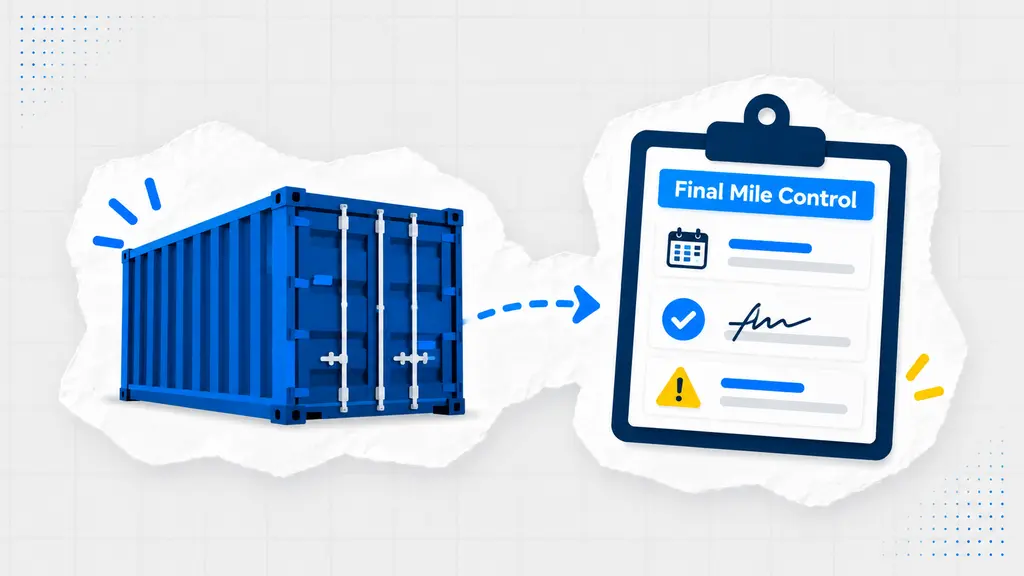
OS&D stands for Over, Short and Damaged, a logistics term used when the goods received do not match the shipping documents or arrive in poor condition. “Over” means more items were received than expected, “short” means items are missing, and “damaged” means cargo arrived broken, defective, or unsellable. An OS&D report helps carriers, warehouses, shippers, and consignees document discrepancies, investigate responsibility, support claims, and correct inventory records. When a shortage occurs because cargo was misrouted, the carrier may forward it to the correct destination as a free astray shipment at no extra freight charge.
The Three Components
- Over: more pieces received than documented on the packing list
- Short: fewer pieces received than documented
- Damaged: goods received with physical damage
How to Handle OS&D
- Note all discrepancies on the delivery receipt before the driver leaves
- Photograph all damage and discrepancies immediately
- File a freight claim or cargo insurance claim within the carrier’s required timeframe
- Preserve damaged goods for inspection by the carrier or insurer
Related terms: Control of Damaged Goods, Bill of Lading (BOL).