For many U.S. importers, the majority of a shipment’s attention, planning, and coordination goes to the ocean leg. That’s where most freight costs typically go and where delays tend to impact production and fulfillment schedules. By the time a container clears customs, it feels like the hard part is over.
The final mile is where that assumption can get expensive. Drayage, warehouse receiving schedules, proof of delivery, and exception handling all converge in a compressed window after customs release, and each one requires active coordination to keep costs and timing on track.
This blog covers what delivery management involves, the components that determine whether the final mile runs smoothly, and what to look for in a freight forwarder who handles it end-to-end.
Quick Reference
What Is Container Delivery Management?
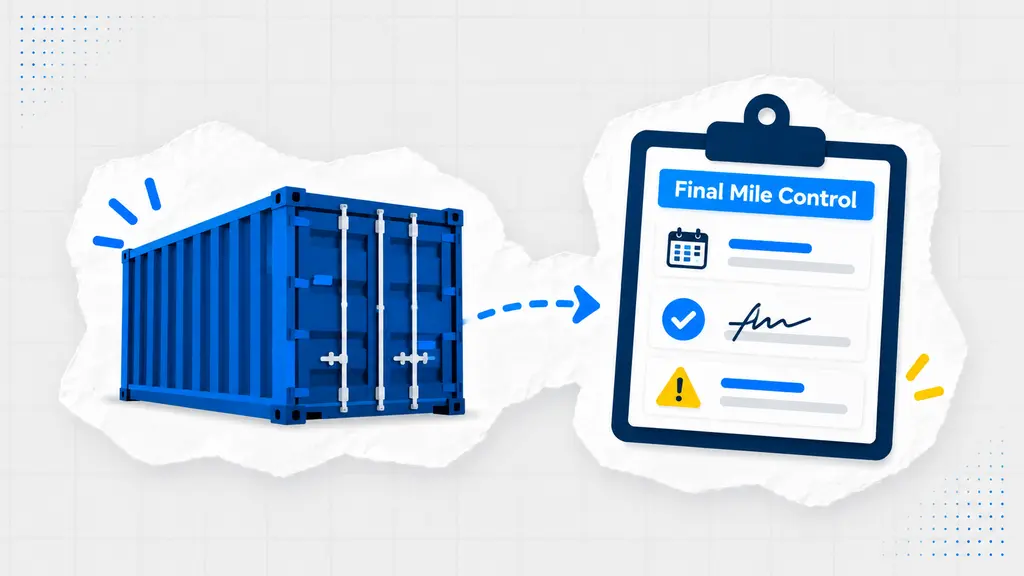
Delivery management is the process of coordinating a container move from the arrival port or rail ramp through final delivery to a distribution center or warehouse. It includes managing who picks up the container and when, how delivery appointments are scheduled, and how issues are identified and resolved to minimize extra charges.
Why does container delivery management matter? Well, some importers track a shipment carefully through arrival and treat customs clearance as the finish line. But clearance is actually when delivery management starts. Detention charges, failed delivery attempts, and accessorial fees almost always originate in the window between port availability and warehouse receipt, and they accumulate faster than most importers expect. Free time at a marine terminal or rail ramp runs on a fixed clock. A drayage appointment that slips a day, a DC receiving calendar that’s already full, a driver who shows up without confirmation: any one of these can turn a cleared shipment into an unplanned expense.
Proactively managing that window, with appointments set in advance and status tracked across every handoff, is what keeps the final mile from increasing landed costs and eroding margins.
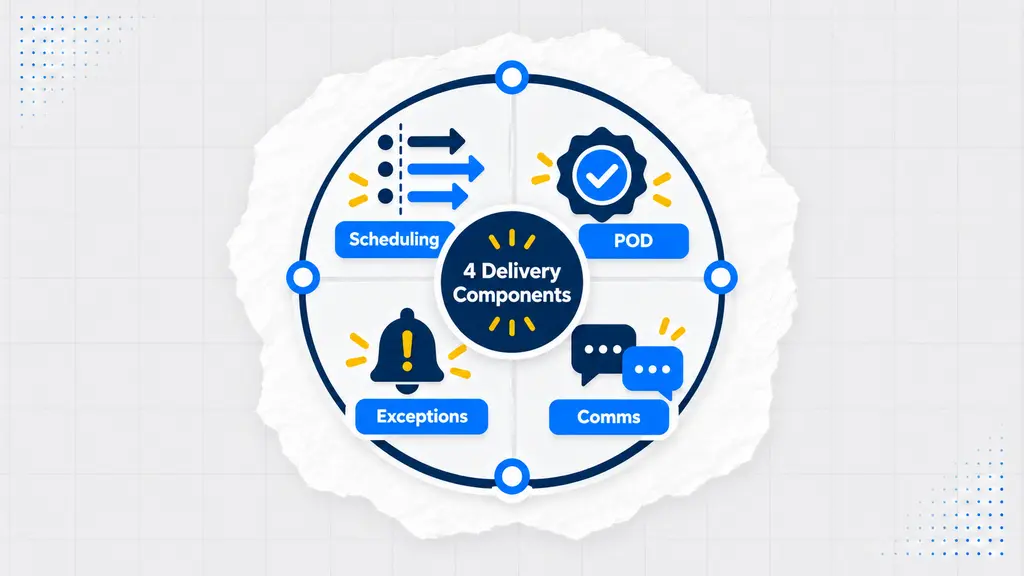
The Four Components of Effective Delivery Management
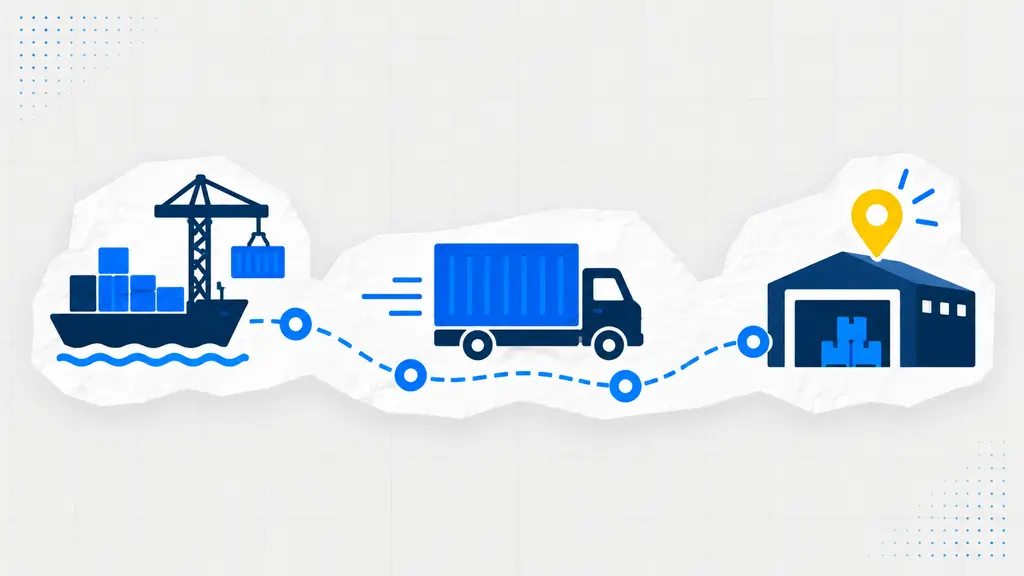
Container delivery involves multiple parties and handoffs and can be difficult to coordinate, especially for newer importers or those moving numerous shipments every day. Each element below answers a different operational question about what happens between customs release and warehouse receipt.
1. Appointment Scheduling
Appointment scheduling coordinates two things that have to align for a container to move without extra cost: when the drayage carrier picks up the container and when the DC is ready to receive it. If those two timelines don’t connect, containers likely sit idle and generate charges.
- Pickup timing determines whether you use free time or burn it. Shipping lines and terminals grant a set number of free days between container availability and pickup. After that window closes, per-diem demurrage charges start accruing. Confirm drayage against the container’s available-for-pickup date to avoid added charges.
- DC appointments need to be scheduled before the container clears. DC receiving calendars tend to fill up fast, especially during high-volume peak seasons. Getting an appointment on the books before customs release means the drayage pickup and delivery are already aligned when the container becomes available. If clearance is delayed, rescheduling one confirmed appointment is usually easier to manage.
- Rail ramp drayage has less free time than marine terminal pickup. A container moving from a rail ramp to a DC is typically granted fewer free days than one sitting at a marine terminal. The appointment has to be built around ramp availability and drayage transit time, not just the DC’s receiving calendar, or the container will run out of free time before it moves.
2. Proof of Delivery
Proof of delivery confirms a container arrived at the right location, at the right time, in the right condition. Without it, any discrepancy that surfaces after the driver leaves is difficult to defend.
- A signed receipt with condition notes and photos at handoff makes a damage claim easier to dispute. If cargo arrives short or damaged and the POD doesn’t capture it, the carrier closes the file without liability. Photographs of damage provide further evidence to back up claims.
- A timestamped, geo-confirmed digital record is harder to contest than paper. It’s also easier to share with suppliers, insurers, or customs when a discrepancy comes up later.
- Apply POD practices to every shipment, not just high-value ones. Inconsistent documentation makes it harder to defend a claim on the shipments where the record happens to be missing.
3. Exception Handling
How quickly the right people learn about a disrupted pickup, missed appointment, or delivery failure determines how much it costs to resolve.
- Delivery exceptions move faster than ocean delays. A vessel running behind usually has days of buffer before it impacts the delivery window. A failed dock appointment can create missed appointment and redelivery charges immediately, adding hundreds of dollars in freight costs.
- Without a direct notification path, importers often learn about exceptions from the invoice. A drayage carrier knows quickly when something goes wrong with a delivery, but that information needs to reach the freight forwarder and importer in time to act.
- Defined escalation keeps resolution costs down. Define who gets notified first and who can approve a redelivery or short-term storage charge before something goes wrong, not in the middle of it.
4. Communication Workflows
The drayage carrier, DC receiving team, customs broker, and freight forwarder each hold different information about the same delivery at the same time. When information doesn’t move between them, the importer ends up in the middle of every conversation.
- A communication gap between drayage and a DC scheduler can push delivery back a day or more. An unanswered call or missed message can cost an appointment slot that may not reopen for 24 to 48 hours.
- Connected systems give the importer one current view of delivery status. When the freight forwarder’s platform links to carrier updates and DC confirmation, the importer isn’t waiting on three parties to report back separately.
- A single coordinating party keeps updates moving without the importer in the middle. When the freight forwarder owns the supply chain collaboration process across drayage, the DC, and the customs broker, the importer receives status rather than chasing it.
What Good Delivery Management Looks Like
Effective container delivery management follows the same checkpoints on every shipment. Here’s what that looks like at each stage.
Before the container is available
- Drayage carrier confirmed and scheduled against the projected available-for-pickup date
- DC receiving appointment on the calendar before clearance
- Free time window documented and actively tracked
Between pickup and delivery
- Drayage status tracked against the appointment window, not just confirmed at departure
- DC receiving team updated on arrival time as it changes
- Any delay flagged to the relevant parties before the appointment is missed
At delivery
- Condition and receipt documented at the point of handoff
- Accessorial charges reviewed against quoted rates before the invoice is approved
- Empty container return scheduled within free time to avoid detention
Dedola applies this process on every end-to-end shipment we handle. A freight forwarder who already holds your customs, carrier, and timeline data can coordinate the final mile without you managing each party separately. If you’re looking for that kind of coverage from origin through final delivery, reach out to our team today.
FAQs
What is delivery management in freight forwarding?
Delivery management is the process of coordinating a container’s movement from port or rail ramp arrival through final delivery to a distribution center or warehouse. It covers drayage scheduling, DC appointment booking, proof of delivery, and exception handling, essentially, everything that happens to a container after it clears customs.
What is drayage and how does it fit into container delivery?
Drayage is the short-distance trucking that moves a container from a port terminal or rail ramp to its next destination, typically a distribution center or warehouse. In container delivery, drayage is the physical link between customs release and warehouse receipt.
What is free time in shipping and how does demurrage work?
Free time in shipping is the number of days a shipping line or terminal grants an importer to pick up a container from the port or rail after it becomes available, at no additional charge. Once free time expires, demurrage charges begin accruing per diem for each day the container remains at the terminal. Free time windows vary by carrier, terminal, and container type, and they run on a fixed clock regardless of customs clearance timing or drayage availability.
What causes detention charges on container shipments?
Detention charges occur when a container is held by the importer or drayage carrier beyond the number of free days the shipping line allows for return of the empty equipment. Common causes include delayed warehouse unloading, missed return appointments, and DC receiving backlogs that extend the time between container pickup and empty return. Unlike demurrage, which accrues at the terminal, detention accrues once the container has left the port and is in the importer’s possession.
What is the difference between marine terminal drayage and rail ramp drayage?
Marine terminal drayage moves a container from an ocean port terminal to its destination, typically a nearby distribution center or warehouse. Rail ramp drayage moves a container from an inland rail facility, called a ramp, after it has been transported by rail from the port. Rail ramp drayage typically has shorter free time windows than marine terminal pickup.