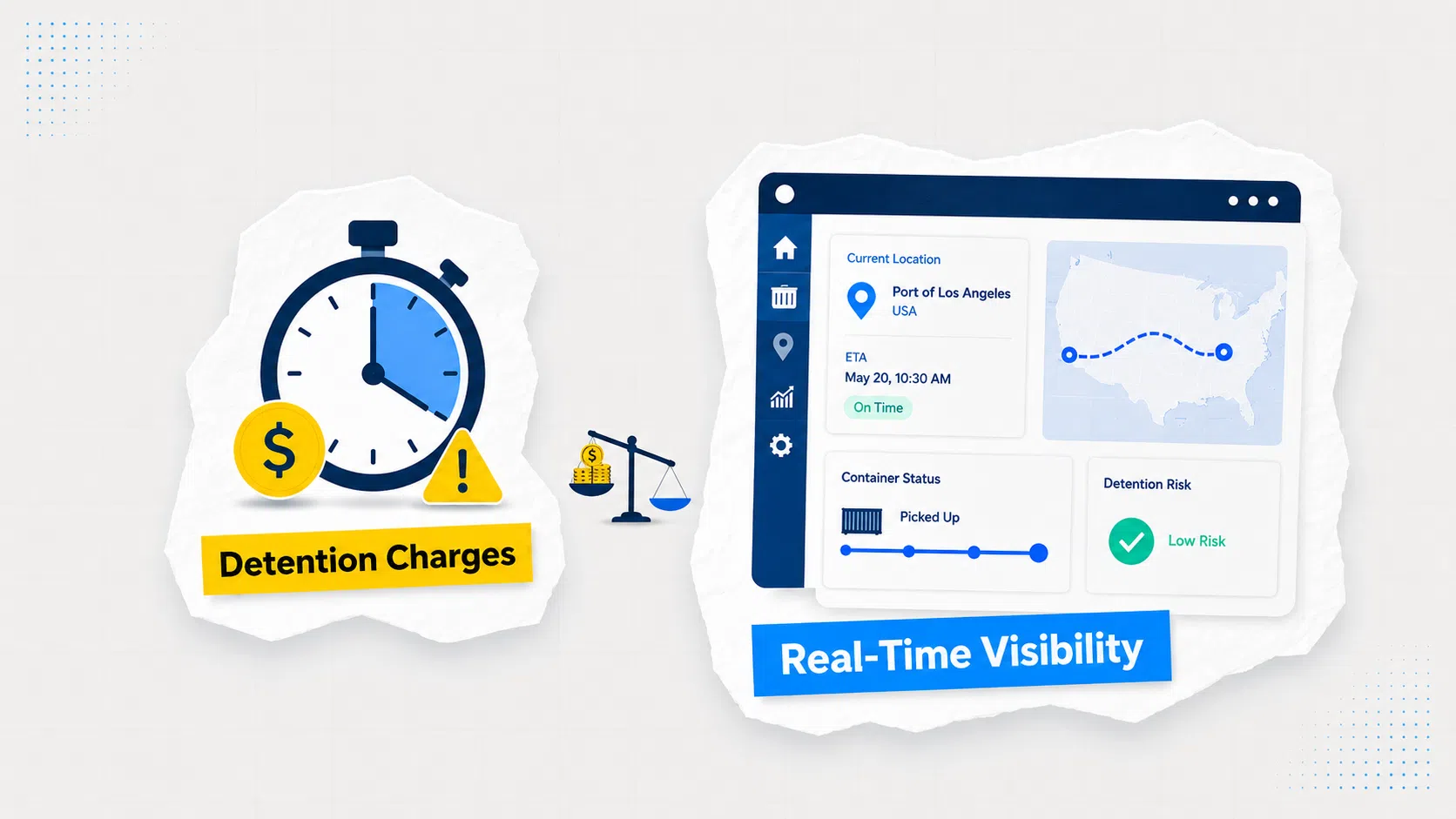
Container detention charges are one of those costs that sneak up on U.S. importers. Your cargo cleared customs. Your trucker picked up the container. But somewhere between the port and the warehouse, days slipped by, the clock ran out, and the shipping line sent a bill.
The frustrating part? Many avoidable detention charges aren’t caused by transit problems. They’re caused by information problems, which means they’re also preventable. In this article, we cover what container detention charges are, why they happen more often than they should, and how real-time supply chain visibility tools help ocean importers get ahead of them.
Quick Reference
What Are Container Detention Charges?
Container detention charges are fees levied by the ocean carrier when a container isn’t returned to the port or depot within the allotted free time after cargo has been unloaded.
Here’s how free time typically works:
- Detention free time is typically 5–10 days, starting from when the container gates out of the terminal and counting down until the empty container is returned to the carrier’s depot. The exact terms can vary greatly based on equipment type, terminal, carrier, and (most importantly) contract terms.
- Once free time expires, charges accrue daily. This is usually $75–$175 per container per day, though rates vary by carrier and escalate the longer a container is held.
It’s worth distinguishing detention from demurrage, since both can show up on the same import.
- Demurrage: The container is still inside the terminal, waiting to be picked up. Most carriers allow 4–7 free days at the terminal before demurrage fees apply, though that window can be smaller at high-volume ports like LA/Long Beach and Savannah.
- Detention: The container has left the port and is in your possession, but hasn’t been returned empty yet.
| Comparison Aspect | Demurrage | Detention |
|---|---|---|
| Where the container is located | Inside the terminal | Outside the terminal, in your possession |
| When the clock starts | When free time at the terminal expires | When the container gates out and free days run out |
| Who charges it | Ocean carrier or terminal operator | Ocean carrier |
| How to avoid it | Pick up cargo before terminal free time expires | Return the empty container before detention free time expires |
You can be hit with both detention and demurrage on the same shipment. If customs clearance delays the pickup, demurrage accrues at the terminal. Once the container is out and the empty return is taking too long, detention charges follow. Together, they add up fast.
In the U.S., detention and demurrage billing is regulated by the Federal Maritime Commission (FMC) under the Ocean Shipping Reform Act of 20221. The FMC’s billing rule, which took effect in May 2024, sets standards for how carriers must invoice these charges, including what information must be included and a 30-day deadline to issue the invoice. If a carrier misses either requirement, the billed party’s obligation to pay is eliminated. One section of the rule governing who can be invoiced was set aside by a federal appeals court in September 20252, though the rest of the rule remains in effect.
Why Container Detention Charges Are Usually a Visibility Problem
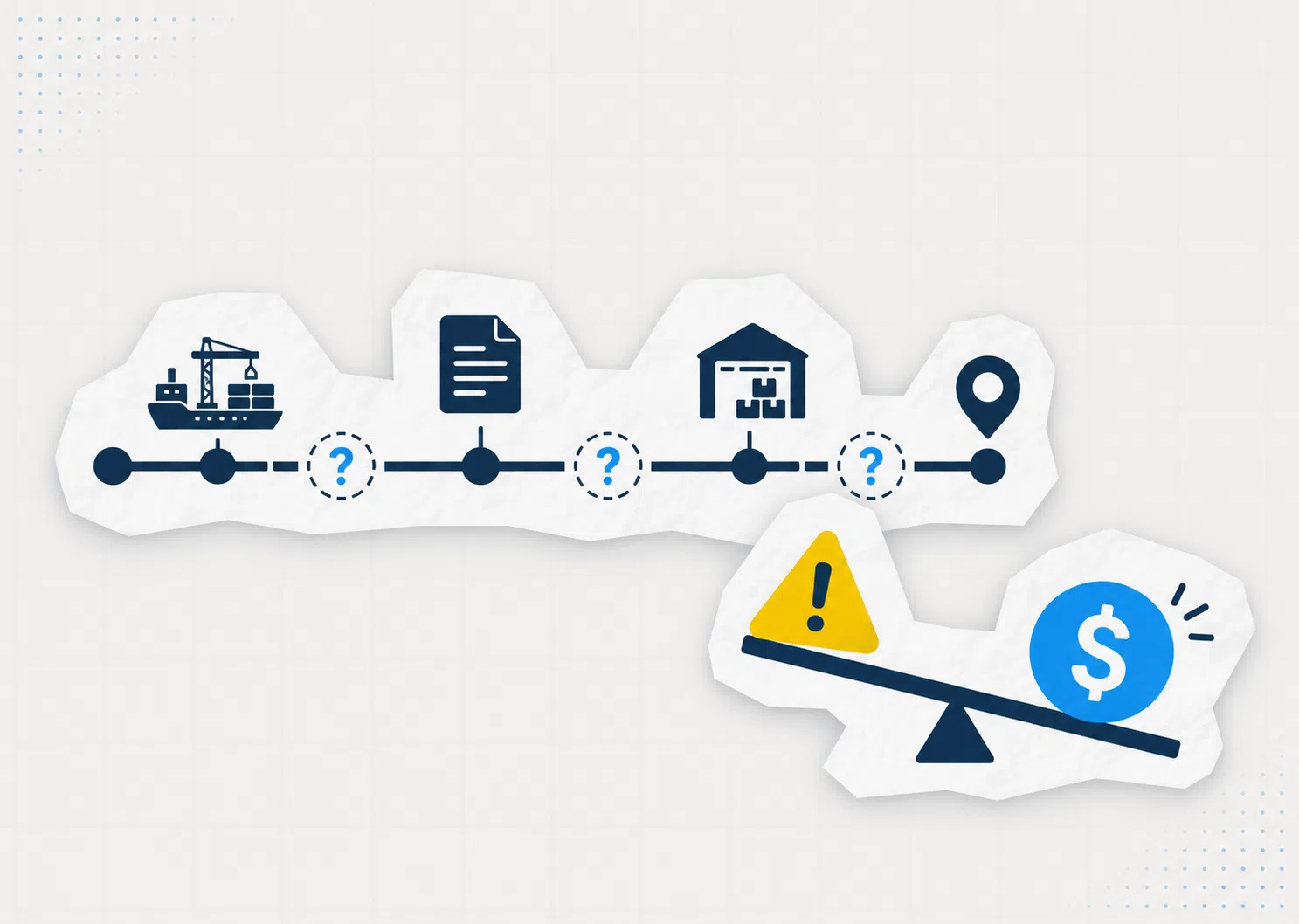
Some importers treat detention as an occupational hazard. After all, it’s just the cost of doing international business. But it doesn’t have to be. In most cases, detention is a downstream consequence of information gaps that could’ve been addressed earlier in the process.
Here’s how it typically unfolds:
- No advance ETA visibility: You don’t know when the vessel is actually going to arrive. By the time it berths, you’re scrambling to secure drayage capacity when your free time is already burning.
- Document delays: The commercial invoice hasn’t been uploaded. A packing list has errors. Customs clearance stalls, the container can’t be released, and charges accrue while you wait on paperwork that should have been ready days ago.
- Disconnected teams: Operations knows the ETA, but the warehouse doesn’t. The trucker wasn’t scheduled in time. Nobody acted because nobody had the full picture.
- Empty return bottlenecks: Even after cargo is unloaded, the container still has to get back to the carrier’s depot before free time expires. No available return appointment, depot restrictions, chassis shortages, or a warehouse that took three days to unload can all push you past the deadline just as easily as anything that happened at the port.
Oftentimes, a container isn’t late because something went wrong on the water. It’s late because no one had the right information at the right time to do something with it once it arrived.
How Supply Chain Visibility Tools Help Importers Avoid Detention
Shipment visibility tools give importers a real-time view of their ocean freight from origin through final delivery. For ocean shipments specifically, that means knowing where your containers are, what documents are ready, and what needs to happen next.
Here’s where the right platform makes a direct impact:
- Real-time milestone tracking: Departure from origin, vessel arrival, customs clearance status, and final delivery are all available in one place. When you can see exactly where a shipment is at any given time, your team can plan around it instead of chasing updates.
- Document organization by shipment: Commercial invoices, packing lists, transport documents, and supporting files are tied directly to each shipment instead of buried in an email thread from three weeks ago. Organized documentation means faster customs clearance and fewer holds eating into your free time.
- Team-wide access: Ops, finance, and receiving teams are all working from the same data in real time. No one is left waiting on a status update before they can schedule a truck or staff a warehouse dock.
- Arrival planning visibility: Knowing when your container will actually be available at port, not just the scheduled ETA, lets you book drayage in advance. A truck ready to pull on day one of free time is a very different situation than scrambling for a booking after the vessel has already berthed.
The Role of Predictive Analytics in Ocean Freight Visibility
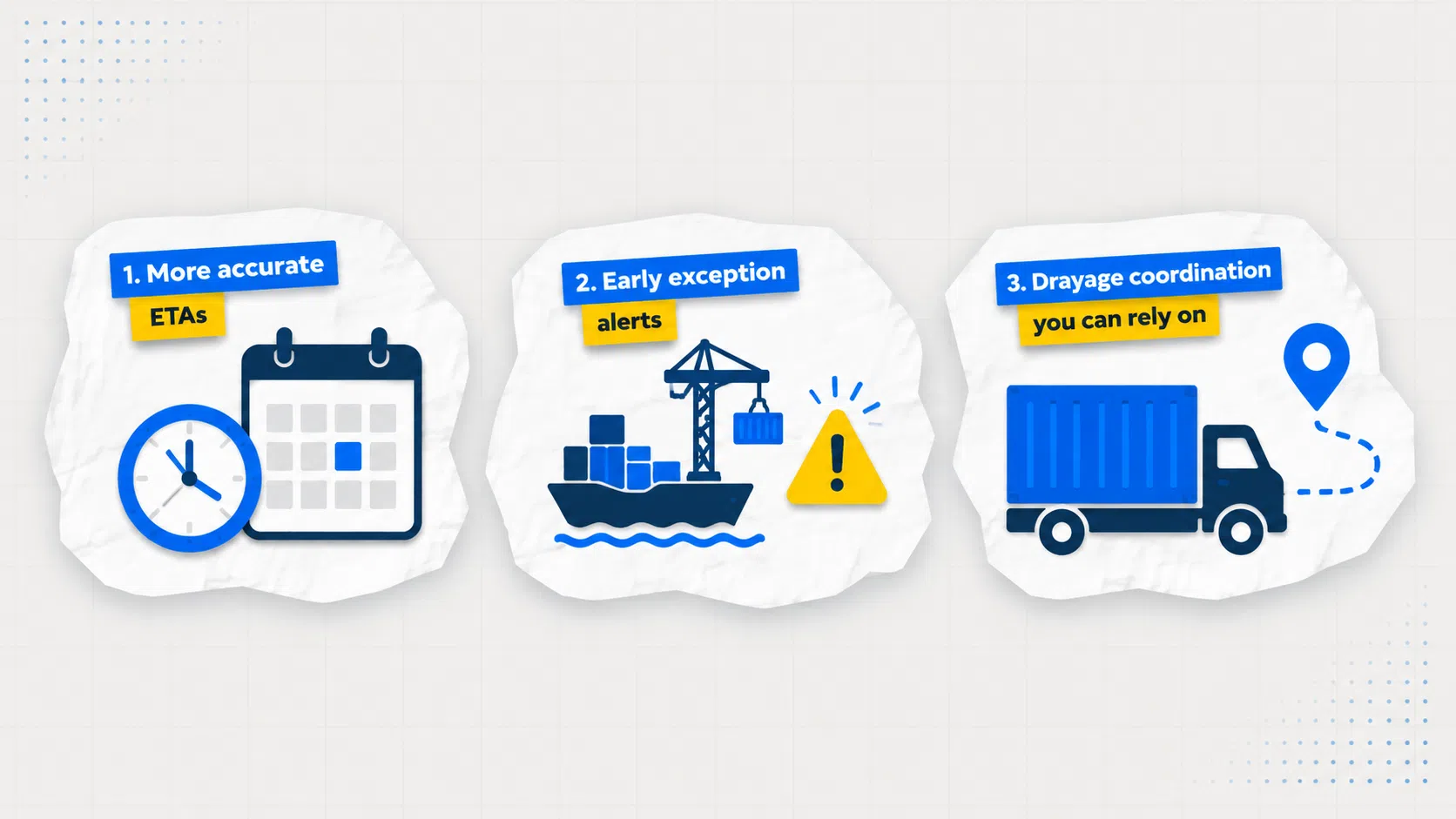
Traditional tracking tools tell you where a shipment is right now. Predictive analytics tells you where it is now, as well as when it’s expected to arrive for final delivery. For ocean importers, that distinction is critical.
- More accurate ETAs: Carrier-scheduled arrival times and actual arrivals often don’t match, particularly on high-volume trans-Pacific lanes. Predictive tools analyze carrier performance history, port congestion patterns, and vessel schedule deviations to give you a realistic picture of when your container will be available. That might mean knowing three days out that a delayed vessel will arrive Thursday instead of Monday, giving you time to adjust your drayage booking before free time starts counting down.
- Early exception alerts: If a vessel is delayed or a port is congested, you know before it becomes a scheduling or customs crisis. That lead time lets you adjust drayage bookings, notify your warehouse, and reset expectations upstream. A congestion alert at LA/Long Beach, for example, might give you enough runway to push your drayage pickup, adjust your warehouse receiving schedule, and avoid a wasted truck roll on a container that isn’t ready to move.
- Drayage coordination you can actually rely on: Accurate predictive ETAs mean booking your port-to-destination trucks based on real information, not a general estimate. Your drivers are confirmed before the vessel berths, not after, and your free time doesn’t disappear while you’re still looking for available capacity.
For ocean importers managing multiple shipments across multiple lanes, that kind of insight is what keeps detention charges from turning into lost margins.
What to Look for in a Real-Time Shipment Tracking Platform
Not all tracking tools give you accurate and useful information. Plenty of platforms show you a status update, but fewer show you what to do about it. Here’s what actually matters for ocean importers trying to control detention exposure.
- Clear milestone tracking: Departure, arrival, customs status, and delivery timelines are visible at a glance. Vague “in transit” statuses don’t help anyone plan.
- Shipment-level document organization: All relevant files are accessible within the shipment record, not scattered across portals and inboxes.
- Arrival planning visibility: Reliable ETAs with enough lead time to act, not just real-time pings when the vessel berths.
- Proactive updates: A platform that only shows data when you log in is not the same as a solution that flags exceptions and keeps you informed in advance.
- Easy access across teams: If only one person can see the data, the rest of your organization is still operating blind.
| Feature | Why It Matters | Detention Impact |
|---|---|---|
| Milestone tracking | Full shipment status visible at any point | Enables proactive scheduling before free time starts |
| Document organization | Customs files ready and accessible | Fewer clearance delays holding containers at the terminal |
| Predictive ETAs | Actual availability, not just scheduled arrival | Drayage booked on real timelines, not carrier estimates |
| Free-time countdown | Remaining free days tracked per container | Flags detention risk before it becomes a charge |
| Exception alerts | Notified when something changes, without logging in | Time to act before free time expires |
| Team-wide access | Everyone working from the same data | No coordination gaps between ops, warehouse, and carriers |
These shouldn’t feel like advanced requirements. They’re the baseline for a visibility platform that actually reduces detention costs rather than just documenting it after the fact.
How TrakItPRO Helps Importers Track Containers and Avoid Detention
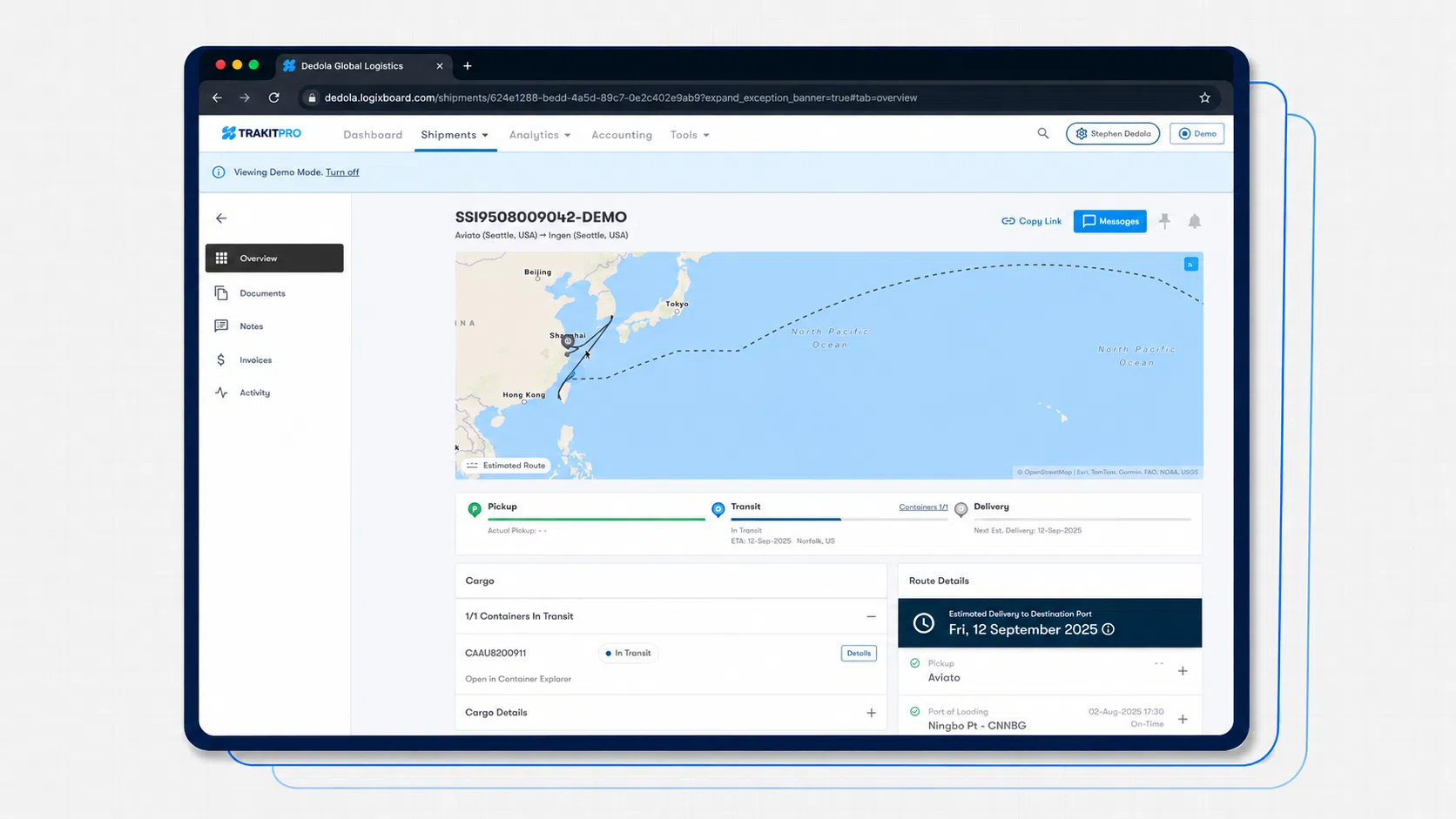
TrakItPRO is Dedola’s shipment visibility platform, giving ocean importers real-time tracking, document access, and freight analytics in one place. But what makes it stand out isn’t the tech alone, because Dedola’s team is actively managing your shipments every step of the way. They’re verifying updates, flagging exceptions, and coordinating across your supply chain before small issues turn into unexpected charges and fees.
Dedola has been managing ocean imports for over 50 years. So if you’re still struggling to manage recurring detention charges, chances are we’ve worked through the exact same issue before. Talk to our experts to see how we can help.
FAQs
What is the difference between demurrage and detention charges?
Demurrage and detention are two separate charges that apply to different parts of a container’s journey. Demurrage accrues when a full container is sitting inside the terminal past the carrier’s free time allowance. Detention applies once the container has left the port but hasn’t been returned empty within the allotted free days. Both can apply to the same shipment, and knowing the difference matters if you ever need to dispute a charge.
How are container detention charges calculated?
Container detention charges are calculated by multiplying the number of days past the allotted free time by the carrier’s daily rate. Here’s how that breaks down:
- Free time: Typically 5–10 days from when the container gates out of the terminal
- Daily rate: Usually $75–$175 per container per day, varying by carrier, trade lane, and equipment type
- Tiered structure: Many carriers increase the daily rate the longer the container is held
Example: 3 days over free time at $100/day equals $300 in detention charges. Rates in your service contract may differ from published rates, so always check your specific terms.
Can container detention charges be disputed or waived?
Container detention charges can be disputed, but success depends on your circumstances and documentation. Under OSRA 2022, the FMC’s charge complaint process requires carriers to prove their charges are reasonable, and carriers have voluntarily waived charges in response to complaints. The strongest grounds for a dispute include:
- Charges assessed during a carrier-caused delay or cargo hold
- Invoice non-compliance with OSRA billing requirements
- Situations where container return was impossible due to port closures or conditions outside your control
Outcomes are not guaranteed. If you believe you’ve been wrongly charged, document everything and loop in your freight forwarder before escalating.
How do supply chain visibility tools reduce detention charges?
Supply chain visibility tools help reduce container detention charges by giving importers the information they need to act before free time runs out. Accurate ETAs enable advance drayage scheduling, organized shipment documents speed up customs clearance, and team-wide access to real-time data keeps everyone coordinated from port to empty return.
Sources
- Federal Maritime Commission – “Ocean Shipping Reform Act of 2022 Implementation”
- Federal Maritime Commission – “U.S. Court of Appeals Issues Decision in Case on Demurrage and Detention Billing Practices”