Collaboration across the import process rarely shows up as conflict. More often, it looks like a supplier marking a shipment as shipped before the forwarder has logged it, or an importer learning at customs that a certificate of origin was never prepared. No single party failed on its own; the information simply didn’t move fast enough between everyone touching the shipment for anyone to catch the issue in time.
A single import involves many players and moving parts, each holding its own piece of the timeline and its own version of where things stand. Supply chain collaboration is what keeps that information accurate and moving between everyone, so nothing slips through the cracks. A good freight forwarder is what makes that possible: the connector who keeps information flowing between every party, so you, as the importer, aren’t managing each relationship on your own.
Quick Reference
What Is Supply Chain Collaboration?

Supply chain collaboration is the operational discipline of every party in a shipment (supplier, freight forwarder, customs broker, and carriers), all working from the same accurate, current information at the same time.
It’s often mistaken for a soft skill: people getting along, staying in touch, being easy to work with. While these factors certainly improve supply chain partnerships, simply getting along doesn’t move freight, identify an incorrect HTS code, or resolve a customs hold.
Collaboration that actually reduces costs and transit delays is structural. It means shared visibility across every party touching the shipment, organized documentation, and a clear process for catching exceptions before they escalate into bigger problems.
The Three Pillars of Effective Supply Chain Collaboration

A collaborative supply chain tends to break down in the same few places. Visibility, documentation readiness, and exception management are the three factors that decide whether information is in place to keep imports moving. Each one answers a different question about a shipment: where it is, whether it can clear customs, and what happens when something goes wrong.
Visibility
Visibility means the supplier, the carrier, and the importer all see the same shipment status, updated at the same time. It starts with a strong supplier partnership, but it doesn’t end there: the same shared status has to hold across every carrier and handoff in between.
- Shared visibility closes the gaps between schedules. The supplier works off a production and dispatch schedule, the carrier works off vessel or flight schedules, and the importer often works off a spreadsheet of collected updates. When a delay happens on one of those timelines, it may not surface for other parties until it’s already affecting the original schedule.
- Staying visible through every handoff keeps cargo on track. Cargo changes hands multiple times between origin and destination: from the supplier to a drayage provider, from drayage to the ocean or air carrier, and again at destination. Each handoff is a new point of contact, and tracking data is most likely to lag or drop when the cargo is changing hands.
- Real visibility comes from connected data, not manual updates. When supplier and carrier systems feed into the forwarder’s visibility platform, it creates one shared view so every party can work off the same status without having to ask for it. Configurable alerts add another layer, flagging a shipment automatically the moment it falls behind schedule instead of waiting for someone to notice.
Documentation Readiness
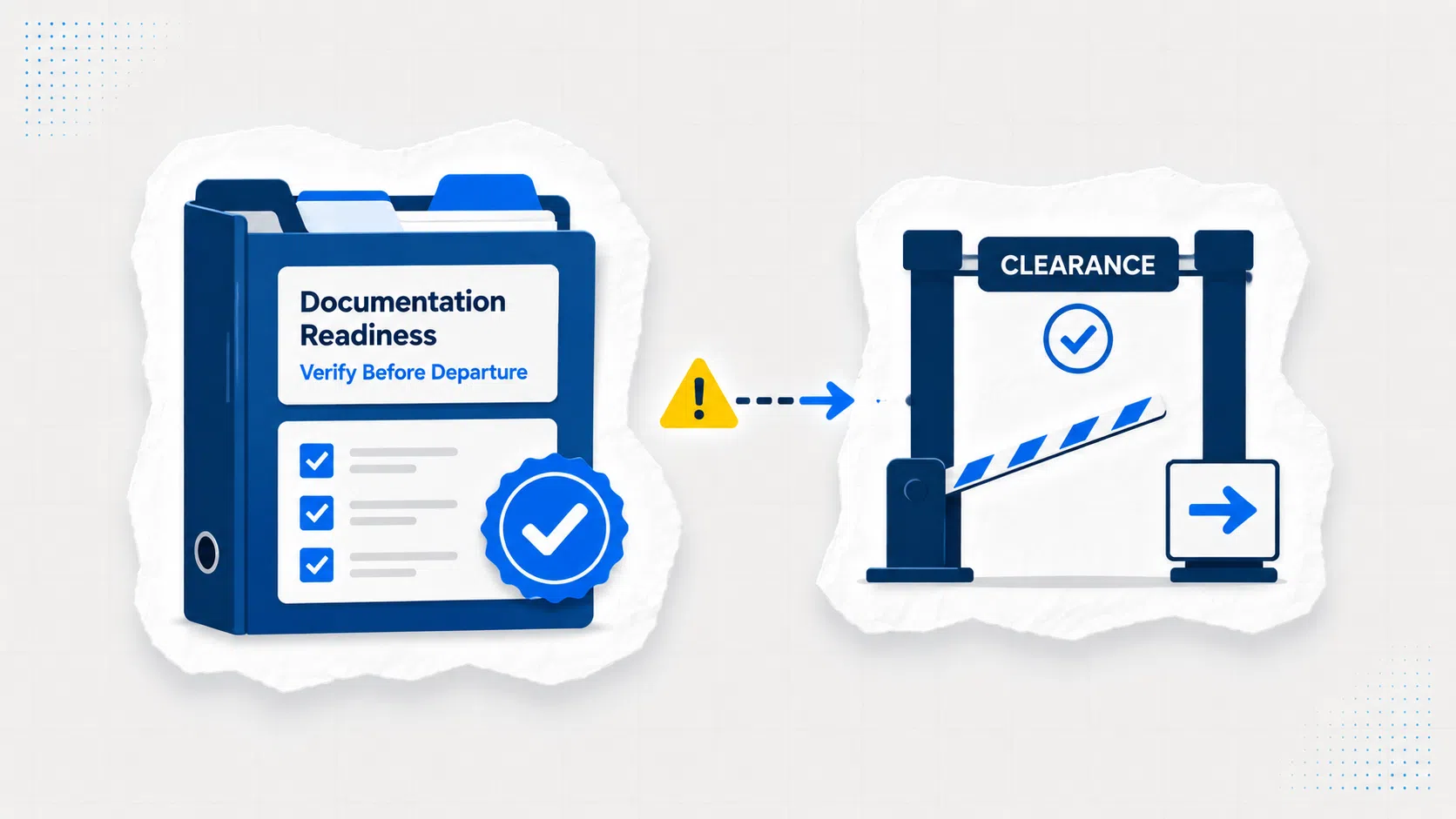
Documentation readiness isn’t only about clearing customs at destination. Export requirements, the paperwork needed to legally load and ship cargo out of the origin country, vary by country and can stop a shipment before it ever reaches destination customs.
- Documents verified before departure keep cargo moving. An incorrect HTS code or a missing certificate of origin isn’t just a destination problem. Depending on the origin country, it can prevent the shipment from being exported in the first place, long before customs at the receiving end sees it.
- Early detection minimizes unexpected costs. A gap that surfaces at destination instead of origin turns into customs holds, demurrage charges, and missed delivery windows. The fix is the same either way. Catching errors early is far cheaper than catching them late.
- Verify documents against origin and destination requirements before departure. The commercial invoice, packing list, certificates, and permits need to satisfy what the origin country requires to release the cargo. They also need to satisfy the destination country’s requirements to clear it. Confirming both early enough leaves time to fix a gap before the shipment moves.
Exception Management
Exception management means a potential delay is caught early enough that the parties involved can address it together, before it turns into something bigger.
- A clear process catches issues before they escalate. Delays, damage, missing documents, and customs holds are routine parts of moving freight. What separates a minor hiccup from a costly delay isn’t whether something goes wrong, it’s how fast the issue is caught and who takes ownership of the fix.
- Early detection only works when someone is watching for it. Whoever catches the issue first, whether that’s the forwarder, the carrier, or the broker, needs a clear way to flag it to everyone else who’s affected, so the fix happens once instead of after multiple parties find out separately.
- Exceptions are easier to manage when visibility and documentation are already in place. Strong visibility means a problem surfaces while there’s still time to react, instead of after it’s already caused a delay. Accurate documentation means the team can focus on fixing the problem instead of scrambling to sort out paperwork errors.
Why Supply Chain Collaboration Matters
Of course, the value of these pillars is reflected in what they add to your operations, not just what they prevent. The benefits of supply chain collaboration show up in how a shipment moves and what it costs to move it.
- Shipments clear faster. Accurate documentation and shared status mean a customs broker isn’t chasing down missing paperwork mid-transit, and the shipment is less likely to be flagged and held upon arrival.
- Costs stay under control. A documentation error or missed exception costs more the longer it goes unnoticed, turning into customs holds, demurrage, or expedited freight fees once it surfaces. Collaboration makes early detection and response possible.
- Every party can act on what they know. A supplier, carrier, or broker working off accurate shared information can make decisions without waiting on someone else to confirm the status first.
- Planning holds up. Inventory, staffing, and delivery commitments can be built around accurate transit and arrival times instead of padded estimates meant to absorb the unknown.
How a Freight Forwarder Improves Supply Chain Collaboration
An import shipment usually involves numerous parties before it reaches your door: the supplier, an origin drayage provider, an ocean or air carrier, a customs broker, and destination trucking. Each one has its own processes and systems, making it hard to keep everyone on the same page.
A freight forwarder should manage that coordination at every stage of the shipment, so you aren’t the one left managing the many moving parts and supply chain partnerships.
Pre-shipment
- Coordinating pickup with the supplier and confirming drayage schedules with the origin agent.
- Setting up transportation with the carrier, including rating and confirming space and sailing or flight schedules.
- Verifying the commercial invoice, certificate of origin, and HTS classification before the shipment departs.
In transit
- Monitoring vessel or flight schedules and ETAs as they update.
- Confirming arrivals to set up dock pickup and destination drayage before the container sits idle.
- Coordinating with the customs broker to keep clearance on track and catch a documentation gap before it becomes a hold.
At destination
- Confirming pickup and delivery to the final destination, including any additional inland transit.
- Monitoring container free time to avoid demurrage and detention charges.
- Auditing carrier and drayage invoices to confirm charges match what was quoted.
With that coordination in place, you get one point of contact: your freight forwarder. Instead of chasing status updates from your supplier, tracking a vessel schedule on your own, and following up with a customs broker on clearance, you get one person managing it all and one clear picture of where your shipment stands.
Experience is what makes that coordination effective. A forwarder who has moved thousands of shipments through the same lanes and ports knows which documentation gaps tend to stall customs and which carrier delays tend to cascade into missed delivery windows, and acts on that pattern before it becomes your problem.
Are You Working With a Collaborative Freight Forwarder?

If you’re wondering how to improve supply chain collaboration, start by looking at the forwarder you already have, not at adding more tools or processes. Visibility, documentation, and exception management aren’t just concepts; they’re a way to evaluate that partnership right now.
A few concrete signals to check:
- Proactive communication. Updates should arrive in real time, not only when you ask for them.
- A single point of contact. One person or team should be familiar with your business and active shipments.
- Visibility tools. You should be able to see real-time status yourself, rather than waiting on someone else to check and report back.
- A track record on exceptions. When something has gone wrong in the past, you should have found out early from your forwarder.
If any of these come up short, that may be telling you something about how your forwarder operates, not how you’re running your business. Dedola has spent 50 years building the systems and relationships that make proactive coordination possible for our clients, so you get a partner managing your shipments instead of a vendor you have to manage yourself. If you want to see what that looks like for your shipments, talk to our team.
FAQs
How is supply chain collaboration different from just having good communication with vendors?
Good communication is informal and reactive, an email here, a phone call there. Supply chain collaboration is structural. It means shared milestones, synchronized documentation, and a defined process for handling exceptions, so information moves the same way every time regardless of who’s involved.
Why is supply chain collaboration important for importers?
Poor collaboration is one of the most common causes of shipment delays and unexpected costs. When information doesn’t move between parties in time, a documentation gap or a schedule change surfaces as a customs hold or a demurrage charge instead of getting caught early.
How does a freight forwarder support supply chain collaboration?
A freight forwarder coordinates directly with your supplier, carriers, and customs broker at every stage of the shipment, so information moves between them without you having to manage each relationship yourself.
What tools improve supply chain collaboration?
Shared visibility platforms, connected data feeds between suppliers and carriers, and configurable status alerts all support collaboration by giving every party the same real-time picture of a shipment instead of relying on manual updates.