 Stephen Dedola
Los Angeles & Long Beach Freight Forwarding Guide
Los Angeles and Long Beach are not just famous for beaches, entertainment, restaurants, and Southern California traffic. For importers, exporters, freight forwarders, customs brokers, drayage providers, warehouses, retailers, manufacturers, and supply chain teams, this region is one of the most important logistics gateways in North America.
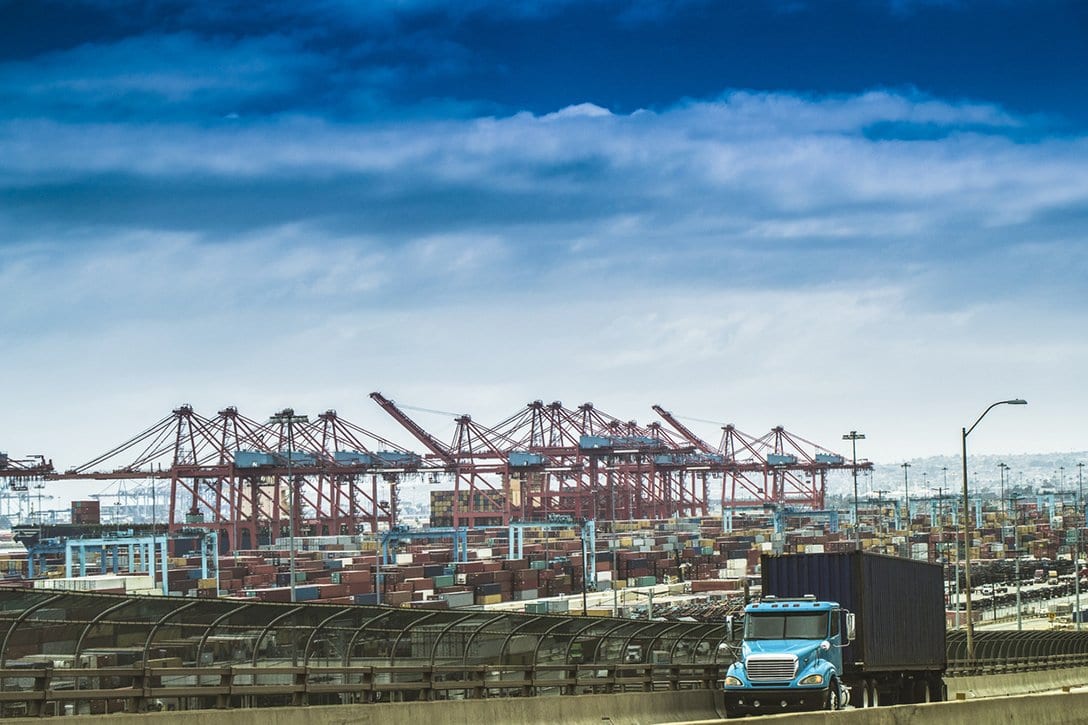
The Ports of Los Angeles and Long Beach form the San Pedro Bay port complex, a critical entry point for containerized trade moving between Asia, North America, and inland U.S. markets. Around that port complex is a dense logistics ecosystem: marine terminals, rail yards, drayage routes, customs operations, warehouses, distribution centers, trucking corridors, air cargo facilities, and freight technology platforms.
If you are visiting Los Angeles or Long Beach for logistics meetings, warehouse tours, port operations, carrier discussions, trade events, or supplier visits, this guide highlights the freight landmarks worth understanding — and why they matter to your supply chain.
Dedola Global Logistics helps businesses coordinate freight through Southern California and beyond, including ocean freight, air freight, customs coordination, supplier communication, warehousing support, shipment visibility, and broader supply chain planning.
Contact Dedola Global Logistics
Why Los Angeles and Long Beach Matter to Global Logistics
For companies importing goods into the United States, the Los Angeles and Long Beach region is often one of the first places to evaluate. The port complex connects major trans-Pacific trade lanes with the U.S. consumer market, inland rail networks, regional warehouses, distribution centers, and final delivery points across the country.
This matters because Southern California is not only a port gateway. It is a full logistics corridor. A container may arrive at the port, move through a marine terminal, clear customs, transfer to a truck, enter a transload warehouse, move by rail through the Alameda Corridor, travel to the Inland Empire, or continue to a national distribution network.
That is why logistics planning in Los Angeles and Long Beach requires more than knowing the vessel arrival date. Importers need to understand terminal activity, customs timing, chassis availability, rail options, warehouse appointments, drayage capacity, labour schedules, free time, and final delivery requirements.
1. The Port of Los Angeles
The Port of Los Angeles is one of the most important freight landmarks in the United States. Located in San Pedro Bay, it serves as a major gateway for containerized imports and exports moving between Asia and North America.
For importers, the Port of Los Angeles is especially important for goods such as furniture, auto parts, apparel, plastics, electronics, consumer goods, retail inventory, industrial products, and e-commerce merchandise. The port is supported by container terminals, on-dock rail, cargo-handling equipment, digital visibility tools, and connections to national rail and truck networks.
Key logistics takeaways for shippers:
- Use it for major trans-Pacific freight: Los Angeles is a natural gateway for goods sourced from China, Vietnam, Japan, South Korea, Taiwan, and broader Asia trade lanes.
- Plan destination delivery early: Arrival at the port is only one milestone. Cargo still needs customs clearance, release, pickup, and delivery.
- Watch free time: Delayed pickup can lead to demurrage, detention, storage, and chassis-related costs.
- Coordinate rail and drayage: On-dock rail and nearby intermodal connections can be valuable for inland distribution, but they must be planned before arrival.
Dedola supports importers using the Port of Los Angeles through ocean freight planning, carrier coordination, customs documentation, shipment tracking, drayage planning, and final delivery support.
2. The Port of Long Beach
The Port of Long Beach sits next to the Port of Los Angeles and forms the other half of the San Pedro Bay port complex. It is one of the busiest container ports in the United States and a major freight gateway for imports, exports, and trans-Pacific trade.
Long Beach is known for container terminals, environmental leadership, rail infrastructure, cargo visibility programs, and connections to regional and national supply chains. For businesses moving goods into Southern California, the port can support both local delivery and inland distribution.
Key logistics takeaways for shippers:
- Compare Los Angeles and Long Beach routing: The best port may depend on carrier service, terminal performance, inland delivery, warehouse location, and available appointment windows.
- Understand terminal differences: Each terminal has its own operating flow, pickup process, appointment system, and availability timeline.
- Plan around congestion risk: Even strong port performance can be affected by volume surges, weather, carrier delays, equipment issues, or labour conditions.
- Use visibility tools and forwarder updates: Timely shipment data helps avoid last-minute pickup and storage problems.
Dedola helps importers evaluate port choice, carrier routing, documentation, destination delivery, and supply chain timing for Long Beach cargo.
3. The San Pedro Bay Port Complex
Together, the Ports of Los Angeles and Long Beach form the San Pedro Bay port complex. For shippers, it is helpful to think of the two ports as separate operating environments within one broader logistics gateway.
The complex supports:
- Containerized imports and exports
- Trans-Pacific ocean freight
- On-dock and near-dock rail
- Regional drayage
- Transloading and warehousing
- Distribution to the Inland Empire and national markets
- Connections to major highways, rail corridors, and airports
For importers, the port complex can be extremely efficient when planned well. It can also become expensive when documentation is late, containers are not picked up on time, warehouse appointments are missed, or inland routing is not prepared before arrival.
4. The Alameda Corridor
The Alameda Corridor is one of the most important freight rail landmarks in Southern California. It connects the ports of Los Angeles and Long Beach with major rail yards near downtown Los Angeles and onward to transcontinental rail networks.
For shippers, the Alameda Corridor matters because it helps move containers between the port complex and inland markets without relying entirely on local truck movement. Rail can be especially useful for cargo moving to the Midwest, South, East Coast, or inland distribution hubs.
Key logistics takeaways for shippers:
- Rail can support inland distribution: Intermodal rail may be useful when cargo needs to move beyond Southern California.
- Rail is not automatic: Cargo must be booked, released, routed, and coordinated correctly to use rail efficiently.
- Final delivery still matters: Rail movement usually requires truck delivery from the inland ramp to the final warehouse or customer.
- Visibility is essential: Importers should track port discharge, rail departure, rail arrival, and final delivery milestones.
5. Los Angeles International Airport
LAX is a major passenger airport, but it also plays an important role in air cargo. For importers and exporters, LAX can support urgent, high-value, time-sensitive, lightweight, or deadline-driven freight moving in and out of Southern California.
Air freight through LAX may be useful when cargo cannot wait for ocean freight or when a split-shipment strategy is needed. For example, a business may move urgent cartons by air through LAX while the balance of the order travels by ocean through Los Angeles or Long Beach.
Air cargo through LAX may be relevant for:
- Medical supplies and devices
- Replacement parts
- Product samples and prototypes
- Fashion launches and seasonal goods
- High-value consumer products
- Technology components
- Emergency replenishment inventory
Air freight is usually more expensive than ocean freight, but it can protect sales, production, service commitments, and customer timelines when speed matters.
6. U.S. Customs and Border Protection Operations
Customs clearance is one of the most important parts of the Southern California freight process. Cargo cannot simply arrive and move to a warehouse without the right import data, customs filings, release status, and documentation.
Importers should pay close attention to:
- Commercial invoice accuracy
- Packing list details
- HTS classification
- Country-of-origin details
- Importer of record information
- Customs bond status
- Partner government agency requirements
- Exam holds or document requests
- Duties, taxes, and fees
Documentation should be reviewed before cargo arrives, not after the container is already waiting at the terminal. Late or inaccurate documents can lead to customs delays, storage, demurrage, missed appointments, and urgent recovery costs.
Dedola helps coordinate customs broker communication, shipment documents, and freight milestones so importers can reduce preventable clearance issues.
7. Warehouses, Transload Facilities, and Distribution Centers
Los Angeles, Long Beach, the South Bay, Carson, Compton, Commerce, Vernon, Santa Fe Springs, and the Inland Empire all play major roles in Southern California logistics. Warehouses and transload facilities help turn international freight into domestic distribution.
A container may be:
- Delivered directly to the importer’s warehouse
- Transloaded from ocean container into domestic trailers
- Split into multiple outbound orders
- Stored before distribution
- Prepared for retail, e-commerce, or fulfillment channels
- Moved by rail or truck to inland markets
Warehouse planning should happen before the vessel arrives. Receiving capacity, appointments, operating hours, labour availability, pallet requirements, floor-loaded cargo, carton counts, and special handling needs can all affect delivery timing.
8. The Inland Empire Logistics Corridor
The Inland Empire is one of the most important distribution regions connected to the Los Angeles and Long Beach port complex. Many importers use warehouses in Ontario, Fontana, Rancho Cucamonga, Riverside, San Bernardino, Moreno Valley, and nearby areas to support regional and national distribution.
For logistics teams, the Inland Empire matters because it provides space, highway access, rail connections, and proximity to Southern California consumer markets. However, delivery to the Inland Empire still requires careful drayage planning, appointment scheduling, chassis coordination, and empty container return management.
A common mistake is assuming the hardest part of the shipment ends when the vessel arrives. In reality, the port-to-warehouse move can be where many costs appear if pickup, delivery, unloading, and container return are not coordinated properly.
9. Local Labour and Terminal Operations
Labour is part of the real-world logistics environment in Los Angeles and Long Beach. Marine terminals, trucking companies, warehouses, rail operators, and distribution centers all depend on coordinated labour and operating schedules.
Importers do not need to manage terminal labour directly, but they should understand that cargo availability depends on terminal hours, appointment windows, discharge schedules, gate activity, holidays, and operational capacity.
Practical shipper takeaways include:
- Do not assume container availability immediately after vessel arrival.
- Check terminal status before scheduling pickup.
- Plan around holidays and reduced operating windows.
- Coordinate warehouse receiving hours before drayage is booked.
- Build buffer into time-sensitive shipments.
10. Freeways and Trucking Routes
Southern California freight depends heavily on trucking. Major highway corridors connect the ports to warehouses, rail yards, airports, and inland distribution points. Congestion, appointment windows, equipment availability, driver hours, and local restrictions can all affect transit time.
For importers, trucking is often where port delays become business delays. If a container is not picked up quickly enough, demurrage may apply. If the container is not unloaded and returned within the allowed time, detention may apply. If the warehouse appointment is missed, the entire delivery plan may need to be rescheduled.
Good drayage planning should include:
- Container availability monitoring
- Terminal appointment scheduling
- Chassis planning
- Delivery appointment confirmation
- Warehouse receiving instructions
- Empty return location and deadline
- Demurrage and detention tracking
11. Clean Freight and Sustainability Landmarks
Los Angeles and Long Beach are also important sustainability landmarks in freight. The ports have been central to clean air planning, emissions reduction programs, cleaner equipment initiatives, and broader conversations around decarbonizing freight movement.
For shippers, sustainability is no longer a side topic. Retailers, manufacturers, healthcare companies, apparel brands, automotive suppliers, and global importers are increasingly asked about freight emissions, routing decisions, carrier choices, and responsible supply chain practices.
Dedola can help businesses compare freight modes and routing options as part of a broader supply chain plan. Sometimes the best option is standard ocean freight. Sometimes air freight is needed for urgency. Sometimes a better-planned ocean move can prevent last-minute air freight and reduce both cost and emissions pressure.
12. Local Tourist Attractions Near the Freight Hub
If you are visiting the Los Angeles and Long Beach area for logistics meetings, there are also several nearby landmarks worth seeing when your schedule allows.
Local attractions may include:
- The Queen Mary: A historic ocean liner in Long Beach and one of the area’s most recognizable maritime landmarks.
- San Pedro waterfront: A working waterfront area connected to port history, harbor views, and maritime activity.
- Aquarium of the Pacific: A Long Beach attraction near the waterfront and port-adjacent business district.
- Downtown Long Beach: A convenient area for business meetings, restaurants, hotels, and port-related travel.
- Ports O’ Call and LA Waterfront area: A reminder of the port’s historical and community-facing side.
These attractions are not logistics facilities, but they help visitors understand how deeply maritime activity is tied to the identity of Los Angeles and Long Beach.
The History of Dedola Global Logistics in Southern California
Dedola Global Logistics has deep roots in international freight forwarding and supply chain coordination. With Southern California’s port, airport, warehouse, rail, and trucking infrastructure nearby, Dedola is well positioned to help importers and exporters manage cargo moving through Los Angeles, Long Beach, LAX, and other global gateways.
Dedola’s work is not limited to one mode or one port. The team helps businesses compare routes, choose freight modes, coordinate suppliers, review documents, monitor shipment milestones, and plan final delivery.
That support can be especially valuable for companies moving freight through the San Pedro Bay port complex, where a shipment can involve many parties before it reaches the final destination.
Industries That Depend on Los Angeles and Long Beach Logistics
Fashion and Apparel
Apparel and fashion brands often use Los Angeles and Long Beach for imports from Asia. Seasonal deadlines, retail launch dates, and size-run complexity make visibility and delivery planning essential. Dedola supports fashion and apparel freight shipping with ocean, air, supplier coordination, and delivery planning.
Medical Supplies and Devices
Medical supplies and devices may move through Southern California by ocean or air depending on urgency, product type, documentation needs, and delivery deadlines. Dedola supports medical supplies and devices freight shipping with routing, customs coordination, and shipment visibility.
Automotive and Aftermarket Parts
Auto parts are among the key containerized import categories moving through Southern California. Aftermarket parts, replacement components, tools, and accessories often require reliable routing and timely delivery. Dedola supports aftermarket auto parts imports with documentation, compliance coordination, and final delivery planning.
Retail and E-commerce
Retailers and e-commerce companies rely on Los Angeles and Long Beach to keep inventory flowing into fulfillment centers, distribution networks, and regional warehouses. Strong port, warehouse, and final-mile coordination can help reduce stockouts and missed sales windows.
Industrial and Manufacturing Cargo
Industrial importers may use the region for components, machinery, tools, raw materials, and production inputs. These shipments often need careful documentation, weight planning, routing, and warehouse coordination.
How to Plan Freight Through Los Angeles and Long Beach
Moving cargo through Los Angeles or Long Beach works best when every step is planned before the vessel or flight arrives.
Use this checklist:
- Confirm the arrival gateway: Know whether cargo is arriving through Los Angeles, Long Beach, LAX, or another route.
- Review documentation early: Commercial invoices, packing lists, bills of lading, HTS codes, and consignee details should be accurate before arrival.
- Track terminal availability: Vessel arrival does not always mean the container is ready for pickup.
- Plan drayage before discharge: Do not wait until cargo is available to look for a trucker.
- Confirm warehouse receiving: Delivery appointments, operating hours, unloading requirements, and floor-loaded cargo details matter.
- Watch demurrage and detention: Free time should be monitored closely.
- Evaluate rail when appropriate: Intermodal rail may be useful for inland destinations.
- Build contingency plans: Urgent shipments may require air freight, alternate routing, or split-shipment strategies.
When Another Port or Gateway May Be a Better Fit
Los Angeles and Long Beach are powerful gateways, but they are not always the best choice for every shipment. The right port depends on origin, destination, carrier service, inland transportation, customs needs, warehouse location, and delivery timeline.
For example, importers serving the Gulf Coast or Southeast may sometimes compare Southern California routing against Gulf or Atlantic options. A port such as the Port of Galveston may be relevant for certain Gulf Coast cargo, while other inland or regional gateways may make sense depending on destination.
Dedola can help compare port options, not just freight rates. A slightly higher ocean rate may be offset by better inland delivery, lower congestion risk, fewer handoffs, or faster warehouse availability.
How Dedola Helps Shippers Navigate Los Angeles and Long Beach Freight
Dedola Global Logistics helps importers and exporters manage the operational details behind Southern California freight. That includes ocean freight, air freight, customs coordination, shipment visibility, supplier communication, drayage planning, warehouse handoffs, and final delivery.
Dedola can support businesses with:
- Ocean freight routing through Los Angeles and Long Beach
- Air freight through LAX and other global airports
- Carrier and sailing schedule comparisons
- Supplier communication and cargo-ready tracking
- Commercial invoice and packing list coordination
- Customs broker communication
- Drayage and port pickup planning
- Warehouse and transload coordination
- Rail and inland delivery visibility
- Cargo insurance option discussions
- Supply chain planning for recurring import programs
The goal is to help shippers move cargo through Southern California with fewer surprises, clearer timelines, and stronger coordination from origin to final destination.
Los Angeles and Long Beach Are More Than Port Names
For logistics professionals, Los Angeles and Long Beach represent a connected freight ecosystem. The ports, LAX, Alameda Corridor, customs operations, warehouses, trucking lanes, rail yards, and regional distribution networks all work together to move cargo through one of the most important gateways in the United States.
Understanding these landmarks helps importers make better decisions. The more clearly you understand how cargo moves through the region, the easier it is to plan around cost, timing, compliance, visibility, and delivery risk.
Need Help Moving Freight Through Los Angeles or Long Beach?
If your business imports or exports through Southern California, Dedola can help coordinate ocean freight, air freight, customs documentation, drayage, warehouse handoffs, shipment visibility, and final delivery planning.
Contact Dedola Global Logistics
Frequently Asked Questions About Los Angeles and Long Beach Logistics
Why are the Ports of Los Angeles and Long Beach important for importers?
The Ports of Los Angeles and Long Beach form the San Pedro Bay port complex, one of the most important containerized trade gateways in the United States. They connect trans-Pacific ocean freight with U.S. warehouses, rail networks, trucking corridors, and distribution centers.
What is the San Pedro Bay port complex?
The San Pedro Bay port complex refers to the combined freight gateway made up of the neighboring Ports of Los Angeles and Long Beach. Together, they support a major share of U.S. containerized waterborne trade.
What is the Alameda Corridor?
The Alameda Corridor is a freight rail corridor that connects the Ports of Los Angeles and Long Beach with major rail yards near downtown Los Angeles and the national rail network.
When should importers use LAX for air freight?
Importers should consider LAX air freight when cargo is urgent, high-value, lightweight, deadline-driven, or needed to recover from ocean freight delays. Air freight may also be useful for samples, medical products, replacement parts, and product launches.
What causes delays at Los Angeles and Long Beach?
Delays may be caused by vessel schedule changes, customs holds, terminal congestion, chassis shortages, appointment availability, warehouse receiving issues, weather, labour schedules, documentation errors, or late drayage planning.
Can Dedola help with freight through Los Angeles and Long Beach?
Yes. Dedola can help coordinate ocean freight, air freight, customs documentation, shipment visibility, drayage, warehousing, rail handoffs, and final delivery for cargo moving through Los Angeles and Long Beach.