 Stephen Dedola
Two unrelated U.S. tariff announcements came out within days of each other last week. The first is a new Section 301 duty tied to forced labor enforcement, already in effect and covering 60 countries. The second is a fresh round of Section 338 tariffs on Canada, set to go into effect in August. Below is a breakdown of what’s happening and what to keep in mind for your upcoming shipments.
New Section 301 Forced Labor Tariffs Take Effect
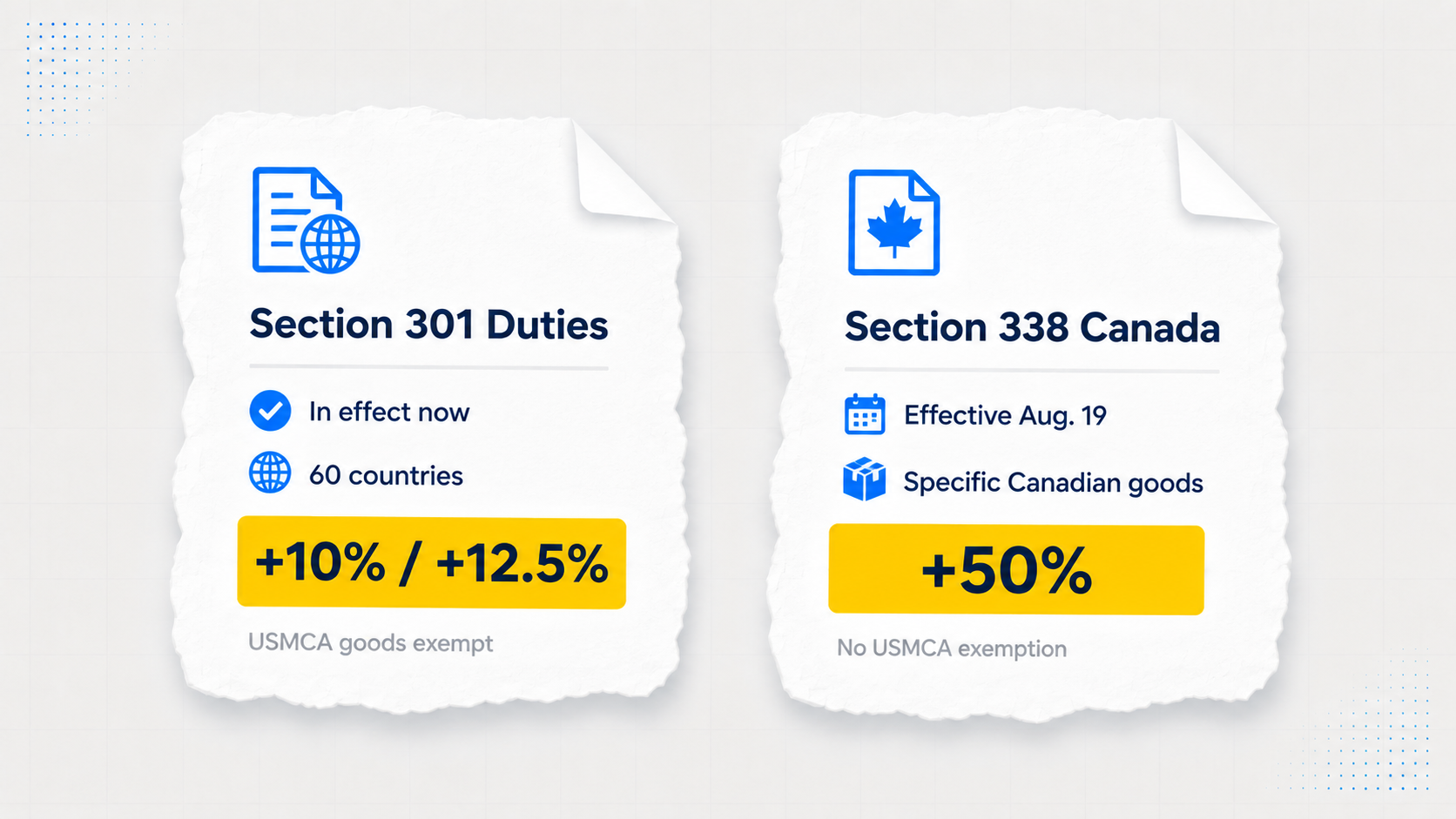
On July 23, 2026, USTR announced the results of its Section 301 forced labor investigation1, and the new duties took effect the very next day, at 12:01 a.m. ET on July 24, 2026. The action applies an additional 10% or 12.5% duty to imports from 60 countries and economies that USTR determined have failed to impose or effectively enforce a ban on goods made with forced labor.
Key dates:
- Effective: 12:01 a.m. ET, July 24, 2026, for goods entered for consumption or withdrawn from warehouse for consumption on or after that time.
- In-transit exception: Goods already loaded onto their final vessel before 12:01 a.m. ET on July 24, 2026, are not subject to the additional duty if they’re entered for consumption before 12:01 a.m. ET on July 28, 2026.
Tariff rate by country:
- 10% additional duty: Argentina, Bangladesh, Cambodia, Canada, Ecuador, El Salvador, Guatemala, Honduras, India, Indonesia, Jordan, Malaysia, Mexico, Pakistan, Sri Lanka, Trinidad and Tobago, and the United Kingdom.
- 12.5% additional duty: All other countries named in the investigation.
- EU, Taiwan, Japan, South Korea, and Switzerland: These five are handled a bit differently. Rather than simply adding the new duty on top of what they already pay, the rate is calculated so the new duty plus their existing standard tariff rate (known as the Most Favored Nation, or MFN, rate) adds up to 10% total for the EU and Taiwan, and 12.5% total for Japan, South Korea, and Switzerland.
Section 301 Exemptions
A few categories are exempt from the new duty across all 60 countries:
- Civil aircraft, engines, and parts
- Certain pharmaceuticals
- Goods already subject to Section 232 duties
- Life-saving donations
- Informational materials
- Certain country-specific commodities
- Goods that qualify for USMCA treatment
- Certain Chapter 98 entries
Action Items
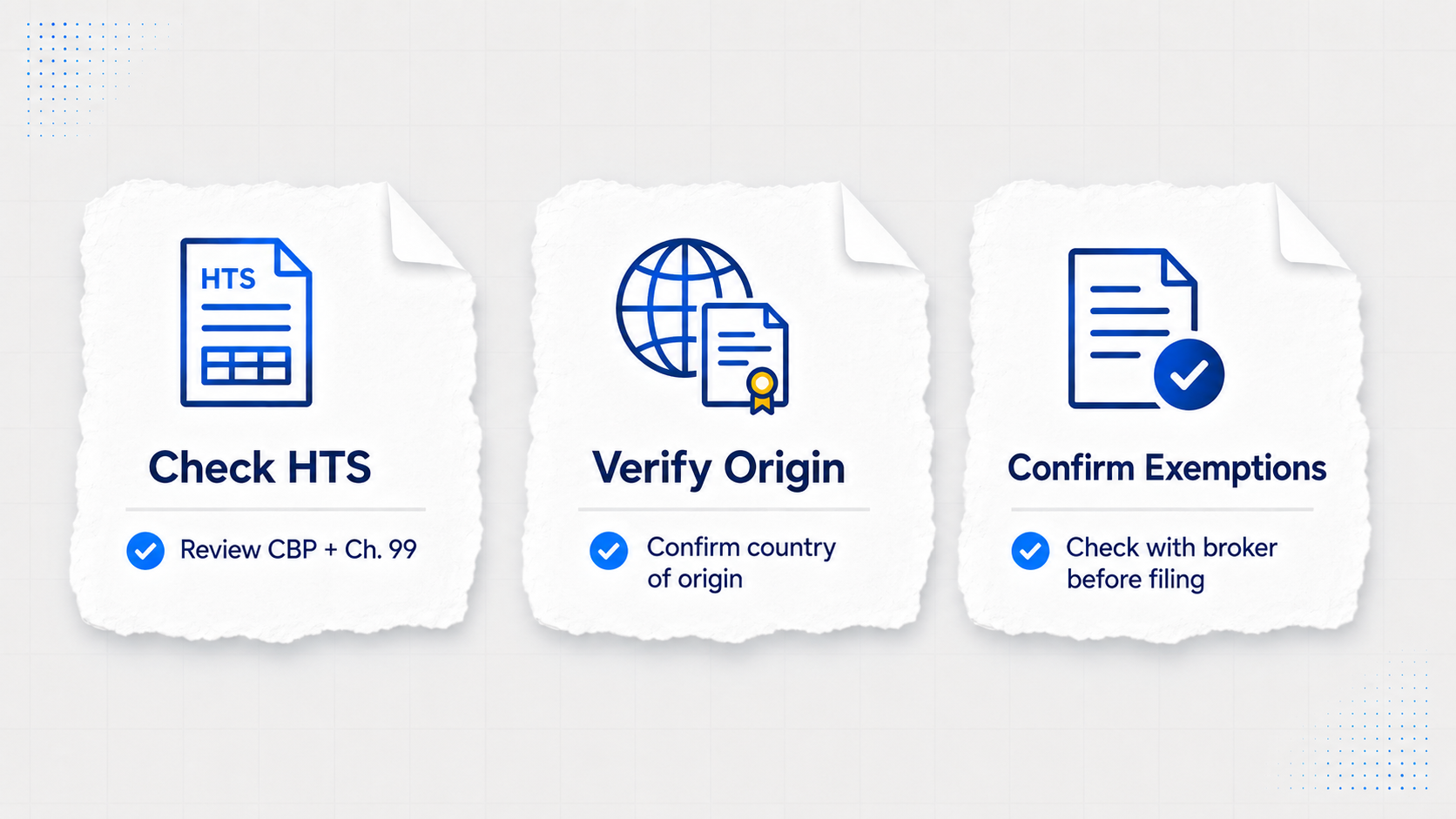
- Review CBP’s guidance2 and confirm which HTS classifications in your product lines are affected, including the new Chapter 99 codes that must be reported alongside them.
- Double-check your country-of-origin documentation. The rate you owe depends on getting this right.
- If you believe an exemption applies, confirm it with your broker before you file the entry.
A New Round of Section 338 Tariffs on Canada
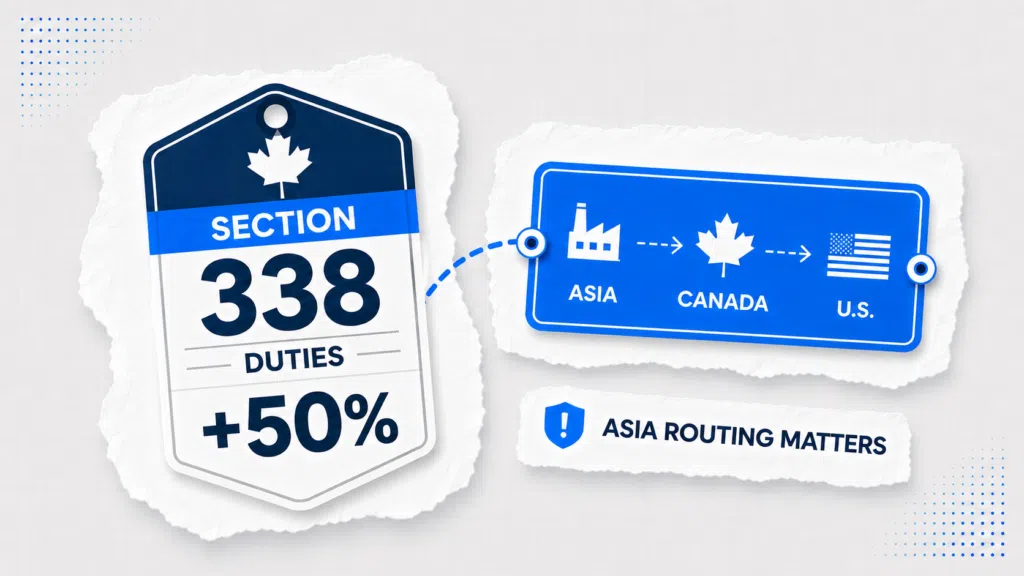
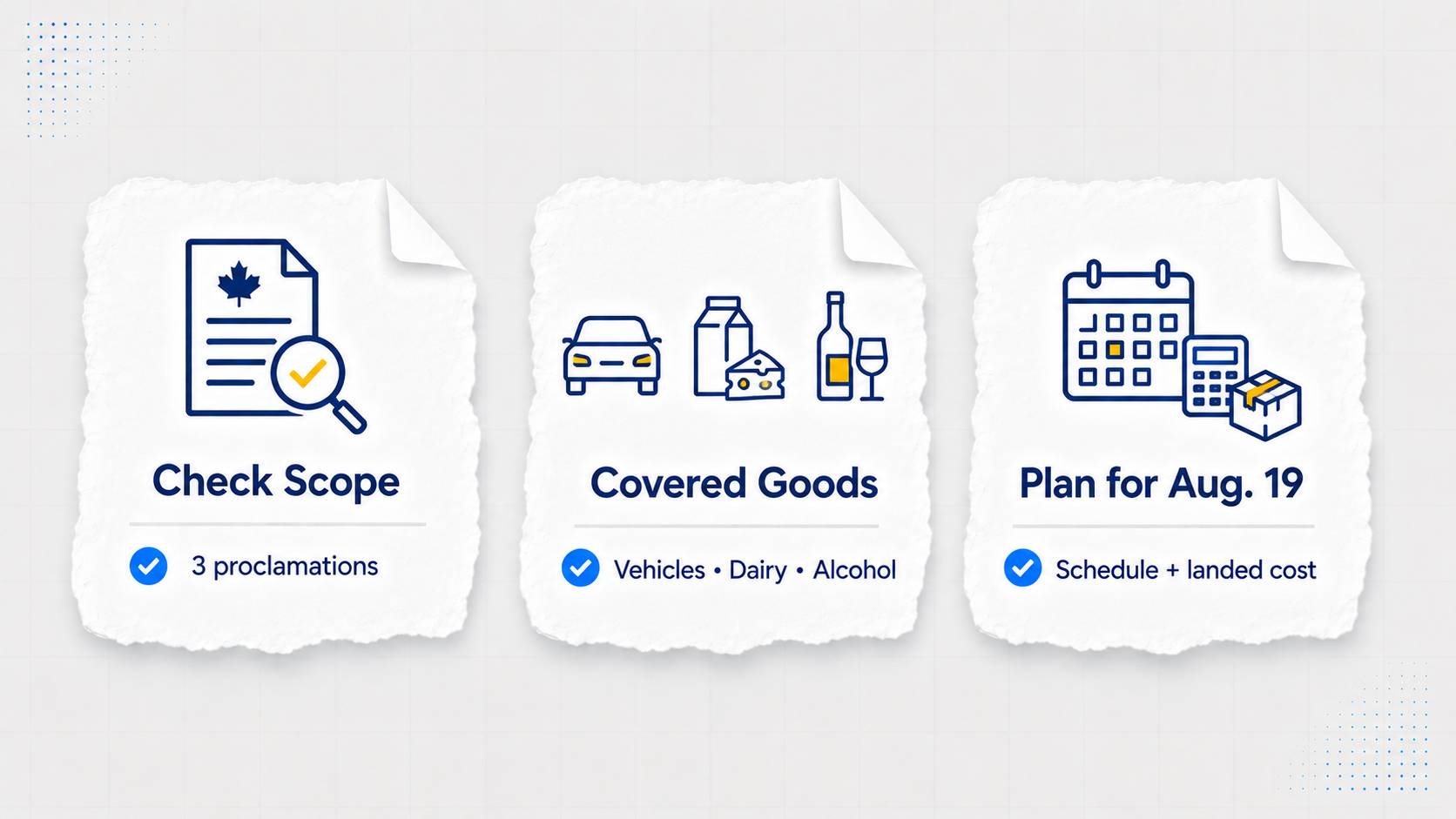
Separately, the President signed three proclamations under Section 338 of the Tariff Act of 19303 imposing an additional 50% tariff on specific categories of Canadian goods: motor vehicles, dairy products, and alcoholic beverages. These are set to take effect August 19, 2026, at 12:01 a.m. ET. Other Section 338 proclamations reportedly cover additional Canadian goods, including wine, hockey sticks, and cement.
One key difference from the Section 301 action: the Section 301 exemptions list includes goods that qualify for USMCA treatment, but Section 338 has no such exemption. That means Canadian goods that would normally clear, duty-free, under USMCA are still subject to this new 50% tariff if they fall into one of the covered categories.
That said, Section 338 does carry its own exclusions. The tariffs will not apply to energy, potash, goods already subject to Section 232 duties, or certain other goods such as fish or critical minerals.
The administration’s stated rationale centers on Canada’s treatment of U.S. auto exports, restrictions on U.S. alcohol sales in most provinces, and Canada’s dairy tariff rate quota structure, which the administration says treats U.S. cheese less favorably than EU cheese under comparable trade agreements.
Action Items
If you move Canadian origin goods in these categories:
- Confirm whether your specific products fall within the scope of the three proclamations, and check them against the excluded categories, like energy, potash, and fish.
- Note the August 19 effective date and factor it into your shipping schedule and landed cost estimates.
Navigating the Next Steps
At Dedola, we know keeping up with changes like these isn’t easy, and it’s not something you have to figure out alone. We’ve been helping importers navigate these kinds of changes for over 50 years. If you have questions about how Section 301 or the new Canada tariffs affect your shipments, reach out to us. We’re happy to help.