Texas Gulf Coast Port
Port of Galveston: Gulf Coast Freight, Ro-Ro, Breakbulk, and Project Cargo Logistics
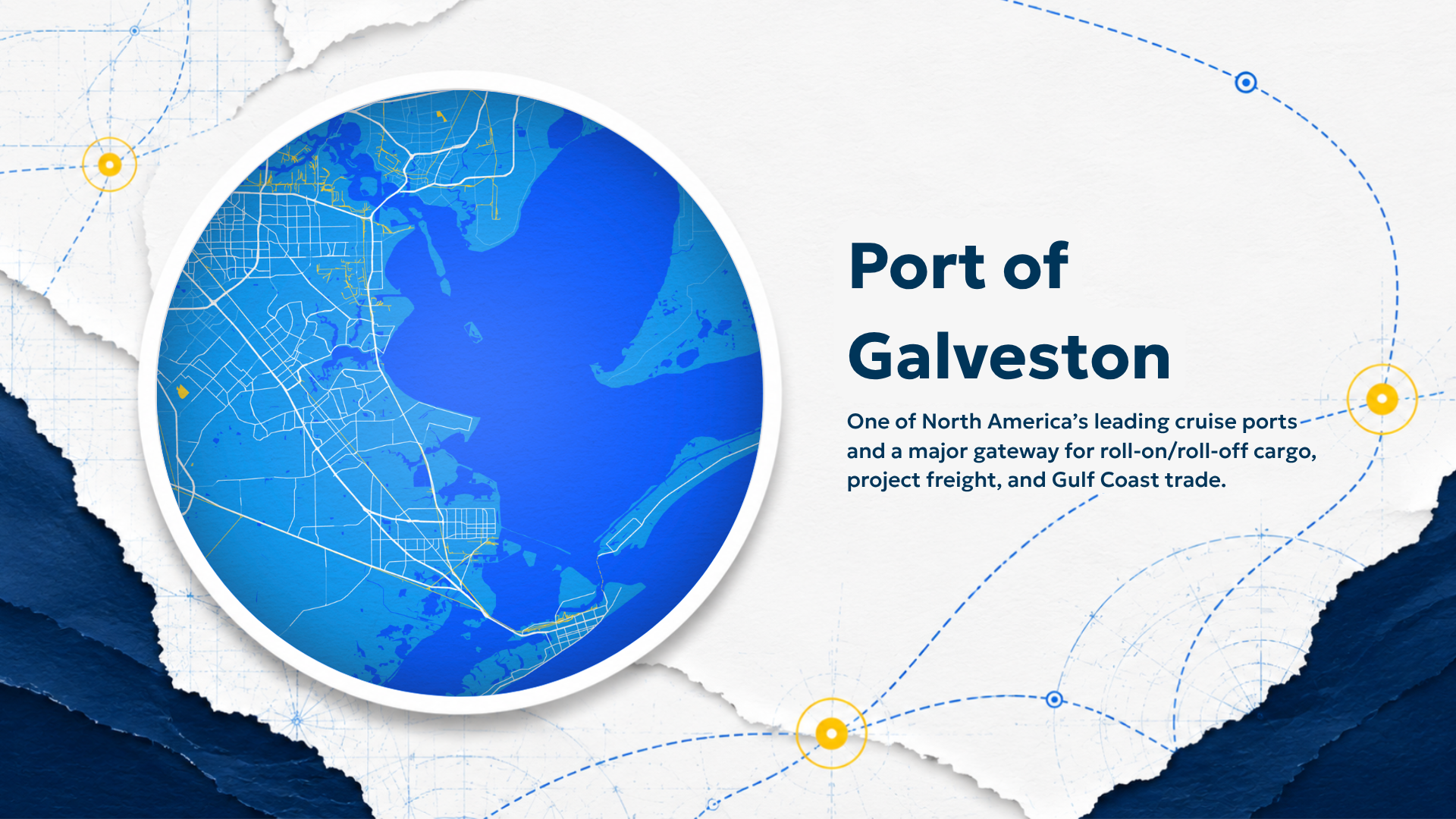
The Port of Galveston is best known as one of the leading cruise homeports in the United States, but it also plays a practical role in Gulf Coast cargo movement. Located at the entrance to Galveston Bay and the Houston Ship Channel, the port supports Ro-Ro cargo, new vehicles, heavy equipment, breakbulk freight, wind energy components, bulk cargo, refrigerated cargo, project cargo, and cruise-related supply chains.
For importers, exporters, manufacturers, automotive suppliers, energy companies, and project cargo teams, Galveston can be a useful Gulf Coast gateway when the shipment profile fits the port’s strengths. Dedola Global Logistics helps businesses evaluate whether Galveston is the right routing option and coordinates the ocean freight, documentation, customs, inland transport, and visibility needed to keep freight moving.
Explore Ocean Freight Services
Port of Galveston Quick Facts
- Port name: Port of Galveston
- Location: Galveston, Texas, on the Gulf Coast
- Established: 1825
- Port area: Approximately 840 acres
- Berths: 24 berths
- Access: About 45 minutes from open sea and 10 minutes from Interstate 45
- Rail connectivity: Two Class I railroads and one short line
- Trade program: Foreign Trade Zone #36
- Key cargo types: Ro-Ro, new cars, heavy equipment, breakbulk, project cargo, dry bulk, liquid bulk, refrigerated cargo, wind turbine components, and cruise-related supplies
Why the Port of Galveston Matters for Cargo Planning
Galveston should not be treated the same way as a large container-first gateway. Its strongest freight value is more specific: Ro-Ro, vehicles, machinery, breakbulk, project cargo, wind components, bulk cargo, and cargo that benefits from Gulf Coast access, available terminal space, and quick inland connections.
The port’s location near the Houston Ship Channel, Interstate 45, rail service, and Gulf Coast industrial markets makes it relevant for shippers that need a Texas entry point without assuming every shipment must move through the largest container terminal in the region. For the right cargo, Galveston can support a more targeted and flexible logistics plan.
Dedola helps companies compare Galveston against other Gulf Coast, inland, ocean, and air gateways so routing decisions are based on cargo type, delivery deadline, inland distance, customs requirements, and total landed cost.
What Cargo Moves Through the Port of Galveston?
The Port of Galveston supports a mix of cargo activity, but its best-fit freight categories are different from a major container-only port. Businesses should consider Galveston when the cargo requires terminal flexibility, specialized handling, vehicle access, or project cargo coordination.
Ro-Ro, Vehicles, and Heavy Equipment
Roll-on/roll-off cargo is one of Galveston’s most important cargo categories. Ro-Ro shipping can be a strong fit for passenger vehicles, trucks, buses, agricultural equipment, construction equipment, and other wheeled or self-propelled units. This makes Galveston especially relevant for automotive importers, equipment dealers, industrial suppliers, and companies handling specialized vehicles.
Dedola can support related documentation, customs coordination, pickup planning, carrier communication, and inland delivery. For companies importing parts or related products, Dedola also provides logistics support for aftermarket auto parts imports.
Breakbulk and Project Cargo
Galveston can be useful for breakbulk and project cargo that does not move efficiently in standard containers. Examples may include machinery, industrial equipment, oversized crates, wind energy components, and cargo that requires careful planning around lifting, terminal handling, permits, escorts, and final delivery.
These shipments often require more coordination than a standard ocean booking. Dedola helps align the shipper, consignee, carrier, terminal, customs broker, drayage provider, and inland transportation team so each handoff is planned before cargo arrives.
Dry Bulk, Liquid Bulk, and Industrial Cargo
The port also supports dry bulk and liquid bulk activity. For industrial shippers, routing decisions should account for commodity type, terminal capability, storage requirements, rail or truck access, and downstream delivery points. Dedola can help evaluate whether Galveston or another Gulf Coast gateway is the better fit for the shipment.
Refrigerated and Time-Sensitive Cargo
Refrigerated and time-sensitive freight requires tighter planning around equipment availability, arrival windows, inspection requirements, and delivery timing. When cargo has temperature sensitivity, short shelf life, or high value, Dedola helps review routing options and coordinate shipment visibility from origin to destination.
Cruise-Related Supplies and Hospitality Logistics
Because Galveston is a major cruise homeport, it also supports supply chains connected to vessel provisioning, hospitality, equipment, maintenance materials, and time-sensitive cruise operations. These shipments may require precise delivery windows and strong communication between suppliers, port contacts, and final delivery teams.
How Dedola Supports Freight Through Galveston
Dedola Global Logistics helps businesses use Galveston strategically instead of treating it as a generic port option. The goal is to match the shipment to the right gateway, mode, documentation process, and final delivery plan.
Ocean Freight Coordination
Dedola’s ocean freight services can support full-container, less-than-container, breakbulk, Ro-Ro, and project cargo planning depending on the shipment’s size, value, urgency, and routing requirements.
Customs and Documentation Support
Imports and exports through Galveston require accurate documentation, correct classification, and proactive customs coordination. Dedola helps review commercial invoices, packing lists, bills of lading, tariff codes, origin details, and other documentation so preventable clearance delays are less likely to disrupt delivery.
Ro-Ro and Vehicle Logistics
For vehicles, equipment, and machinery, Dedola can help coordinate carrier requirements, terminal instructions, pickup appointments, title or ownership documentation where applicable, and inland transport after discharge.
Project Cargo and Heavy Freight Planning
Oversized, heavy, or irregular cargo requires detailed planning before it reaches the port. Dedola helps coordinate dimensions, weights, lifting requirements, inland routing, permits, escorts, equipment selection, and delivery milestones.
Inland Transportation and Final Delivery
The port’s proximity to Interstate 45, rail links, Houston-area distribution points, and Gulf Coast industrial markets makes inland planning a critical part of any Galveston move. Dedola coordinates truck, rail, warehouse, and final-mile solutions based on cargo requirements and delivery commitments.
When Galveston May Be the Right Port
The Port of Galveston can be a strong option when the cargo profile matches the port’s capabilities. Businesses may consider Galveston when they need to:
- Import or export Ro-Ro cargo, vehicles, machinery, or heavy equipment
- Move breakbulk or project cargo through the Texas Gulf Coast
- Coordinate freight tied to energy, construction, manufacturing, or cruise operations
- Use Gulf Coast access while maintaining proximity to Houston-area markets
- Combine ocean freight with truck or rail delivery into Texas or nearby states
- Evaluate an alternative to larger regional gateways when the shipment does not require a container-first port
For containerized retail, apparel, medical, or automotive goods, Galveston may or may not be the best option depending on origin, schedule, carrier service, and final delivery location. Dedola can compare ocean, air, and multimodal options to help determine the most reliable route.
Industries That May Use Galveston-Area Freight Routing
Automotive and Equipment
Galveston’s Ro-Ro activity makes it relevant for vehicle and equipment logistics. Dedola supports automotive-related shipments, including compliant and reliable aftermarket auto parts imports, as part of broader supply chain planning.
Medical Supplies and Devices
Medical logistics requires dependable timelines, accurate documentation, and careful shipment visibility. When Gulf Coast routing is appropriate, Dedola can help coordinate medical supplies and devices freight shipping by ocean, air, or multimodal transport.
Fashion, Apparel, and Retail Goods
Apparel and retail importers often need to balance cost, speed, and inventory risk. While some shipments move best through container-heavy gateways, Dedola can help assess whether Gulf Coast ocean routing or another mode is better for sustainable fashion and apparel freight shipping.
Alternative Ports and Gateways to Compare
Galveston is useful for specific cargo types, but it is not the only option. Depending on origin, destination, commodity, and required transit time, Dedola may compare Galveston with other gateways.
- Port of South Louisiana for Mississippi River bulk, energy, and agricultural cargo connections
- Port of Huntington Tri-State for inland river and heavy industrial freight planning
- Port of Pittsburgh for inland waterway cargo movement in the Ohio River system
- Port of Qingdao, China for China-origin ocean freight and transpacific routing
- Port of Mundra, India for India-origin cargo and Asia-U.S. supply chains
- Port of Marseille, France for Mediterranean and European ocean freight options
When speed is more important than ocean cost, Dedola can also compare air freight options through gateways such as Memphis International Airport (MEM) or dedicated air freight services.
Planning a Shipment Through the Port of Galveston
Before choosing Galveston, shippers should build a clear cargo profile. This helps determine whether the port is a strong fit or whether another ocean, air, or inland gateway would perform better.
- Cargo type: Confirm whether the shipment is Ro-Ro, breakbulk, bulk, refrigerated, containerized, oversized, or project cargo.
- Dimensions and weight: Provide accurate measurements, gross weight, center of gravity, and lifting requirements for heavy or irregular cargo.
- Origin and destination: Include supplier location, port of loading, final delivery address, and any intermediate warehouse points.
- Timing: Identify required sailing windows, port arrival dates, delivery deadlines, and any penalties for delay.
- Documentation: Prepare invoices, packing lists, bills of lading, classification details, certificates, and any product-specific compliance documents.
- Inland needs: Confirm whether truck, rail, permits, escorts, storage, transloading, or final-mile delivery will be required.
Dedola can use this information to compare routing options, flag risks, and coordinate the right freight plan before cargo is booked.
Need Help Shipping Through the Port of Galveston?
If your freight involves Ro-Ro cargo, vehicles, machinery, breakbulk, project cargo, bulk materials, refrigerated goods, or Gulf Coast delivery, Dedola can help determine whether Galveston is the right port for your shipment.
Dedola supports ocean freight, customs coordination, air freight alternatives, inland transportation, documentation, tracking, and broader supply chain planning.
Contact Dedola Global Logistics
Frequently Asked Questions About the Port of Galveston
Is the Port of Galveston mainly a cruise port?
Yes. Galveston is widely known as a major cruise homeport, but it also supports cargo operations, including Ro-Ro, new cars, heavy equipment, breakbulk, project cargo, bulk cargo, refrigerated cargo, and cruise-related supplies.
What cargo is the Port of Galveston best suited for?
Galveston is especially relevant for Ro-Ro cargo, vehicles, machinery, heavy equipment, breakbulk freight, wind energy components, dry and liquid bulk, refrigerated cargo, and project cargo that benefits from Gulf Coast access.
Can Dedola arrange ocean freight through Galveston?
Yes. Dedola can help coordinate ocean freight, Ro-Ro shipments, project cargo planning, documentation, customs support, inland transportation, and shipment visibility for cargo moving through Galveston when the routing is a good fit.
Is Galveston a good alternative to larger Gulf Coast ports?
Galveston can be a good option for certain cargo types, especially Ro-Ro, breakbulk, project cargo, vehicles, and heavy equipment. For standard containerized cargo, the best choice depends on carrier service, origin, destination, timing, inland delivery requirements, and total landed cost.
What information is needed to quote a Galveston shipment?
A freight quote should include cargo type, dimensions, weight, origin, destination, incoterms, ready date, required delivery date, packaging details, commodity description, value, and any special handling, permits, or customs requirements.