France Mediterranean Gateway
Port of Marseille-Fos: Mediterranean Freight Shipping, Container Logistics, and European Supply Chain Support
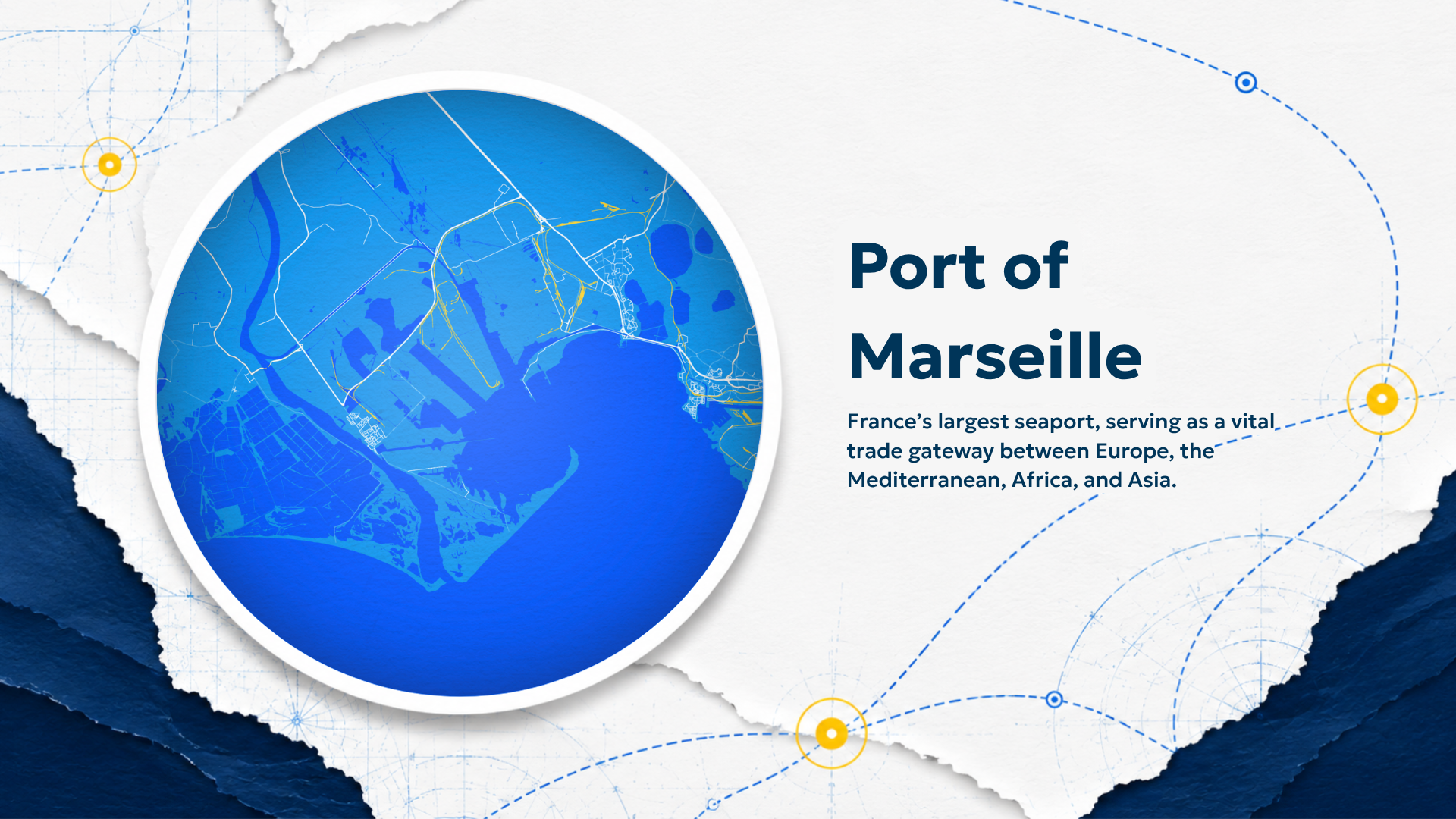
The Port of Marseille-Fos is France’s leading maritime gateway and one of the most important logistics hubs on the Mediterranean. Located on the southern coast of France, the port connects European importers and exporters with North Africa, the Middle East, Asia, the Mediterranean basin, and inland European markets through ocean freight, road, rail, river, and multimodal transport options.
For businesses moving containerized goods, refrigerated cargo, industrial freight, Ro-Ro cargo, breakbulk, bulk commodities, or project cargo, Marseille-Fos can serve as a strategic entry point into France and wider Western Europe. Dedola Global Logistics helps shippers evaluate routing options, coordinate international freight, manage documentation, support customs clearance, and plan the inland movement that happens after cargo reaches port.
Explore Ocean Freight Services
Port of Marseille-Fos Quick Facts
- Port name: Port of Marseille-Fos
- Location: Marseille and Fos-sur-Mer, southern France
- Primary role: France’s leading seaport and a major Mediterranean trade gateway
- Recent official merchandise figure: Approximately 74 million tonnes of merchandise
- Recent official vessel calls figure: Approximately 9,400 calls
- 2024 container volume: Approximately 1.45 million TEU
- Key cargo sectors: Containers, reefers, breakbulk, dry bulk, liquid bulk, Ro-Ro, vehicles, project cargo, industrial freight, and passenger traffic
- Multimodal access: Road, rail, river, and deep-water maritime connections
- Common trade lanes: Europe, North Africa, the Mediterranean, the Middle East, Asia, and transshipment networks
Why the Port of Marseille-Fos Matters for Global Trade
Marseille-Fos is not just a local French port. It is a major Mediterranean gateway for cargo moving between Europe and global markets. Its location gives shippers access to Southern France, inland France, Switzerland, Germany, Italy, Spain, North Africa, and wider Mediterranean trade routes.
The port’s value comes from its mix of deep-water access, container terminals, reefer infrastructure, bulk facilities, Ro-Ro capabilities, industrial zones, logistics services, and multimodal inland connections. For companies that need more than a simple port-to-port move, Marseille-Fos can support a full supply chain strategy that includes customs planning, inland delivery, warehousing, distribution, and modal comparisons.
Dedola helps importers and exporters determine whether Marseille-Fos is the best option for their shipment based on origin, destination, cargo type, delivery deadline, carrier availability, customs requirements, and total landed cost.
What Cargo Moves Through Marseille-Fos?
Marseille-Fos supports a wide range of cargo types, which makes it relevant for companies in retail, healthcare, energy, manufacturing, automotive, food, apparel, industrial equipment, and project cargo sectors.
Containers and General Cargo
Containerized freight is a major part of Marseille-Fos operations. The port serves shippers moving full-container load and less-than-container load cargo, including consumer goods, industrial components, retail merchandise, machinery parts, packaging, raw materials, and finished products.
Dedola’s ocean freight services can support FCL, LCL, consolidated cargo, import planning, export coordination, documentation review, and inland delivery from port to warehouse or final destination.
Refrigerated and Temperature-Sensitive Cargo
Marseille-Fos is also relevant for reefer cargo, including food, beverages, pharmaceuticals, medical products, and other temperature-sensitive goods. These shipments require careful planning around equipment availability, inspection requirements, customs documentation, delivery timing, and risk management.
For healthcare-related products, Dedola supports medical supplies and devices freight shipping with attention to documentation, compliance, shipment visibility, and reliable routing.
Fashion, Apparel, and Retail Supply Chains
Apparel and retail shippers often need to balance freight cost, seasonal deadlines, inventory planning, and sustainability goals. Marseille-Fos can be useful for European distribution when ocean freight aligns with the required delivery window. When speed becomes more important, Dedola can also compare ocean freight against air freight or multimodal alternatives.
Dedola works with brands and importers on fashion and apparel freight shipping, helping teams choose routes that support cost control, delivery reliability, and more thoughtful supply chain planning.
Automotive, Ro-Ro, and Industrial Cargo
Marseille-Fos supports Ro-Ro and vehicle-related cargo, making it relevant for automotive, equipment, manufacturing, and industrial shippers. Cargo may include finished vehicles, machinery, wheeled equipment, industrial parts, aftermarket components, and oversized units that require specialized handling.
For companies moving vehicle-related freight, Dedola also supports aftermarket auto parts imports with a focus on reliable routing, compliance, and documentation accuracy.
Bulk, Breakbulk, and Project Cargo
Marseille-Fos is also important for dry bulk, liquid bulk, breakbulk, and project cargo. These shipments may include energy products, industrial commodities, heavy machinery, oversized crates, infrastructure materials, and cargo that cannot move efficiently in standard containers.
Breakbulk and project cargo require more planning than a basic container shipment. Dedola helps coordinate shipment dimensions, weights, equipment needs, carrier requirements, lifting plans, permits, customs documentation, and inland delivery milestones before freight reaches the port.
How Dedola Supports Freight Through Marseille-Fos
Dedola Global Logistics helps businesses use Marseille-Fos as part of a complete logistics strategy. That means planning the shipment from origin to final delivery, not just booking port-to-port transportation.
Ocean Freight Coordination
Dedola coordinates ocean freight for containerized cargo, LCL shipments, project cargo, Ro-Ro freight, reefer cargo, and other international shipments moving through Mediterranean and European trade lanes. The team helps compare carrier options, transit times, cost implications, and delivery requirements so shippers can make routing decisions with more confidence.
Customs and Documentation Support
Cargo entering or leaving France must be supported by accurate commercial documents, classification details, valuation information, certificates when required, and customs-ready shipment data. Dedola helps coordinate customs brokerage support, documentation review, tariff code discussions, and compliance steps to reduce the risk of avoidable delays.
Inland Transport and European Distribution
Marseille-Fos can connect ocean freight to inland Europe by road, rail, and river. Dedola helps coordinate drayage, trucking, rail planning, transloading, warehousing, and delivery to distribution centers, retail networks, factories, or final consignee locations.
Multimodal Freight Planning
Not every shipment should move only by ocean. Some freight benefits from a mix of ocean, air, road, rail, and warehouse handling. Dedola can compare ocean freight, air freight, and multimodal options based on cost, urgency, cargo risk, and inventory pressure.
Shipment Visibility and Communication
International freight depends on timing and communication. Dedola helps shippers monitor cargo status, carrier updates, customs milestones, handoffs, and inland delivery progress so teams can plan around real shipment conditions instead of waiting for problems to surface.
When Marseille-Fos May Be the Right Port
The Port of Marseille-Fos can be a strong fit when companies need a Mediterranean entry point into France, Southern Europe, North Africa, or wider European markets. Businesses may consider Marseille-Fos when they need to:
- Move containerized cargo into or out of Southern France
- Serve European markets through Mediterranean trade lanes
- Coordinate refrigerated cargo, food products, medical supplies, or temperature-sensitive shipments
- Move Ro-Ro, vehicles, industrial cargo, or equipment
- Handle dry bulk, liquid bulk, breakbulk, or project cargo
- Use road, rail, or river connections for inland European distribution
- Compare Mediterranean routing against Northern European ports
- Reduce supply chain risk by evaluating alternate European gateways
The best routing decision depends on the shipment’s origin, destination, value, timing, cargo type, and final delivery requirements. Dedola helps compare these variables before cargo is booked, which is especially important for time-sensitive, regulated, or high-value shipments.
Industries That Use Marseille-Fos Freight Routing
Retail and Consumer Goods
Retail importers often use Mediterranean gateways to support European inventory planning. Marseille-Fos may be useful when final destinations are in France, Southern Europe, or connected inland markets. Dedola can help coordinate ocean freight, warehousing, customs, and delivery timing so inventory arrives when it is needed.
Fashion and Apparel
Fashion shippers need predictable timelines, careful cost control, and routing that supports seasonal demand. Dedola helps apparel companies evaluate whether ocean freight through Marseille-Fos, air freight, or a combined solution is the right fit for each shipment.
Medical Supplies and Healthcare Products
Medical devices, supplies, and related healthcare products require dependable shipping processes and strong documentation. Dedola helps coordinate freight planning for regulated and sensitive cargo moving by ocean, air, or multimodal transport.
Automotive and Industrial Goods
Marseille-Fos can support automotive, equipment, and industrial supply chains that require Ro-Ro services, containerized parts movement, machinery handling, or coordinated inland delivery. Dedola helps connect the ocean leg with customs, drayage, rail, truck, and final delivery requirements.
Energy, Bulk, and Project Cargo
Bulk and project cargo often involve heavy planning before the shipment moves. Dedola supports shippers with cargo profiling, documentation, routing analysis, carrier coordination, and inland logistics for large, heavy, or irregular freight.
Alternative Ports and Gateways to Compare
Marseille-Fos is a strong Mediterranean gateway, but it is not always the only option. Depending on the origin, cargo type, carrier schedule, and final destination, Dedola may compare Marseille-Fos against other ports and airports.
- Port of Mundra, India for India-origin cargo and Asia-Europe supply chains
- Port of Qingdao, China for China-origin ocean freight and transshipment planning
- Port of Galveston for Gulf Coast Ro-Ro, breakbulk, and project cargo routing
- Port of South Louisiana for bulk, energy, and Mississippi River cargo connections
- Liège Airport (LGG) for European air cargo and time-sensitive freight
- Dubai International Airport (DXB) for Middle East air cargo connections
Comparing gateways is especially useful when shippers need to balance speed, reliability, customs requirements, equipment availability, and total landed cost.
Planning a Shipment Through Marseille-Fos
Before choosing Marseille-Fos, shippers should prepare a clear freight profile. This allows Dedola to evaluate the right mode, port, carrier, documentation process, and inland delivery plan.
- Cargo type: Confirm whether the shipment is containerized, refrigerated, Ro-Ro, bulk, breakbulk, oversized, hazardous, or project cargo.
- Dimensions and weight: Provide accurate cargo measurements, gross weight, package count, and handling notes.
- Origin and destination: Include supplier location, port of loading, final delivery address, warehouse location, and consignee details.
- Timing: Identify cargo-ready date, required sailing window, delivery deadline, and any seasonal or contractual constraints.
- Documentation: Prepare commercial invoice, packing list, bill of lading instructions, tariff codes, certificates, and product-specific compliance records.
- Inland requirements: Confirm whether drayage, trucking, rail, river, warehousing, transloading, or final-mile delivery is needed.
- Risk factors: Note temperature sensitivity, high value, fragile cargo, customs complexity, hazardous classification, or delivery penalties.
With these details, Dedola can help determine whether Marseille-Fos is the best gateway or whether another ocean, air, or multimodal route would better support the shipment.
Need Help Shipping Through the Port of Marseille-Fos?
If your business is moving freight through France, the Mediterranean, North Africa, the Middle East, or inland Europe, Dedola can help you plan a smarter logistics strategy through Marseille-Fos.
Dedola supports ocean freight, air freight alternatives, customs coordination, documentation, inland delivery, shipment visibility, and multimodal supply chain planning.
Contact Dedola Global Logistics
Frequently Asked Questions About the Port of Marseille-Fos
What is the Port of Marseille-Fos known for?
The Port of Marseille-Fos is known as France’s leading seaport and a major Mediterranean logistics gateway. It supports containers, reefers, Ro-Ro, vehicles, dry bulk, liquid bulk, breakbulk, industrial cargo, passenger traffic, and multimodal distribution into Europe.
Is Marseille-Fos a good port for container shipping?
Yes. Marseille-Fos supports major container and reefer activity, with deep-water access, container terminals, reefer infrastructure, storage space, and road, river, and rail connections into European markets.
Can Dedola arrange ocean freight through Marseille-Fos?
Yes. Dedola can help coordinate ocean freight, customs documentation, inland transportation, multimodal routing, shipment visibility, and delivery planning for cargo moving through Marseille-Fos when the route fits the shipment requirements.
What cargo types are a good fit for Marseille-Fos?
Marseille-Fos can be a strong fit for containerized goods, refrigerated cargo, apparel, medical supplies, automotive parts, industrial cargo, Ro-Ro freight, breakbulk shipments, bulk commodities, and project cargo.
Should I use Marseille-Fos or a Northern European port?
The best choice depends on origin, destination, carrier service, inland delivery point, cargo type, timing, and total landed cost. Marseille-Fos may be a better fit for Southern France, Mediterranean, North Africa, and certain inland European routes, while Northern European ports may be stronger for other trade lanes.