Belgium Air Cargo Gateway
Liège Airport (LGG): Belgium’s Cargo Gateway for Air Freight and Multimodal Shipping
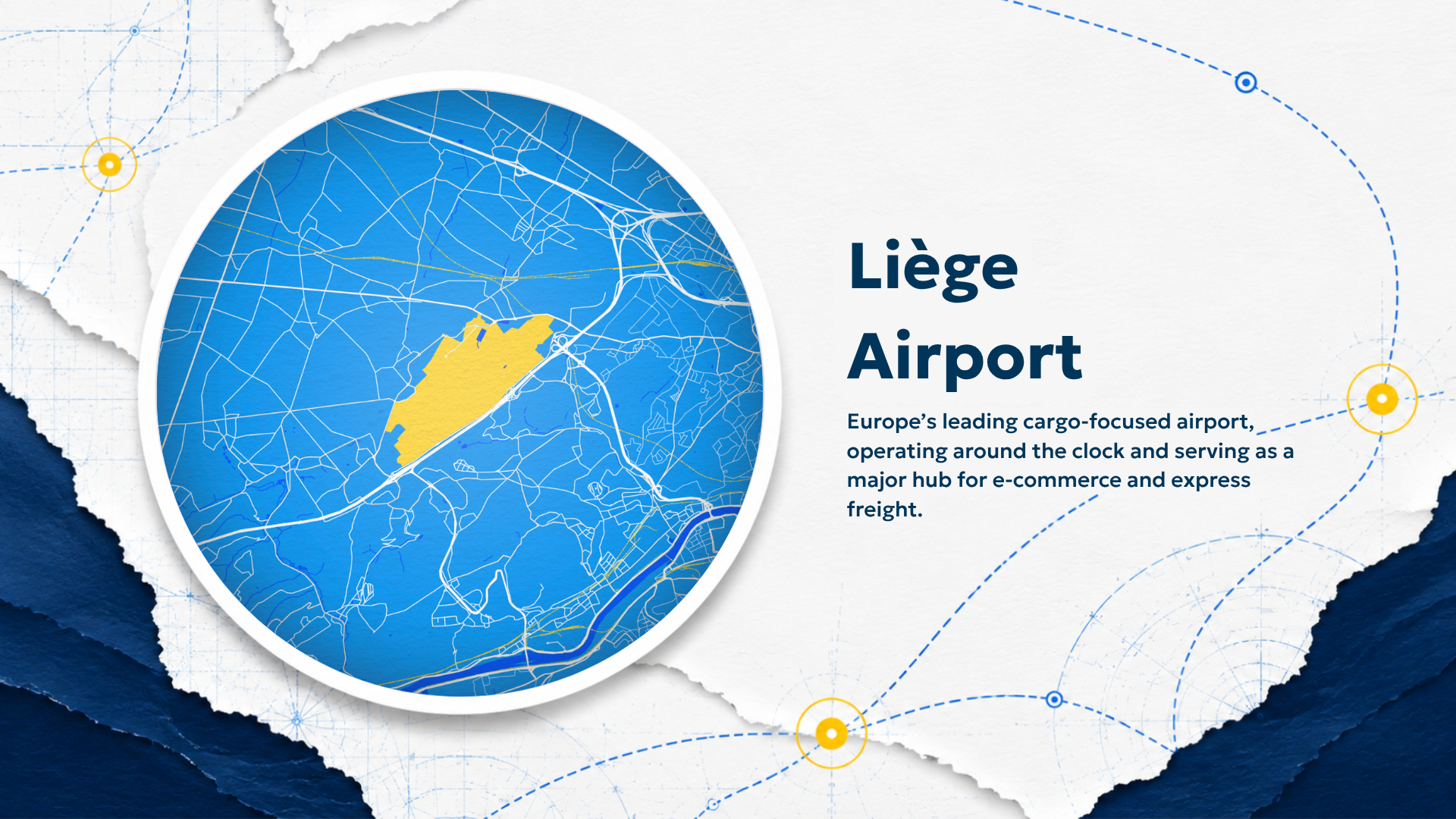
Liège Airport (LGG) is one of Europe’s most important cargo-focused airports, serving importers, exporters, e-commerce brands, manufacturers, medical suppliers, and time-sensitive shippers moving freight through the heart of Western Europe. Located near the Amsterdam–Paris–Frankfurt logistics corridor, LGG gives businesses direct access to major European markets while supporting 24/7 cargo activity, customs availability, and multimodal connections.
For companies that need dependable international freight support through Belgium, Dedola Global Logistics helps coordinate air freight, customs clearance, documentation, multimodal routing, and supply chain visibility from origin to final delivery.
Liège Airport (LGG) Quick Facts
- Airport name: Liège Airport
- IATA code: LGG
- Location: Grâce-Hollogne, near Liège, Belgium
- Primary role: Cargo airport and European logistics hub
- 2025 cargo volume: Approximately 1.325 million tons of freight
- European ranking: Top-five cargo airport in Europe
- Operating advantage: Open and operational 24 hours a day, seven days a week
- Common cargo types: E-commerce, express parcels, pharmaceuticals, medical equipment, perishables, flowers, live animals, oversized cargo, and high-value goods
Why Liège Airport Matters for European Air Freight
Liège Airport has become a strategic cargo gateway because it is built around freight activity rather than passenger-first operations. That matters for shippers moving time-sensitive cargo, because cargo-focused infrastructure can reduce handoff complexity and support faster coordination between airlines, handlers, customs teams, and inland transportation providers.
LGG is especially valuable for companies that need access to Belgium, France, the Netherlands, Germany, Luxembourg, and wider European distribution networks. Its location near major road links allows freight arriving by air to be moved quickly into regional trucking lanes, consolidation points, fulfillment centers, and final-mile delivery networks.
For importers and exporters, this makes LGG more than an airport. It can function as a European cargo entry point, a transshipment hub, or a flexible alternative when traditional ocean gateways are congested, delayed, or too slow for the shipment’s timeline.
What Types of Cargo Move Through Liège Airport?
Liège Airport is used for a wide range of cargo, from urgent industrial parts to delicate healthcare products. Its cargo ecosystem is particularly relevant for businesses that need speed, reliability, and careful handling.
E-commerce and Express Parcels
LGG is a major European node for e-commerce and express parcel flows. This makes it useful for brands, marketplaces, and distributors that need fast replenishment, regional parcel injection, or air-to-road movement across Europe.
Medical Supplies, Devices, and Pharmaceuticals
Medical logistics often requires tight documentation, controlled handling, and reliable transport timing. Companies shipping healthcare products can benefit from pairing LGG’s cargo capabilities with Dedola’s freight coordination, documentation review, and compliance-focused support for medical supplies and devices freight shipping.
Fashion, Apparel, and Retail Goods
For fashion and apparel brands, air freight through LGG can help protect launch dates, retail replenishment windows, and seasonal promotions. When ocean freight is too slow or inventory risk is too high, Dedola can help evaluate whether air freight, deferred air, or multimodal shipping is the better fit. Learn more about Dedola’s support for fashion and apparel freight shipping.
Automotive and Aftermarket Parts
Automotive parts importers often rely on predictable timelines to avoid production delays, backorders, or service disruption. LGG can be a useful European gateway for urgent, high-value, or replenishment-driven parts shipments. Dedola also supports aftermarket auto parts imports with attention to compliance, documentation, and dependable routing.
Perishables, Flowers, Live Animals, and Special Cargo
LGG is also known for specialized cargo categories such as perishables, flowers, live animals, express shipments, oversized freight, and temperature-sensitive products. These shipments require more than a booking; they require careful planning around timing, handling, customs, transfer points, and final delivery.
How Dedola Supports Shipments Through Liège Airport
Dedola Global Logistics helps importers and exporters plan air cargo movements around the full shipment lifecycle, not just the airport transfer. That includes origin coordination, supplier communication, booking strategy, customs documentation, cargo insurance review, visibility, and delivery planning.
Air Freight Planning
Dedola’s air freight services can support direct, express, deferred, consolidated, and multimodal air solutions depending on the urgency, value, size, and delivery requirements of the shipment. For LGG cargo, this can include urgent freight moving into Europe, deferred air when cost control matters, or air-sea routing when shippers need a balance between speed and budget.
Customs, Documentation, and Compliance Support
International cargo moving through Belgium requires clean documentation and proactive compliance review. Dedola helps coordinate commercial documents, tariff code review, customs brokerage support, export documentation, and communication with relevant parties so cargo is less likely to be delayed by preventable paperwork issues.
Ground, Rail, and Multimodal Coordination
The value of LGG depends on what happens after cargo lands. Dedola can coordinate the next leg by truck, rail, ocean, or combined modes, helping businesses move freight from the airport into warehouses, fulfillment centers, retail networks, factories, or final delivery points.
Shipment Visibility
For time-sensitive cargo, visibility is critical. Dedola supports proactive tracking and communication so importers know where shipments stand, which handoffs are complete, and whether any routing or customs issue needs attention.
When LGG Air Freight Makes the Most Sense
Liège Airport can be a strong option when speed, flexibility, and central European access matter. Businesses may consider routing through LGG when they need to:
- Move urgent cargo into Belgium, France, Germany, the Netherlands, or Luxembourg
- Recover from ocean freight delays or port congestion
- Support e-commerce fulfillment or retail replenishment in Europe
- Ship high-value, medical, automotive, apparel, or seasonal goods
- Coordinate air freight with inland trucking, rail, or ocean freight
- Reduce disruption when other European gateways are constrained
Not every shipment needs air freight. When transit time allows, ocean freight may offer a more cost-efficient option. Dedola can compare air, ocean, and multimodal routing so your team is not choosing based on speed alone, but on landed cost, inventory urgency, risk, and delivery commitments.
Air and Ocean Routing Alternatives to Consider
LGG is often part of a broader international shipping strategy. Depending on origin, destination, lead time, and cargo type, Dedola may also evaluate other gateways for better cost, capacity, or final-mile performance.
- Port of Marseille, France for ocean freight access into Southern France and the Mediterranean region
- Port of Mundra, India for India-origin ocean freight and export planning
- Port of Qingdao, China for China-origin ocean shipping and Asia-Europe supply chains
- Dubai International Airport (DXB) for Middle East air cargo connections
- Memphis International Airport (MEM) for U.S. express and time-sensitive cargo networks
The right gateway depends on more than the closest port or airport. Shipment value, delivery date, customs requirements, inland distance, inventory pressure, and available carrier capacity all affect the best routing decision.
Planning a Shipment Through Liège Airport
If your cargo may move through LGG, start with a clear shipment profile. This helps determine whether the shipment should move by express air, deferred air, consolidated air, air-sea, or another multimodal option.
- Origin and destination: Include supplier location, airport, warehouse, and final delivery address.
- Cargo details: Provide dimensions, weight, commodity type, value, packaging, and handling requirements.
- Timing: Identify required pickup date, arrival deadline, and whether delivery is flexible.
- Compliance needs: Confirm tariff codes, product restrictions, licenses, certificates, and required customs documentation.
- Risk factors: Note temperature sensitivity, high value, fragility, hazardous classification, or delivery penalties.
- Budget priorities: Decide whether speed, cost, predictability, or risk reduction is the main driver.
With this information, Dedola can help compare viable freight options and recommend a route that fits your business goals.
Need Help Moving Freight Through Liège Airport?
Whether you are moving urgent air cargo, high-value products, medical supplies, apparel, automotive parts, or e-commerce inventory, Dedola can help you plan the right international freight strategy through LGG and beyond.
Work with a logistics team that understands air freight, ocean freight, customs, multimodal routing, and supply chain visibility.
Contact Dedola Global Logistics
Frequently Asked Questions About Liège Airport (LGG)
What is Liège Airport used for?
Liège Airport is primarily known as a major European cargo airport. It supports e-commerce, express parcels, medical logistics, perishables, flowers, live animals, oversized freight, and other time-sensitive cargo moving through Belgium and Western Europe.
Why is Liège Airport important for air freight?
LGG is important because it combines central European access, cargo-focused infrastructure, 24/7 operations, and strong road connectivity. This makes it useful for companies that need fast movement into Belgium, France, Germany, the Netherlands, Luxembourg, and nearby markets.
Can Dedola arrange air freight through Liège Airport?
Yes. Dedola can help coordinate international air freight, customs support, documentation, tracking, and inland delivery planning for shipments moving through LGG, depending on cargo requirements and available routing options.
Is air freight through LGG better than ocean freight?
Air freight through LGG is usually better when speed, high-value cargo, or urgent delivery matters. Ocean freight is often more cost-effective for larger or less time-sensitive shipments. Dedola can help compare air, ocean, and multimodal options based on cost, timing, and supply chain risk.
What cargo types are a good fit for Liège Airport?
LGG can be a strong fit for e-commerce goods, medical supplies, pharmaceuticals, apparel, automotive parts, perishables, flowers, live animals, express shipments, and high-value products that require reliable cargo handling and efficient European distribution.