Mississippi River Freight Gateway
Port of South Louisiana: Mississippi River Freight, Grain Exports, Bulk Cargo, and Global Logistics Support
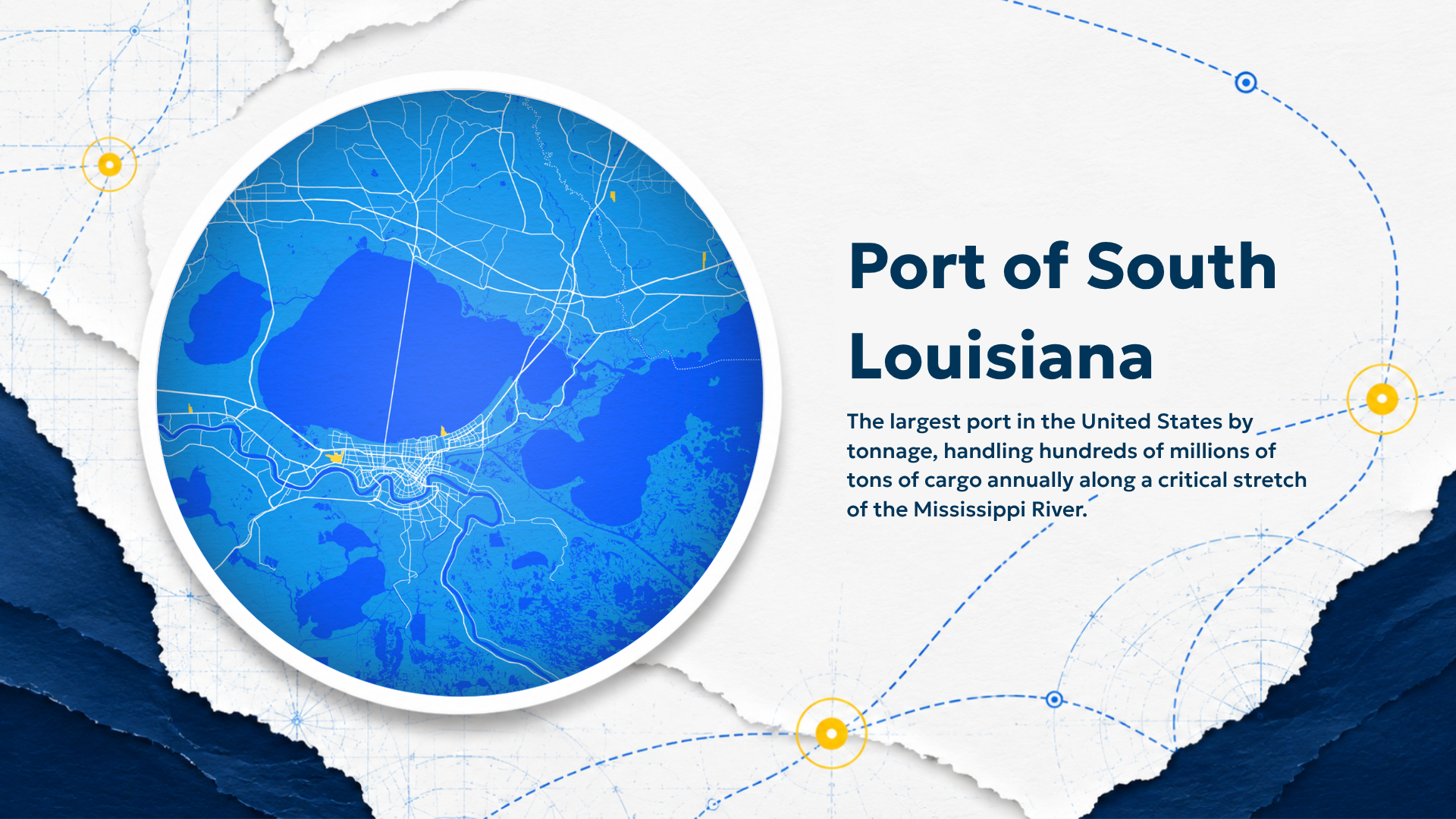
The Port of South Louisiana is one of the most important tonnage port districts in the United States and a critical gateway for cargo moving along the Lower Mississippi River. Stretching 54 miles through St. Charles, St. John the Baptist, and St. James parishes, the port supports grain exports, petroleum products, petrochemicals, dry bulk, liquid bulk, industrial cargo, barge traffic, deep-draft vessels, and multimodal supply chains connected to the Gulf of Mexico.
For shippers moving agricultural commodities, energy products, raw materials, industrial freight, or international cargo through Louisiana, the Port of South Louisiana can be a strategic connection point between inland river transportation, ocean freight, rail, truck, pipeline, warehousing, and global markets. Dedola Global Logistics helps businesses evaluate routing options, coordinate freight movement, support customs documentation, and connect port activity with broader supply chain planning.
Explore Ocean Freight Services
Port of South Louisiana Quick Facts
- Port name: Port of South Louisiana
- Location: Lower Mississippi River, Louisiana
- Port district: 54 miles along the Mississippi River through St. Charles, St. John the Baptist, and St. James parishes
- Primary role: Major U.S. tonnage port, grain export gateway, and bulk cargo corridor
- 2025 total trade: Approximately 248.3 million short tons
- Facilities: More than 40 liquid and dry bulk terminals, seven grain elevators, Globalplex Intermodal Terminal, and multiple midstream operations
- Vessel and barge activity: Thousands of deep-draft vessel calls and tens of thousands of barge movements
- Grain exports: Handles a significant share of U.S. grain export movement, including maize, soybeans, wheat, animal feed, sorghum, and rice
- Key cargo types: Grain, crude oil, petroleum products, petrochemicals, chemicals, dry bulk, liquid bulk, fertilizers, minerals, industrial cargo, and project freight
- Transportation access: Mississippi River, Gulf of Mexico access, Class I rail connections, interstate highways, pipelines, terminals, and air cargo access through nearby airports
Why the Port of South Louisiana Matters for Global Trade
The Port of South Louisiana is not a traditional container-focused coastal gateway. Its importance comes from scale, commodity flow, and access to the Mississippi River system. The port connects inland U.S. production, agriculture, energy, petrochemicals, and manufacturing with Gulf Coast export routes and international markets.
This makes the port especially important for shippers moving high-volume cargo. Grain, petroleum products, petrochemicals, liquid bulk, dry bulk, and industrial materials often depend on river, barge, terminal, and deep-draft vessel coordination. For companies operating in these sectors, the right logistics plan must account for more than a vessel booking. It must include inland origin, terminal capability, documentation, customs requirements, storage, handling, and final destination.
Dedola helps shippers compare ocean, river, rail, truck, air, and multimodal options so freight decisions are based on cargo requirements, delivery timing, risk, and total landed cost.
What Cargo Moves Through the Port of South Louisiana?
The Port of South Louisiana supports some of the most important commodity flows in the United States. Its cargo profile is especially relevant for agricultural exporters, energy companies, chemical producers, industrial manufacturers, and businesses that depend on bulk or multimodal freight movement.
Grain and Agricultural Exports
Grain is one of the defining cargo categories for the Port of South Louisiana. The port plays a major role in U.S. export movement for maize, soybeans, wheat, animal feed, sorghum, rice, and related agricultural commodities. These shipments often require coordination between inland elevators, barges, rail, terminals, deep-draft vessels, documentation teams, and overseas buyers.
Dedola can help agricultural and commodity shippers evaluate routing, export documentation, customs requirements, ocean freight options, and downstream delivery needs when cargo moves from inland origin points to global markets.
Petroleum, Petrochemicals, and Energy Products
The Lower Mississippi River corridor is a major energy and petrochemical region. The Port of South Louisiana supports cargo tied to crude oil, petroleum products, mineral fuels, chemicals, petrochemical feedstocks, and related industrial flows. These shipments require careful planning around safety, documentation, storage, terminal access, product handling, and regulatory requirements.
For shippers moving energy or chemical cargo, Dedola helps coordinate the freight-forwarding side of the supply chain by aligning carriers, brokers, terminals, inland providers, documentation, and visibility milestones.
Dry Bulk and Liquid Bulk Cargo
Dry and liquid bulk cargo is central to the port’s role. Depending on the commodity, shipments may require specialized terminal capabilities, tankage, covered storage, conveyors, pipelines, barges, bulk vessels, or transloading support. Bulk freight planning must account for volume, commodity risk, equipment availability, inspection needs, and the timing of river and vessel movements.
Industrial Materials and Project Cargo
The port’s industrial setting makes it relevant for heavy materials, machinery, equipment, infrastructure components, and project cargo. These shipments may require route surveys, permits, escorts, lift planning, terminal coordination, and inland transport by truck, rail, barge, or a combination of modes.
Containerized and Manufactured Goods
While the Port of South Louisiana is better known for tonnage, bulk, grain, and energy cargo, some companies may still need containerized or manufactured goods connected to Louisiana distribution points. In those cases, Dedola can compare the port’s role against other Gulf Coast gateways, rail ramps, airports, and ocean freight options.
How Dedola Supports Freight Through the Port of South Louisiana
Dedola Global Logistics is a freight forwarder and logistics partner. Dedola does not operate the Port of South Louisiana, own terminals, or run the vessels serving the port. Instead, Dedola helps businesses coordinate international and domestic freight through trusted carrier, broker, terminal, warehouse, customs, and inland transportation networks.
Ocean Freight Coordination
Dedola’s ocean freight services can support international freight connected to the Port of South Louisiana, including bulk-adjacent planning, project cargo, breakbulk, containerized freight, FCL, LCL, and multimodal ocean solutions where appropriate.
River, Rail, Truck, and Multimodal Planning
Shipments connected to South Louisiana often involve multiple modes. Cargo may move by barge down the Mississippi River, by rail into the port district, by truck to a terminal or warehouse, by pipeline for certain liquid products, and by ocean vessel to international markets. Dedola helps evaluate these options and coordinate the handoffs that keep freight moving.
Customs, Documentation, and Compliance Support
International cargo requires accurate documentation, including commercial invoices, packing lists, bills of lading, export documents, tariff classifications, certificates, product details, and customs-ready shipment data. Dedola helps coordinate customs brokerage support and documentation review so preventable delays are less likely to disrupt the shipment.
Commodity and Industrial Freight Coordination
Agricultural, energy, chemical, and industrial freight can be more complex than standard retail cargo. Dedola helps shippers think through commodity type, terminal requirements, cargo value, storage needs, delivery timing, handling constraints, and visibility requirements before the shipment is booked.
Air Freight and Time-Sensitive Alternatives
Some cargo connected to Louisiana cannot wait for ocean or river schedules. When urgency is the priority, Dedola can compare air freight services against ocean, truck, rail, and multimodal options so shippers can choose the right balance of speed, cost, and risk.
Shipment Visibility and Communication
Port, river, and multimodal freight often involves many parties. Dedola helps shippers monitor shipment milestones, carrier updates, customs status, terminal activity, inland movement, and delivery progress so teams are not left guessing when cargo changes hands.
When the Port of South Louisiana May Be the Right Gateway
The Port of South Louisiana can be a strong fit when cargo is tied to the Mississippi River system, Gulf Coast export routes, high-volume commodities, or industrial supply chains. Businesses may consider this gateway when they need to:
- Export grain, agricultural products, animal feed, or related commodities
- Move petroleum products, petrochemicals, chemicals, or liquid bulk cargo
- Coordinate dry bulk, fertilizers, minerals, or industrial materials
- Connect inland river cargo with deep-draft ocean vessels
- Use barge, rail, truck, pipeline, warehouse, and terminal networks in one freight plan
- Ship project cargo, heavy equipment, or industrial components through Louisiana
- Compare Gulf Coast routing against East Coast, West Coast, or inland options
- Build a multimodal strategy for domestic and international freight movement
The best choice depends on cargo type, origin, destination, volume, handling requirements, delivery deadline, customs needs, and final landed cost. Dedola helps compare these variables before freight is committed to a route.
Industries That May Use South Louisiana Freight Routing
Agriculture and Food Supply Chains
Grain exporters, food producers, agricultural suppliers, and commodity traders may use South Louisiana routing for high-volume export movement. Dedola can help coordinate logistics planning around commodity flow, documentation, ocean freight, inland transport, and international delivery requirements.
Energy, Chemicals, and Petrochemicals
The region’s energy and petrochemical activity makes the port important for liquid bulk, petroleum products, mineral fuels, chemical cargo, and industrial inputs. These shipments require careful planning around safety, documentation, terminal capability, and regulatory requirements.
Industrial Manufacturing and Project Cargo
Manufacturers and industrial shippers may use the port for heavy cargo, equipment, raw materials, machinery, fabricated components, and project freight. Dedola helps connect these moves with inland transport, ocean freight, customs, warehousing, and shipment visibility.
Automotive and Aftermarket Parts
Louisiana routing may support automotive-related freight when ocean, inland, or Gulf Coast distribution makes sense. Dedola also helps companies manage aftermarket auto parts imports with documentation, compliance, routing, and delivery visibility.
Medical Supplies and Devices
Medical freight is not the port’s defining cargo category, but healthcare shippers may still need Gulf Coast logistics, customs support, warehousing, and multimodal transport. Dedola supports medical supplies and devices freight shipping by ocean, air, and multimodal routes.
Fashion, Apparel, and Consumer Goods
Some retail and apparel shipments may route through Gulf Coast gateways depending on supplier origin, final destination, and delivery timing. Dedola helps brands compare fashion and apparel freight shipping options across ocean, air, rail, truck, and multimodal solutions.
Alternative Ports and Gateways to Compare
South Louisiana is a strong choice for grain, bulk, energy, petrochemicals, and Mississippi River-connected cargo, but not every shipment belongs on the same route. Depending on cargo type, origin, destination, and urgency, Dedola may compare it with other gateways.
- Port of Galveston for Gulf Coast Ro-Ro, breakbulk, vehicles, and project cargo routing
- Port of Huntington Tri-State for inland river freight and heavy industrial cargo planning
- Port of Pittsburgh for Ohio River system cargo and inland multimodal freight
- Port of Mundra, India for India-origin container, bulk, and project cargo
- Port of Qingdao, China for China-origin container, bulk, and industrial freight
- Port of Marseille-Fos, France for Mediterranean and European ocean freight options
- Memphis International Airport (MEM) for time-sensitive air cargo and express freight connections
Gateway comparison is especially useful when freight has high value, strict delivery timing, commodity-specific handling needs, customs complexity, or changing capacity conditions.
Planning a Shipment Through the Port of South Louisiana
Before routing freight through the Port of South Louisiana, shippers should prepare a complete cargo profile. This helps Dedola compare river, rail, truck, pipeline, ocean, air, warehouse, and terminal options before the shipment moves.
- Cargo type: Confirm whether the shipment is grain, agricultural cargo, dry bulk, liquid bulk, petroleum, petrochemical, industrial, containerized, breakbulk, oversized, or project cargo.
- Commodity details: Include product description, handling requirements, storage needs, safety restrictions, and any product-specific regulations.
- Volume and weight: Provide tonnage, unit count, dimensions, packaging, bulk handling requirements, and any loading or discharge constraints.
- Origin and destination: Include farm, elevator, refinery, plant, terminal, warehouse, port, rail ramp, buyer, or final delivery location.
- Timing: Identify cargo-ready date, delivery deadline, vessel window, river movement constraints, and seasonal considerations.
- Documentation: Prepare commercial documents, bill of lading instructions, classification details, certificates, export records, and customs documentation where applicable.
- Inland requirements: Confirm whether barge, rail, truck, pipeline, warehousing, transloading, permits, escorts, or final delivery will be needed.
- Budget and risk: Decide whether the priority is lowest landed cost, predictable timing, reduced handling, faster delivery, or supply chain resilience.
With these details, Dedola can help determine whether the Port of South Louisiana is the best gateway or whether another Gulf Coast, inland, ocean, air, or multimodal option would better fit the shipment.
Need Help Shipping Through the Port of South Louisiana?
If your cargo is connected to the Mississippi River, Gulf Coast exports, grain, petroleum, petrochemicals, dry bulk, liquid bulk, industrial materials, or project freight, Dedola can help build a practical logistics plan.
Dedola supports ocean freight, air freight alternatives, customs coordination, documentation, inland transportation, shipment visibility, warehousing, and multimodal supply chain planning.
Contact Dedola Global Logistics
Frequently Asked Questions About the Port of South Louisiana
What is the Port of South Louisiana known for?
The Port of South Louisiana is known for high-volume cargo movement along the Lower Mississippi River, especially grain exports, petroleum products, petrochemicals, dry bulk, liquid bulk, barge traffic, and deep-draft vessel activity.
Where is the Port of South Louisiana located?
The Port of South Louisiana stretches 54 miles along the Mississippi River through St. Charles, St. John the Baptist, and St. James parishes in southeastern Louisiana.
What cargo moves through the Port of South Louisiana?
Common cargo includes grain, maize, soybeans, wheat, animal feed, petroleum products, crude oil, petrochemicals, chemicals, fertilizers, minerals, dry bulk, liquid bulk, industrial materials, and project cargo.
Can Dedola arrange freight through the Port of South Louisiana?
Yes. Dedola can help coordinate ocean freight, inland transportation, customs documentation, multimodal planning, shipment visibility, and supply chain support for cargo connected to the Port of South Louisiana.
Does Dedola operate terminals or vessels at the Port of South Louisiana?
No. Dedola is a freight forwarder and logistics partner, not a terminal operator or vessel owner. Dedola coordinates shipments through carrier, broker, terminal, warehouse, customs, and inland transportation networks.
When is the Port of South Louisiana a good routing option?
The port can be a good option for high-volume grain, bulk, petroleum, petrochemical, industrial, river-connected, or Gulf Coast export cargo. The best routing choice depends on cargo type, origin, destination, timing, terminal capability, and total landed cost.