U.S. Inland Waterway Gateway
Port of Pittsburgh: Inland Waterway Freight, Barge Logistics, and Multimodal Shipping Support
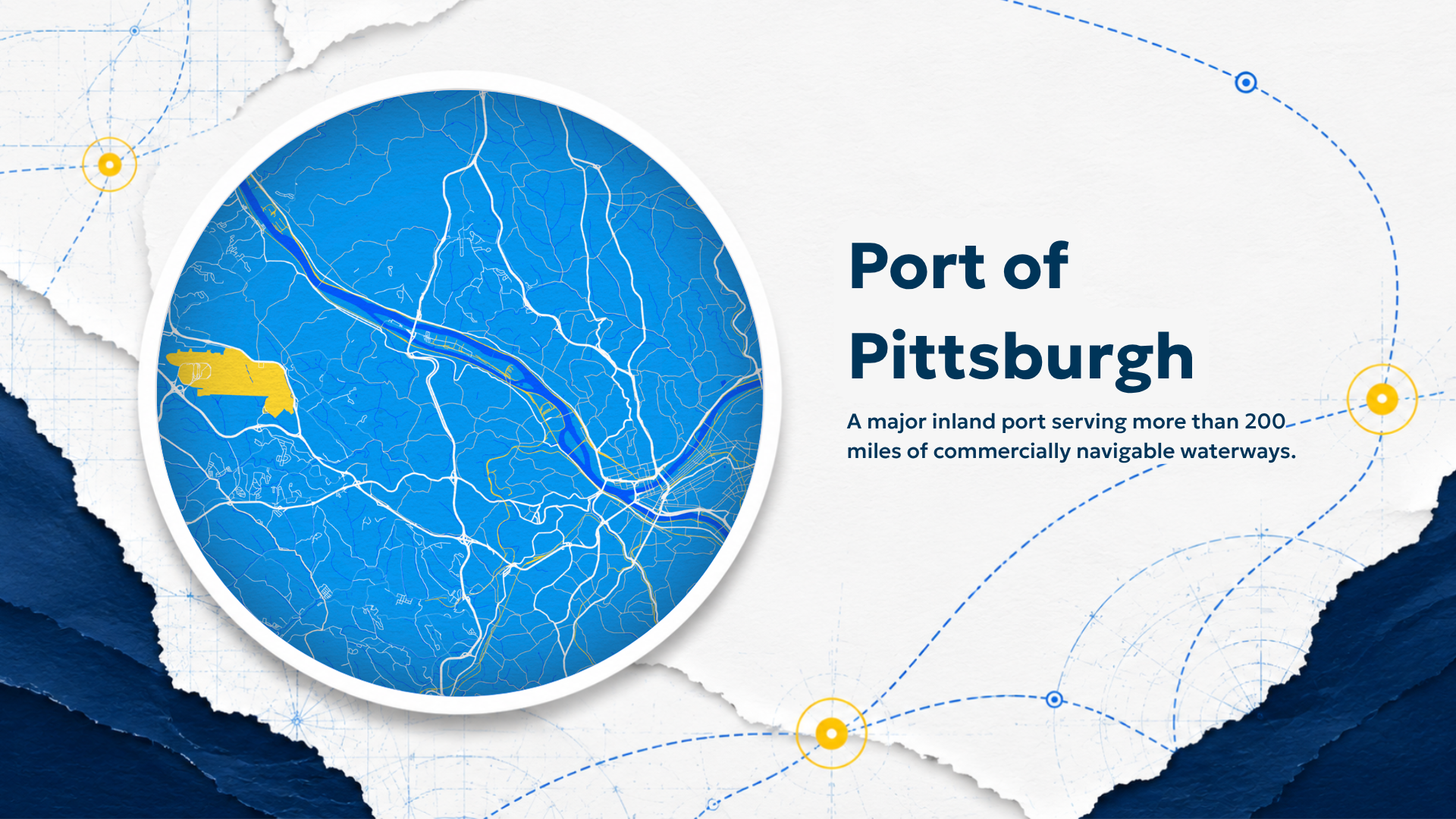
The Port of Pittsburgh is one of the most important inland waterway systems in the United States. Unlike a coastal seaport, it is a river-based freight network built around the Allegheny, Monongahela, and Ohio rivers, serving industrial shippers, bulk cargo operators, energy companies, steel producers, construction suppliers, manufacturers, and inland freight networks across southwestern Pennsylvania.
The Pittsburgh Port District includes 200 miles of commercially navigable waterways, a network of locks and dams, more than 200 river terminals and barge industry service suppliers, major rail access, and interstate highway connections. For companies that need to connect inland cargo with domestic or international markets, Dedola Global Logistics can help evaluate river, rail, truck, ocean, and air options as part of a complete freight strategy.
Explore Ocean Freight Services
Port of Pittsburgh Quick Facts
- Port name: Port of Pittsburgh
- Location: Southwestern Pennsylvania
- Primary role: Inland river port and multimodal freight district
- Waterways: Allegheny River, Monongahela River, and Ohio River
- Commercial waterways: Approximately 200 miles
- Port district: 13-county area in southwestern Pennsylvania
- Terminals and suppliers: More than 200 river terminals and barge industry service suppliers
- Rail access: Served by CSX and Norfolk Southern
- Highway access: Connected to four interstate highways
- 2020 cargo volume: Approximately 15.5 million tons
- Key cargo types: Coal, steel, aggregates, scrap, petroleum products, road salt, fertilizers, cement, lime, glass, bulk materials, and industrial cargo
Why the Port of Pittsburgh Matters for Inland Freight
The Port of Pittsburgh plays a different role than coastal ports such as Los Angeles, New York/New Jersey, Savannah, or Houston. It is an inland freight network that helps move heavy, bulk, industrial, and energy-related cargo by barge through the Ohio River system and onward toward the Mississippi River, Gulf Coast, and broader U.S. inland waterway network.
This makes Pittsburgh especially important for shippers moving dense, heavy, or high-volume cargo that may be more efficient by barge than by truck alone. River freight can support regional industries while helping reduce highway congestion, lower per-ton transport costs, and connect inland production sites with larger domestic and international freight corridors.
Dedola helps businesses evaluate when Pittsburgh-area river logistics make sense, when rail or truck is more practical, and when cargo should connect to a coastal port for international ocean freight.
What Cargo Moves Through the Port of Pittsburgh?
Pittsburgh’s inland waterway network is especially relevant for industrial and bulk cargo. While the port is not a container-first ocean gateway, it supports the movement of materials that are central to manufacturing, construction, energy, infrastructure, and regional supply chains.
Coal, Coke, and Energy-Related Cargo
Coal has historically been one of the dominant commodities in the Pittsburgh Port District. The river system supports cargo tied to power generation, metallurgical coal, coke production, industrial fuel supply, and energy-related manufacturing. These shipments often move in high volumes and require close coordination with terminals, barge operators, industrial facilities, and inland delivery points.
Steel, Scrap, and Industrial Materials
Pittsburgh’s industrial economy depends on the movement of steel, iron products, scrap, non-ferrous ores, and related raw materials. Inland barge transport can be useful when cargo is heavy, dense, or better suited to waterborne movement than long-haul trucking.
Dedola can help industrial shippers connect inland freight planning with broader domestic or international supply chains, including ocean freight routing when cargo needs to move through a Gulf Coast or East Coast port.
Aggregates, Cement, Lime, Asphalt, and Construction Materials
The Port of Pittsburgh also supports construction and infrastructure cargo, including sand and gravel, cement, lime, asphalt, gypsum, road salt, and related bulk materials. These commodities often require efficient high-volume movement and dependable terminal access.
Petroleum Products, Chemicals, and Liquid Cargo
Petroleum products and chemical-related cargo can move through the regional river network, including gasoline, kerosene, fuel oils, solvents, asphalt products, and similar industrial materials. These shipments require careful attention to safety, documentation, storage, handling, and delivery planning.
Manufacturing and Project Cargo
For manufacturers and industrial suppliers, the Pittsburgh river system may support oversized, heavy, or project-based cargo when barge access is available. Project cargo can include machinery, fabricated materials, plant equipment, infrastructure components, and large freight that requires coordination across terminal handling, permits, escorts, and final delivery.
How Dedola Supports Freight Connected to Pittsburgh
Dedola Global Logistics does not operate the Port of Pittsburgh, own river terminals, or run barge vessels. Dedola is a freight forwarder and logistics partner that helps businesses coordinate the larger freight plan around inland, domestic, and international movement.
Inland and Multimodal Freight Planning
Pittsburgh freight often involves more than one mode. Cargo may move by barge, rail, truck, warehouse transfer, ocean vessel, or air depending on origin, destination, timing, commodity type, and cost requirements. Dedola helps compare these options so shippers can choose a practical route instead of relying on a one-size-fits-all plan.
Ocean Freight Connections
When Pittsburgh-area cargo needs to move internationally, Dedola can help connect inland movement with ocean freight services through suitable coastal or Gulf Coast gateways. This may include FCL, LCL, breakbulk, Ro-Ro, project cargo, or other ocean solutions depending on the shipment profile.
Air Freight Alternatives
Some cargo cannot wait for barge, rail, or ocean schedules. When delivery timing is urgent, Dedola can compare inland movement against air freight services to determine whether expedited transport is justified by the cargo value, deadline, or supply chain risk.
Customs, Documentation, and Compliance Support
International shipments connected to Pittsburgh require accurate commercial invoices, packing lists, bills of lading, tariff classifications, certificates, and customs-ready documentation. Dedola helps coordinate customs brokerage support and documentation review so preventable clearance issues are less likely to delay the shipment.
Industrial and Project Cargo Coordination
Heavy industrial cargo requires careful planning around dimensions, weight, terminal capabilities, loading methods, permits, route restrictions, and delivery windows. Dedola helps coordinate the parties involved, including shippers, consignees, carriers, brokers, warehouses, and inland transportation providers.
Shipment Visibility and Communication
Inland freight can involve many handoffs. Dedola helps customers monitor shipment milestones, carrier updates, customs status, inland transfers, warehouse activity, and final delivery progress so teams have better visibility across the full shipment lifecycle.
When Pittsburgh Inland Freight May Be the Right Fit
The Port of Pittsburgh can be useful when cargo is heavy, dense, bulk-oriented, industrial, or connected to facilities with practical river, rail, or highway access. Businesses may consider Pittsburgh-area river logistics when they need to:
- Move bulk commodities through southwestern Pennsylvania
- Transport coal, coke, steel, scrap, aggregates, cement, lime, road salt, or petroleum products
- Connect industrial facilities with the Ohio River and Mississippi River systems
- Evaluate barge, rail, and truck options for inland cargo
- Move heavy or oversized freight that may not be efficient by truck alone
- Connect inland freight to Gulf Coast or East Coast ocean gateways
- Reduce transportation costs for high-volume cargo where barge service is available
- Build a multimodal strategy for domestic and international supply chains
Pittsburgh is not always the best fit for standard containerized imports, small parcels, or time-sensitive consumer goods. For those shipments, Dedola may recommend direct ocean freight through a coastal port, air freight, truckload, rail, or a blended multimodal approach.
Industries That May Use Pittsburgh Freight Routing
Steel and Manufacturing
Steel producers, fabricators, manufacturers, and industrial suppliers may use Pittsburgh-area freight routes for raw materials, finished products, machinery, and heavy cargo. Dedola can help coordinate domestic movement and international routing when freight needs to connect to ports outside the region.
Energy and Bulk Commodities
Energy shippers and bulk commodity teams may use inland waterways for coal, fuel products, minerals, and industrial materials. These shipments often require planning around terminal capabilities, barge service, safety requirements, and downstream delivery.
Construction and Infrastructure
Construction suppliers may use the Pittsburgh river network for aggregates, cement, asphalt, lime, gypsum, road salt, and other heavy materials. Dedola can help evaluate truck, rail, barge, and warehousing options when projects require predictable delivery and cost control.
Automotive and Industrial Parts
Automotive suppliers and industrial parts companies may rely on Pittsburgh-area routing for domestic distribution or international imports moving onward from coastal gateways. Dedola also supports aftermarket auto parts imports with logistics planning, documentation, customs support, and reliable delivery coordination.
Medical Supplies and Devices
Medical products are not typical bulk river cargo, but healthcare shippers in the region may still need international freight, customs support, warehousing, and final delivery coordination. Dedola supports medical supplies and devices freight shipping by ocean, air, and multimodal transport.
Retail, Apparel, and Consumer Goods
Retail and apparel cargo may move through other gateways before reaching warehouses or distribution centers in Pennsylvania and nearby states. Dedola helps brands compare cost, speed, and reliability across fashion and apparel freight shipping options, including ocean, air, rail, and truck solutions.
Alternative Ports and Gateways to Compare
Pittsburgh is an inland freight gateway, so many shipments need to be compared against river, ocean, rail, truck, and air options. Depending on cargo type, origin, destination, and urgency, Dedola may compare Pittsburgh-area routing with other ports and airports.
- Port of Huntington Tri-State for Ohio River inland freight and heavy industrial cargo planning
- Port of South Louisiana for Mississippi River, Gulf Coast, bulk, energy, and export cargo connections
- Port of Galveston for Gulf Coast Ro-Ro, breakbulk, and project cargo routing
- Port of Marseille-Fos, France for Mediterranean and European ocean freight options
- Port of Mundra, India for India-origin container, bulk, and project cargo
- Port of Qingdao, China for China-origin ocean freight and Asia trade lane planning
- Memphis International Airport (MEM) for time-sensitive air cargo and express freight connections
Comparing gateways is especially important for inland shippers because the lowest ocean rate is not always the lowest total logistics cost once inland transport, timing, terminal handling, risk, and delivery commitments are included.
Planning a Shipment Connected to the Port of Pittsburgh
Before choosing a Pittsburgh-area freight route, shippers should prepare a complete cargo profile. This helps Dedola evaluate whether barge, rail, truck, ocean, air, or a combined multimodal option is the best fit.
- Cargo type: Confirm whether the shipment is bulk, breakbulk, industrial, liquid, oversized, containerized, high-value, hazardous, or time-sensitive.
- Commodity details: Include material type, handling requirements, packaging, safety requirements, and any product-specific restrictions.
- Dimensions and weight: Provide accurate measurements, gross weight, volume, unit count, and lifting or loading requirements.
- Origin and destination: Include plant, supplier, river terminal, warehouse, rail ramp, port, or final delivery address.
- Timing: Identify cargo-ready date, required pickup date, delivery deadline, production schedule, and any penalty for delay.
- Documentation: Prepare commercial invoice, packing list, bill of lading instructions, classification details, certificates, and customs documents when applicable.
- Inland requirements: Confirm whether barge, rail, truck, drayage, transloading, warehousing, permits, escorts, or final-mile delivery will be needed.
- Budget and risk: Decide whether the priority is cost savings, predictable timing, reduced handling, faster delivery, or supply chain resilience.
With these details, Dedola can help identify the most practical freight plan for cargo moving into, out of, or through the Pittsburgh region.
Need Help With Pittsburgh Inland Freight or Multimodal Shipping?
If your cargo is connected to southwestern Pennsylvania, the Ohio River system, industrial facilities, bulk commodities, steel, construction materials, or international freight moving through a coastal gateway, Dedola can help build a practical logistics plan.
Dedola supports inland freight planning, ocean freight, air freight alternatives, customs coordination, documentation, shipment visibility, warehousing, and multimodal supply chain support.
Contact Dedola Global Logistics
Frequently Asked Questions About the Port of Pittsburgh
Is the Port of Pittsburgh a coastal seaport?
No. The Port of Pittsburgh is an inland river port district, not a coastal seaport. It is built around commercially navigable waterways on the Allegheny, Monongahela, and Ohio rivers in southwestern Pennsylvania.
What cargo moves through the Port of Pittsburgh?
Common cargo includes coal, steel, scrap, aggregates, sand and gravel, road salt, cement, lime, petroleum products, asphalt, fertilizers, industrial materials, and other bulk or heavy freight.
Can Dedola arrange freight connected to Pittsburgh?
Yes. Dedola can help coordinate inland, ocean, air, rail, truck, customs, documentation, and multimodal freight planning for shipments connected to Pittsburgh and the surrounding region.
Does Dedola operate barges or terminals in Pittsburgh?
No. Dedola is a freight forwarder and logistics partner, not a barge operator or terminal owner. Dedola coordinates shipments through carrier, broker, terminal, warehouse, and inland transportation networks.
When is inland waterway freight a good option?
Inland waterway freight can be a good option for heavy, dense, high-volume, bulk, or industrial cargo when barge access is available and the shipment timeline allows for river-based movement.
Can Pittsburgh cargo connect to international ocean freight?
Yes. Pittsburgh-area cargo can connect to international shipping through inland movement to coastal or Gulf Coast ports. Dedola can help compare ocean, truck, rail, barge, and air options based on cargo type, cost, timing, and final destination.