
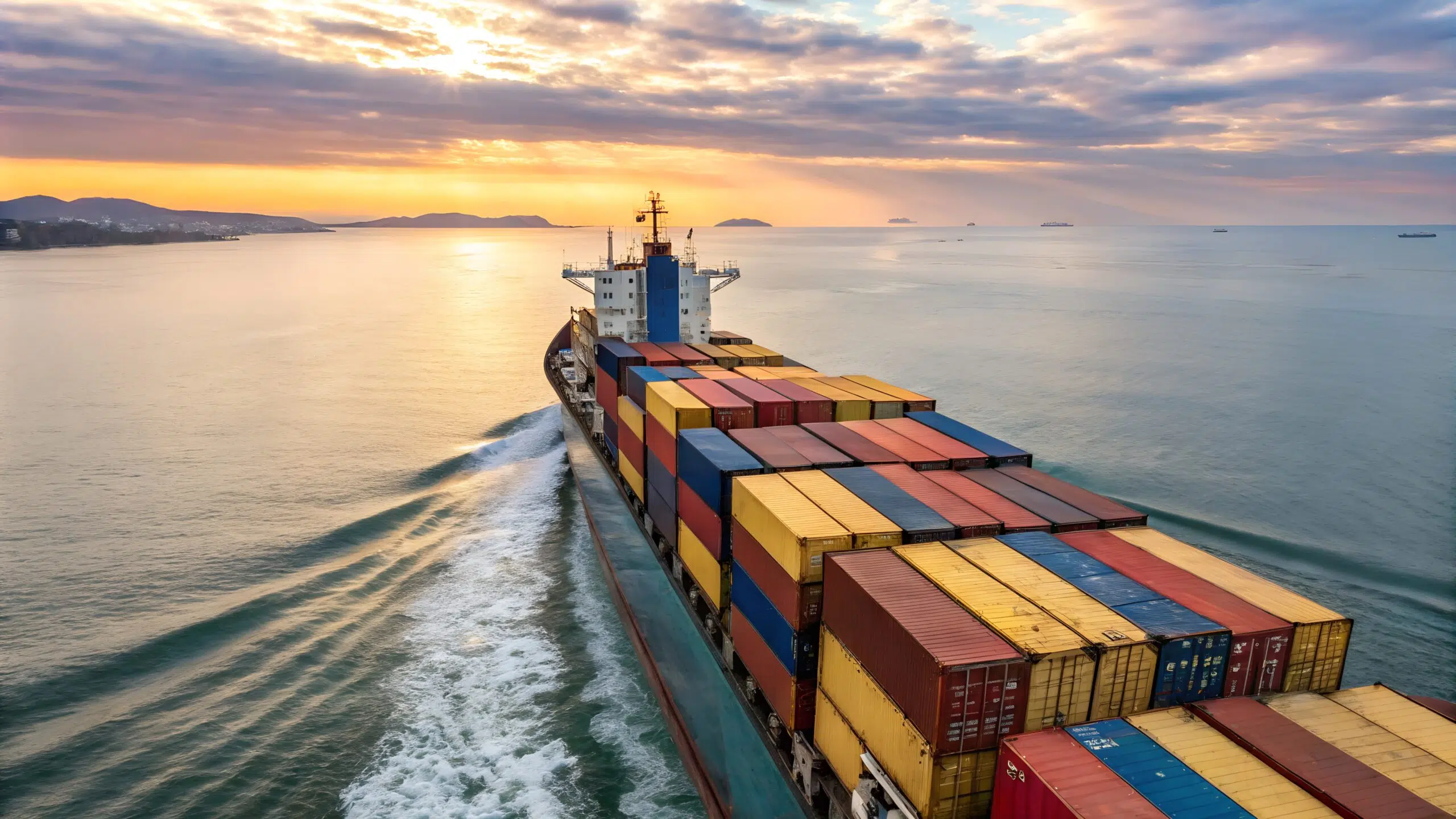

The Panama Canal Authority has warned that a strengthening El Niño is threatening the rainfall that refills Gatun and Alajuela lakes, the reservoirs that feed the canal lock chambers [1]. The Authority’s response to low water is well established: reduce maximum draft, then trim the number of daily transit slots [11]. Shipping lanes from Asia to the US East Coast will feel the financial impacts first.
Draft restrictions rarely cancel sailings. Instead, they change economics. Carriers leave weight behind, add canal surcharges, bid up auctioned slots, or reroute via Suez or the Cape of Good Hope at the price of added transit days.
Each of those choices drives landed costs up for importers within the first couple of booking cycles. For cargo owners moving FCL containers soon, the question isn’t whether to react, but which lane, inventory, and compliance controls to address first.
Key Takeaways
- Lower authorized water draft and fewer daily booking slots reduce Asia-to-USEC capacity without removing vessels from the water.
- Expect canal-linked surcharges and longer transit variability on East Coast all-water services, with West Coast discharge plus intermodal rail as the primary hedge.
- Blank sailings and string adjustments support rate levels while degrading schedule reliability, which erodes the value of fixed delivery windows.
- Changed ports of unlading and new entry filings raise the risk of classification and valuation errors on the entry summary.
Transpacific Rates and Carrier Capacity
Spot direction. Published index levels for both West Coast and East Coast lanes are rising off recent lows, with canal constraints concentrating pressure on East Coast quotes [2][3]. Treat index rates as directional signals rather than reliable pricing for individual shipments.
Capacity withdrawal. Carriers continue to manage Transpacific supply through blank sailings, string consolidation, and vessel upsizing on surviving loops [3]. That helps keep the rate floor from dropping, while reducing the number of sailings available to recover a missed cutoff.
| Trade Lane / Corridor | Indicative Rate Level | 30-Day Benchmark | Outlook and Impact |
|---|---|---|---|
| Asia to US West Coast | $3,150 to $3,450 / FEU | $2,850 / FEU | Tight space, spot premiums on diverted volume |
| Asia to US East Coast | $4,800 to $5,200 / FEU | $4,500 / FEU | Canal surcharge risk, longer and less predictable transits |
Sector Exposure Across Core Verticals
Retail and consumer goods. Toys under heading 9503, furniture under Chapter 94, and plastic housewares under 3924 often carry firm retail set dates that punish late arrival. West Coast discharge with transload to inland distribution centers protects promotional windows better than a delayed all-water booking.
Consumer electronics. Power supplies under 8504.40, speakers under 8518, and LED luminaires under heading 9405 combine high unit value with launch-date sensitivity. Partial air conversion for launch quantities is often cheaper than a missed retail reset.
Apparel and textiles. Chapters 61 and 62 apparel and Chapter 63 made-up articles face the tightest calendars and the heaviest forced-labor scrutiny, particularly cotton-content goods [5]. Earlier booking windows should be paired with documented input tracing, not substituted for it.
Automotive aftermarket. Parts classified under heading 8708, tires under 4011, and ignition components under 8511 feed fill-rate commitments to jobbers and installers. Extended and variable transits argue for buffer stock on top movers rather than lane-wide inventory increases.
Sporting goods and musical instruments. Heading 9506 sporting equipment and Chapter 92 instruments, including guitars under 9202, move on seasonal and school-calendar demand. Both categories carry bulky cube that makes air conversion expensive, so calendar discipline is the only practical lever.
Packaging. Paper cartons under heading 4819 and plastic conveyance articles under 3923 are low-value, high-cube inputs where a canal surcharge can materially shift delivered cost. Late packaging stops domestic production lines, so these SKUs deserve the same expediting priority as finished goods.
Port Performance, Rail Fluidity, and Demurrage Practice
West Coast fluidity. Los Angeles and Long Beach vessel waiting times are still low relative to the 2021 to 2022 peak, which is why they function as the release valve for canal-constrained volume [6]. Terminal appointment availability, not berth capacity, is the current constraint.
East Coast sensitivity. Savannah, New York, and Norfolk have absorbed higher volumes, but a sustained rerouting of Asia to USEC cargo would concentrate arrivals and lengthen dwell [7]. Monitor terminal operating advisories rather than national averages.
Inland rail. Intermodal volumes and terminal dwell reported by railroads remain within normal ranges, though increased West Coast discharge might create localized chassis and ramp congestion [8]. Secure inland capacity before diverting bookings to ensure smooth transitions.

Demurrage defense. Keep timestamped records of availability notices, appointment attempts, terminal closures, and container return refusals for every affected unit [4]. Those records determine whether a disputed charge is mitigated or paid.
Action Checklist for Importers
- Re-test routing guides with a dual-gateway scenario: all-water USEC versus USWC discharge plus rail, priced on delivered cost and on delivery-date risk.
- Confirm with carriers in writing how canal-related surcharges are triggered, calculated, and terminated under your current service contract.
- Reconfirm Section 301 exclusion status and HTSUS classification for every high-volume SKU before the next entry cycle.
- Refresh UFLPA tracing files for cotton, polysilicon, and aluminum-content inputs so a detention notice doesn’t start the evidence gathering [5].
- Build a standing demurrage dispute file and template that cites the invoice content and timing requirements of 46 CFR part 541.
Dedola has been helping importers navigate complex shipping circumstances for over 50 years, and we’re here to help. If you want help reviewing and planning for your upcoming shipments, reach out to our team today.
References
- Container News, “Panama Canal warns of strengthening El Niño threat to water levels“
- Freightos, “Freightos Baltic Index (FBX) Container Freight Index“
- Drewry, “World Container Index“
- U.S. Customs and Border Protection, “CBP Form 7501 Entry Summary Instructions“
- U.S. Customs and Border Protection, “Uyghur Forced Labor Prevention Act“
- Marine Exchange of Southern California, “Vessel Traffic and Port Statistics“
- Georgia Ports Authority, “Port Operations Updates“
- Association of American Railroads, “Rail Traffic Data“
- Panama Canal Authority, “Advisories to Shipping and Vessel Requirements“
- Electronic Code of Federal Regulations, “19 CFR Part 142, Entry Process“