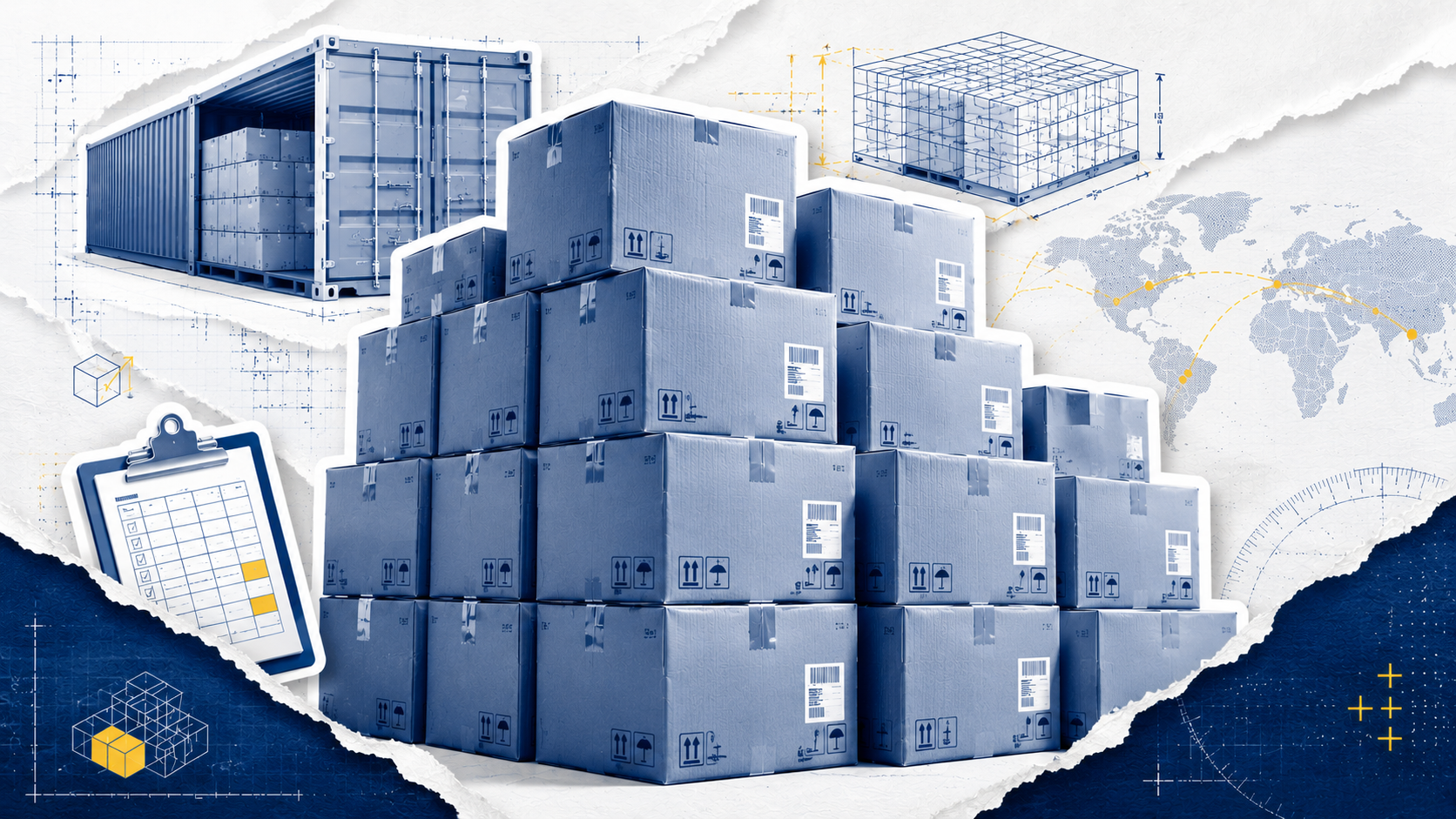
High-volume packaging importers run some of the most consistent freight patterns in the industry. Similar origins, lanes, and cargo quarter after quarter. Yet many aren’t taking advantage of that predictability and volume to leverage better freight rates. For buyers importing cartons, poly bags, labels, film, or other packaging SKUs on a recurring schedule, small freight improvements can compound across every replenishment cycle.
This blog covers container selection, tariff rates by material and origin, sourcing alternatives to China, and how to build a contracted freight program around consistent volume.
Container Selection and Cube Optimization for Packaging Materials
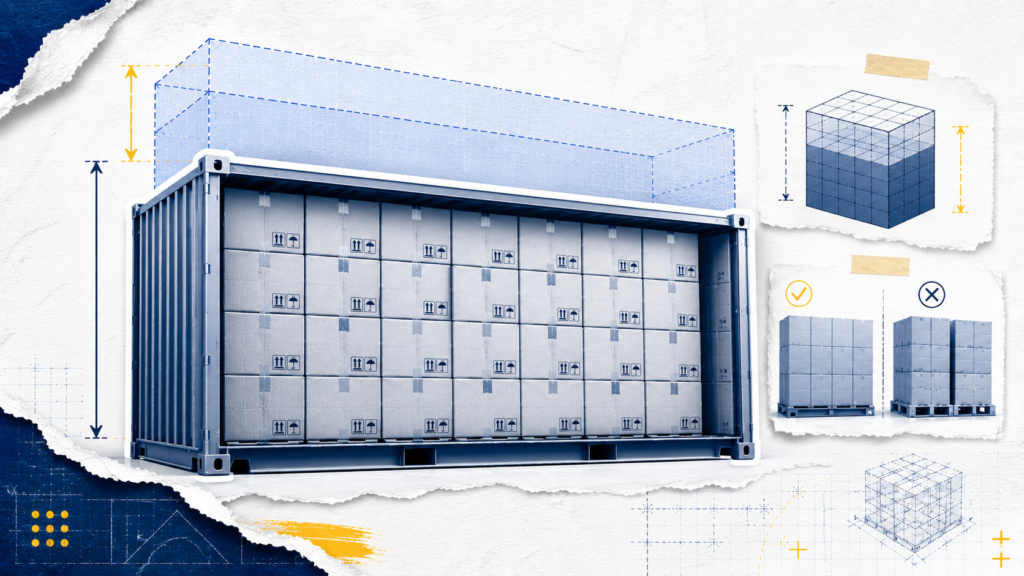
Packaging cargo fills containers by volume before it fills them by weight. That means your container choice directly impacts cost per unit.
A few decisions worth getting right:
- 40HQ vs. 40-standard: A 40-foot high cube gives you 2.69 meters of internal height versus 2.39 meters in a standard 40-foot, often at a similar ocean rate, depending on lane, equipment availability, and carrier pricing. For most packaging SKUs, that extra volume is a major benefit, although high-cube availability may be limited on some shipping lanes.
- Floor-loading vs. palletizing: Floor-loading maximizes cube utilization, particularly for uniform cartons. Palletized loads are faster to receive and offer better cargo protection, but you give up CBM. The right call depends on your product mix and warehouse setup.
- LCL and corrugated don’t mix well: In a shared container, you have no control over what loads alongside yours. Moisture is a real risk for corrugated. For corrugated packaging, a dedicated FCL often makes more economic sense than LCL, and removes the moisture risk entirely.
Tariffs on Packaging Materials: Rates by Material and Origin
Most paper-based packaging carries a 0% base duty when entering the U.S. For Chinese-origin materials, Section 301 adds 25% on top of that across most categories. Plastic packaging has a modest base duty of 0% to 5.3%, depending on the subheading, with the same 25% Section 301 rate for goods from China.
The bigger recent development involves polypropylene corrugated boxes. In March 2026, the U.S. International Trade Commission issued anti-dumping and countervailing duty orders on Chinese-origin polypropylene corrugated boxes under HTS 3923.10.901. Total duty costs now exceed the standard Section 301 levels for that category. If you’re sourcing polypropylene corrugated from China, confirm current AD/CVD rates with your customs broker before your next booking.
Also note that rates can vary by the exact HTS classification, country of origin, exclusions, and active trade remedy measures. Importers should confirm classifications and current duty exposure with a licensed customs broker before booking.
| Material | HTS Code | Base Duty | Section 301 (China) | Notes |
|---|---|---|---|---|
| Corrugated paper/paperboard boxes | 4819.10 | 0% | +25% | Covers single- and double-wall corrugated boxes and cartons |
| Folding cartons, non-corrugated | 4819.20 | 0% | +25% | Common for retail, CPG, and pharmaceutical packaging |
| Plastic bags and sacks | 3923.21 | 3% | +25% | Specific to polyethylene (PE). Other polymers (PP, PVC) classified under 3923.29 |
| Plastic packaging articles, other | 3923.90 | 0–5.3% | +25% | Rate varies by subheading |
| Polypropylene corrugated boxes | 3923.10.9000 | 0% | +25% + AD/CVD | Confirm scope; written scope controls over HTS code |
Sourcing Outside China: Freight and Tariff Implications
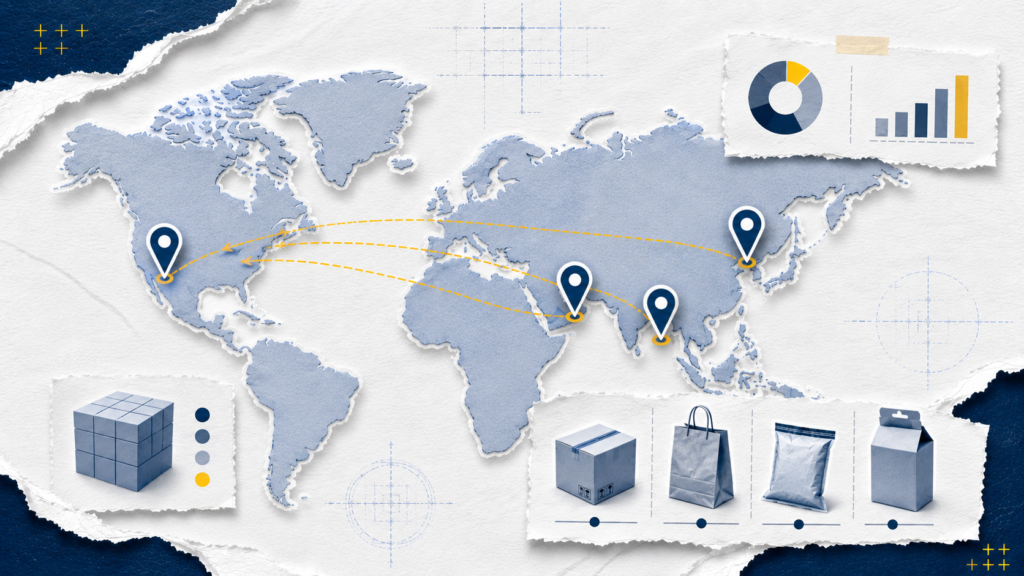
China remains the dominant source for packaging materials and the primary source for many importers. Section 301 adds 25% to landed costs across most categories, which makes the following alternatives worth a hard look.
- Vietnam: Strong in kraft paper bags, eco-mailers, and custom folding cartons. The Vietnam paper packaging market size is over $2.8 billion annually2, with the U.S. among the primary markets. Transit to U.S. West Coast runs two to three days longer than from China, which matters more for just-in-time programs than for importers on a rolling replenishment cycle.
- India: A solid option for paper-based packaging like kraft paper, corrugated sheets, and paperboard cartons at competitive prices. Transit to the U.S. East Coast takes 25 to 30 days, so lead-time planning is critical. Quality consistency varies more than in established packaging export markets, so supplier vetting matters more here.
- Mexico: The strongest alternative for plastic packaging. USMCA-qualifying products enter the U.S. duty-free, and cross-border trucking is viable for West Coast and Southwest importers. For high-volume plastic packaging buyers, it’s worth running a landed-cost comparison before assuming Asia is cheaper. And keep in mind, qualification is not automatic. Importers still need origin documentation and should confirm rules of origin for the specific packaging material.
Rate Contracts and Freight Programs for Recurring Packaging Shipments
Global shipping rates have grown harder to predict, with geopolitical tensions and economic pressure introducing volatility across major trade lanes. In that environment, carriers increasingly value consistent, committed volume. It gives them predictability when the market doesn’t, and packaging importers with steady demand are in a stronger position to negotiate contracted rates than they may realize.
Carriers offer better pricing on committed volume. If you’re moving consistent freight on the same lanes month after month, a contracted program will almost always outperform spot. Clarify whether the agreement includes minimum quantity commitments, space guarantees, surcharge treatment, and flexibility if demand changes.
Getting a contract in place requires a few things on your end:
- A rough forecast: A rolling 90-day view of what you need to book is enough to start the conversation. It doesn’t have to be precise.
- Booking lead time: Contracted programs typically require bookings four to six weeks out. If you’re running shorter than that, extending your lead time is the first adjustment to make.
- Lane clarity: Programs are tied to specific origin and destination ports. Know your specific lanes and lane volumes before you have the conversation.
Contracted ocean programs give you fixed sailing schedules. Spot booking doesn’t. That predictability lets you plan replenishment more precisely and carry less buffer inventory than you’d need when transit windows are variable. Alternatives like expedited air freight are among the more expensive options and are almost always avoidable.
Multi-Supplier, Multi-Origin Complexity: The Consolidation Question
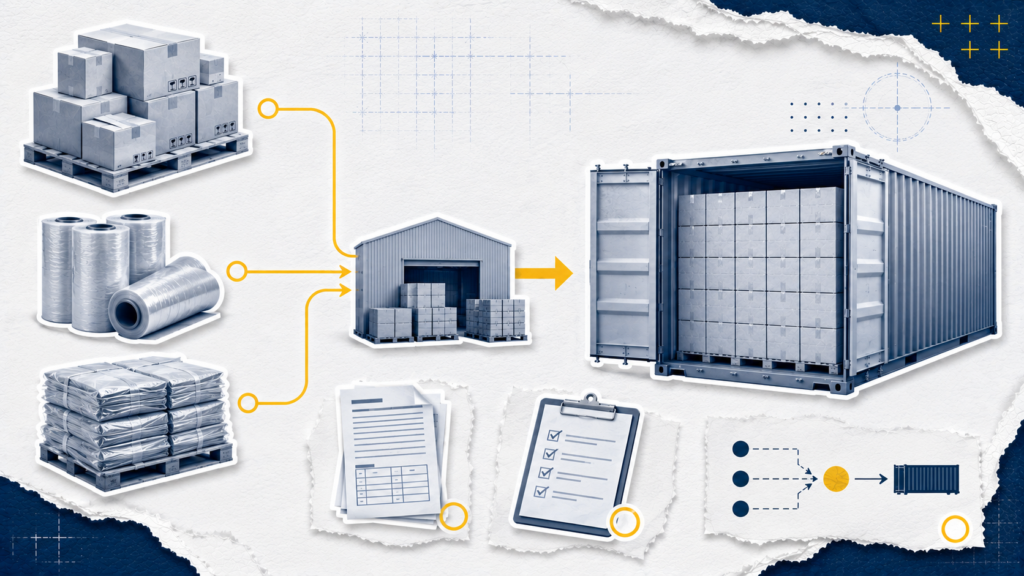
Most packaging importers don’t buy from a single factory. Corrugated boxes from one supplier, poly bags from another, stretch film from a third. Shipping those independently means multiple customs entries, multiple LCL bookings, underutilized containers, and more inbound complexity than necessary.
Origin consolidation is the alternative. A freight forwarder with that capability can pull cargo from multiple suppliers to a container freight station near the origin port, load it into a single FCL, and deliver a single shipment on a single bill of lading. Be sure to discuss CFS handling fees, cargo-ready-date alignment, and whether suppliers can deliver to the consolidation point on time, as well. This is essential to determining if consolidation will actually reduce costs.
Geography and lead times are what make or break a consolidation plan. If your suppliers are in different cities with significantly different production timelines, routing cargo to a consolidation point can create delays that offset the savings. A supplier with a 28-day lead time alongside one with a 35-day lead time means you’re either holding cargo at the CFS or shipping them separately anyway.
Work With Dedola on Your Packaging Freight
For more than 50 years, Dedola has worked with packaging importers managing freight across multiple origins and categories. Our team handles container selection, tariff strategy, origin sourcing, and rate contracts as one integrated program. If you want a clear look at what your current setup is costing you, request a packaging freight review to compare your current container usage, sourcing lanes, and contract-rate opportunities.
FAQs
How do my purchase terms (EXW, FOB, DDP) affect my ability to consolidate shipments or build a contracted freight program?
Purchase terms determine who controls the freight. For packaging importers trying to consolidate multi-supplier loads or build a structured freight program, that distinction can have real consequences.
- EXW (Ex Works): You control freight from the factory gate. You can route multiple suppliers’ cargo to a CFS, consolidate into a single FCL, and run it through a contracted rate program. This gives you the most flexibility.
- FOB (Free on Board): The supplier controls freight to the origin port. Each supplier books their own inland leg independently, which limits your ability to consolidate at origin.
- DDP (Delivered Duty Paid): The supplier controls door-to-door movement, including customs clearance. You gain simplicity but give up all visibility and control over freight costs.
- FCA (Free Carrier): Similar to EXW in terms of control, with cleaner risk transfer under Incoterms 2020. A practical alternative for importers who want control without full Ex Works risk exposure.
If consolidating freight is part of your freight strategy, EXW and FCA give you the most room to work with.
How do I calculate the volume threshold where FCL makes more financial sense than LCL for my packaging shipments?
Compare your FCL rate to your LCL rate on a per-CBM basis. If the FCL cost per CBM is lower than your LCL rate per CBM, FCL probably makes more financial sense.
- Formula: FCL rate divided by usable CBM capacity = break-even rate per CBM (roughly 67 CBM for a 40-foot standard, 76 CBM for a 40HQ). If your LCL rate per CBM exceeds that number, FCL is the better option.
For packaging materials, the actual break-even is often lower than that calculation suggests. LCL carries costs that don’t show up in the per-CBM rate: CFS handling charges, longer transit from deconsolidation, and for corrugated, moisture risk. A shipment often justifies FCL once those factors are included.
What happens if spot rates drop below my contracted freight rate?
Most freight contracts don’t include an exit clause tied to market rate changes. What they include is a minimum volume commitment, and carriers track utilization closely. Consistently shipping below your committed volume puts the rate agreement at risk and can affect your standing for the next contract cycle.
The right time to address this is before you sign. Negotiate a volume range rather than a fixed number. A contract that allows you to ship between 80% and 120% of a target volume gives you room to flex without breaching the agreement. A freight forwarder who regularly structures these agreements will know how to build that flexibility in from the start.
What volume do I need to qualify for a contracted ocean program?
Several consistent FCLs per month on a lane is generally enough to start the conversation. Direct carrier service contracts typically require higher volume commitments, but named account programs through a freight forwarder have lower thresholds. Forwarders aggregate volume across clients, which means smaller importers can access rates they couldn’t negotiate independently.
Lane specificity matters more than total volume. One FCL per month on a consistent trade lane is more valuable to a carrier than the same volume spread across multiple routes. If you source from multiple origins, each lane is evaluated on its own.
Sources
- U.S. Department of Commerce, International Trade Administration
- Mordor Intelligence – “Vietnam Paper Packaging Market”