Carriers blanked 39 East-West sailings scheduled between October 5 and November 8, about half of them transpacific, as demand eased around China’s Golden Week holiday.¹ That is 5% of scheduled voyages, a lighter cut than the roughly 10% of Asia to U.S. West Coast sailings Sea-Intelligence has recorded as blanked in a typical period since 2020.² Xeneta’s chief analyst, Peter Sand, says transpacific spot rates have reached their post-Hormuz peak for 2026,³ while Freightos expects prices to climb again from a higher floor ahead of Lunar New Year.⁴ Either way, rates are nowhere near where the year started: on October 1, Xeneta’s Far East to U.S. West Coast average stood at $8,346 per FEU and East Coast at $11,523, about 4.4 and 4.3 times their February 28 levels, before the Strait of Hormuz closure.³
Freightos attributes the higher rate floor to fuel costs since the Hormuz closure and to port congestion in Asia, with resilient demand keeping pressure on transpacific prices through September.⁴ Xeneta notes the congestion is easing as typhoon season winds down.³ Blank sailings play a different role. As demand cools after peak season, carriers cancel sailings to keep their remaining ships full. That helps them hold a floor under rates, but it also means that the ship your cargo is booked on may not leave as planned.
Our 2026 peak season shipping update covered what drove this year’s extended peak. This post picks up from there: how blank sailings work, why they keep rates from falling as fast as demand, and how you can protect your space and budget when a carrier cancels your sailing.
Quick Reference
Key Takeaways
- A blank sailing is a canceled voyage or a skipped port call; booked cargo moves to the next departure, often a week or more later.
- Carriers blank sailings to keep ships full when demand dips, mostly around Golden Week, Lunar New Year and the weeks after peak season.
- Blank sailings hold a floor under rates more than they raise them; rates rise when carriers pair them with a GRI or PSS while demand holds.
- FMC rules give at least 30 days’ notice of any tariff increase, which is your window to book ahead or adjust budgets.
What Are Blank Sailings?
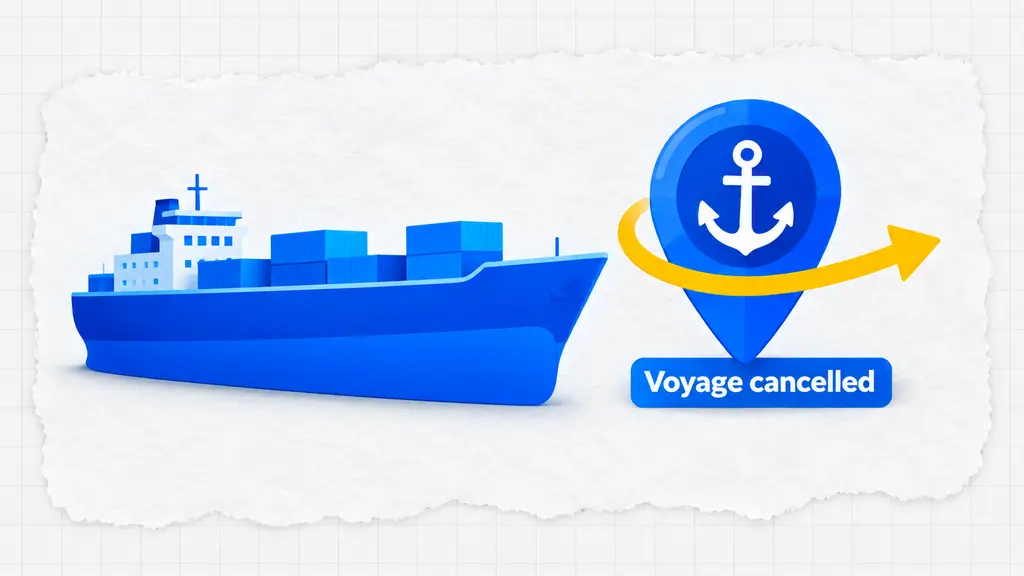
A blank sailing is an ocean carrier’s cancellation of a scheduled voyage, or of a port call within that voyage. Any cargo booked on the canceled sailing moves to a later departure.
Blank sailings come in two main forms:
- Full voyage cancellation: The carrier cancels the entire voyage, so every port on that service loses that departure.
- Port omission: The vessel still sails but skips one or more scheduled ports, usually to save time or avoid a low-volume call.
Carriers announce many blank sailings weeks in advance, especially around predictable holidays like Lunar New Year. Others come with shorter notice when demand drops faster than carriers expected.
Weather, port congestion, and vessel delays can all force a carrier to cancel a sailing. Many blank sailings, though, are planned commercial decisions about how much capacity a carrier puts on a trade lane.
Why Do Carriers Blank Sailings?
A carrier’s decision to blank a sailing usually comes down to cost, demand, and schedule reliability.
- Running a half-empty ship costs nearly as much as running a full one. Fuel, crew, port fees, and charter costs don’t scale down with cargo volume. Fewer, fuller ships lower the carrier’s cost per container.
- Blanking adjusts capacity in the short term. Carriers can pull space off a trade lane for a week or two, then restore it when demand recovers, without changing their service network.
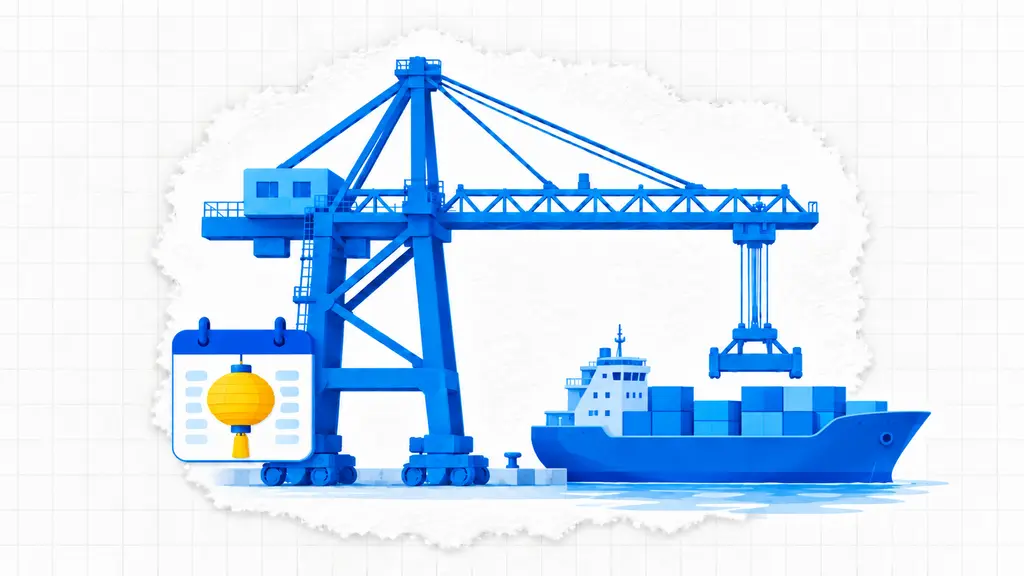
- Seasonal demand dips are predictable. Golden Week, Lunar New Year, and the weeks after peak season all bring lower export volumes from Asia, so carriers plan cancellations around them.
- Carriers also use blanks to reset schedules after congestion. When vessels run days behind, skipping a sailing can bring a loop back to its published schedule.
How Do Blank Sailings Affect Ocean Freight Rates?

When bookings slow after a peak, carriers can try to cut rates to fill their ships, or cut sailings to bring capacity closer to demand. Blank sailings are the second option. Carriers use them alongside general rate increases and peak-season surcharges, which determine the price of remaining space. For importers, that combination affects both what you pay and whether your cargo leaves on the sailing you booked.
Blank Sailings and Effective Capacity
Effective capacity is the space actually available to shippers on a trade lane in a given week, after cancellations, delays, and congestion. When carriers blank sailings, cargo competes for fewer slots, and the ships that do sail leave fuller. That higher utilization gives carriers leverage to hold their prices and protect their margins.
The leverage has limits. When demand falls sharply, cancellations alone usually can’t keep rates steady, and spot rates still decline. Blank sailings slow that decline more often than they reverse it.
General Rate Increases (GRIs)
A general rate increase (GRI) is an across-the-board increase to a carrier’s base ocean rates on a trade lane. Carriers commonly schedule GRIs for the 1st or 15th of the month, often around when they announce blank sailings.
Carriers can’t announce a GRI and apply it the same week, though. Federal Maritime Commission (FMC) rules require them to publish any change that raises a shipper’s cost at least 30 days before it takes effect.⁵ Carriers can ask the FMC to shorten that window, but they have to show good cause. In March 2026, the FMC denied four such requests from carriers seeking to impose war-risk surcharges on short notice.⁶
That 30-day window gives you time to plan. When your freight forwarder flags an upcoming GRI, you can book ahead of the effective date or adjust your freight budget before the increase applies.
Peak Season Surcharges (PSS)
A peak season surcharge (PSS) is a temporary charge carriers add on top of base rates when they expect demand to outpace available space, typically ahead of and during the summer and fall peak. The same 30-day notice rule applies.⁵
A service contract locks in your base rate, but it doesn’t always lock in your surcharges. Many contracts pull some charges directly from the carrier’s published tariff. If yours does, a carrier’s PSS can apply to your cargo, as long as the surcharge is in effect by the date the carrier receives your shipment.⁷ Before peak season starts, check whether your contract sets surcharges at a fixed amount or ties them to the carrier’s tariff.
Rolled Bookings
When a carrier blanks a sailing, it rolls the cargo booked on that vessel to a later departure. The next vessel on the service then has to carry its own bookings plus the cargo from the canceled sailing, so space fills up fast. When there isn’t room for everything, carriers generally load higher-paying cargo first, and lower-rate bookings wait for the next sailing.
For you, a rolled booking means your container arrives later than planned. A one-week roll can push back deliveries, replenishment orders, and any production schedules that depend on that shipment.
When a carrier blanks a sailing one of our clients is booked on, we check with our partner at the port of loading to confirm where the container stands and what the earliest alternative is, whether the next vessel on the same service or another carrier. We then go back to the client with a revised plan and arrival date, and track the container until it loads.
How to Protect Your Cargo Space and Freight Budget
Here’s what we’re advising clients to do when planning shipments around blank sailings:
- Book earlier ahead of known blank windows. Holidays bring predictable cancellations, so lock in space before carriers finalize their schedules. Lunar New Year, February 6, 2027, is the next one to plan for.
- Ask about potential blank sailings on your lane. Your ocean freight forwarder tracks carrier cancellation notices and can tell you which services have announced blanks, so you can choose a lower-risk sailing before you book.
- Build a buffer into delivery dates. For time-sensitive cargo, plan around at least one possible roll rather than the published transit time.
- Watch GRI and PSS filings. Use the 30-day notice period to adjust booking timing or budgets before an increase takes effect.
- Review your contract and spot mix. Know which surcharges your contract exposes you to, and keep enough spot flexibility to use alternate carriers or ports when a sailing falls through.
Need Help Planning Around Blank Sailings?
Keeping up with blank sailings means tracking cancellation notices, rate filings, and surcharge changes across every carrier on your lanes, often in the same week. That’s a lot to sort through on top of running your business.
Dedola has been family-owned and operated since 1976, and we’ve helped importers plan around capacity cuts through plenty of rate swings. If you’d like a second look at your upcoming bookings or your surcharge exposure, reach out to our team. We’re happy to help.
FAQs
What are blank sailings, and why do carriers use them?
A blank sailing is a carrier’s cancellation of a scheduled voyage, or of a port call within that voyage. Carriers use them to reduce capacity when demand slows, most often around holidays like Golden Week and Lunar New Year and in the weeks after peak season. Fewer sailings keep the remaining ships fuller and help carriers protect their rates.
How much notice do carriers give before blanking a sailing?
It varies. Carriers often announce cancellations around predictable holidays several weeks in advance, while others come with much shorter notice. Your freight forwarder should flag blank sailings on your lane as soon as carriers announce them.
Do blank sailings always raise ocean freight rates?
Not necessarily. Blank sailings mainly help carriers hold a floor under rates when demand softens. When demand drops sharply, cancellations usually slow the rate decline without stopping it. Rates are more likely to rise when carriers pair blank sailings with a GRI or peak season surcharge while demand holds steady.
What happens to my container if my sailing is blanked?
If your planned sailing is blanked, the carrier moves your container to the next available sailing, which may be a week or more later. If that vessel fills up, your container can roll again. Your freight forwarder can confirm the new vessel, flag the revised arrival date, and look for alternate routings if the delay affects your delivery window.
Sources
- Drewry, “Cancelled Sailings Tracker,” October 2, 2026
- Sea-Intelligence data, as cited in Dedola Global Logistics, “Capacity Uncertainty Continues: Post-Golden Week Blank Sailings,” October 7, 2026 (replace with the original Sea-Intelligence report if available)
- Xeneta, “Xeneta Weekly Ocean Container Shipping Market Update,” October 2, 2026
- Freightos Group, “Freightos Weekly Update: China-US truce to reduce some tariffs, and likely postpone port fees,” October 1, 2026
- Federal Maritime Commission, 46 CFR § 520.8, “Effective dates.”
- Federal Maritime Commission, special permission denials SP-011974 to SP-011977, March 23, 2026 (summarized by Holland & Knight, “The FMC Denies Ocean Carrier Surcharge Special Permission Applications,” March 27, 2026)
- Federal Maritime Commission, “Statement of Chairman Laura DiBella on Special Permissions,” March 23, 2026
- Federal Maritime Commission, “Commission Statement Regarding Strait of Hormuz Surcharges,” March 11, 2026