 Stephen Dedola
Marine Cargo Insurance & Shipment Risk
International shipping usually works as planned, but every shipment carries some level of risk. Cargo can be damaged, lost, stolen, delayed, exposed to severe weather, involved in a vessel incident, or affected by handling problems during transit. For importers and exporters, one uninsured loss can quickly become more expensive than the freight itself.
Marine cargo insurance, often called cargo insurance, helps protect the financial value of goods while they move through the supply chain. Depending on the policy, coverage may apply during ocean freight, air freight, trucking, rail movement, terminal handling, and warehouse-to-warehouse transit.
Many businesses assume the carrier, freight forwarder, or supplier will automatically cover cargo loss or damage. That assumption can be costly. Carrier liability is often limited, and it may not come close to the full commercial value of the goods. This is why importers and exporters should review cargo insurance before every shipment moves.
What Is Marine Cargo Insurance?
Marine cargo insurance is insurance that helps cover physical loss or damage to goods while they are in transit. Although the word “marine” suggests ocean freight, many cargo insurance policies can also apply to related land, air, rail, terminal, or warehouse movements when those stages are included in the insured transit.
Marine cargo insurance is commonly used for shipments moving through ocean freight, but it can also be valuable for air freight, truck movements, intermodal shipments, and supply chains with multiple handoffs.
The exact coverage depends on the policy terms, cargo type, route, value, packaging, exclusions, and any special conditions. Importers should never assume that “insured” means every possible loss is covered. The policy details matter.
Why Cargo Insurance Matters for Importers and Exporters
Cargo insurance matters because international shipments involve many parties and many risk points. A shipment may move from a supplier to a warehouse, from a warehouse to a port, onto a vessel, through a destination terminal, onto a truck or rail line, and finally to a distribution center or customer.
Loss or damage can happen at several stages, including:
- Supplier loading
- Origin trucking
- Warehouse handling
- Port or terminal handling
- Ocean vessel transit
- Air freight handling
- Rail or drayage movement
- Customs or inspection handling
- Destination delivery
Without cargo insurance, the shipper may need to absorb the loss, pursue a limited carrier claim, replace inventory, refund customers, pay for expedited replacement cargo, or manage production and sales disruption.
For businesses that depend on imported inventory, replacement lead time can be just as damaging as the value of the lost cargo. If goods take weeks or months to reproduce and reship, the business may also face stockouts, missed promotions, production gaps, or customer dissatisfaction.
Carrier Liability Is Not the Same as Cargo Insurance
One of the most common misunderstandings in freight is assuming that carrier liability protects the full value of the shipment. It usually does not.
Carrier liability is the carrier’s limited legal responsibility for cargo loss or damage under the applicable transportation rules, contract terms, and bill of lading. Cargo insurance is separate protection purchased to help cover the insured value of the goods under the policy terms.
For U.S.-related ocean shipments, carrier liability may be limited under the Carriage of Goods by Sea Act. In practical terms, this can leave a shipper with recovery that is far below the actual value of the cargo if additional insurance was not purchased or a higher value was not properly declared.
This is why marine cargo insurance should be considered even when the shipment seems routine. The carrier’s legal liability, the forwarder’s role, and the supplier’s responsibility may not provide enough protection if something goes wrong.
What Does Marine Cargo Insurance Cover?
Coverage depends on the policy, but marine cargo insurance may help protect against physical loss or damage caused by covered events during transit.
Common covered risks may include:
- Theft or non-delivery
- Fire or explosion
- Vessel sinking, stranding, or collision
- Severe weather or heavy seas
- Damage during loading or unloading
- Water damage when covered by the policy
- Accidental damage during covered transit
- Loss or damage during multimodal movement
- General Average contribution when included
Importers should confirm whether coverage applies door-to-door, warehouse-to-warehouse, port-to-port, or only during a specific leg of transportation. Coverage should match how the shipment actually moves.
What Is All-Risk Cargo Insurance?
All-risk cargo insurance generally provides broad protection against physical loss or damage, subject to policy terms, conditions, and exclusions. Despite the name, “all-risk” does not mean every situation is covered.
All-risk coverage may be a strong option for many commercial shipments, but the insurer may require proper packaging, accurate cargo descriptions, declared values, and compliance with routing or handling requirements.
All-risk insurance may not be available or may cost more for certain cargo types, routes, values, or risk profiles. High-value goods, fragile products, temperature-sensitive cargo, hazardous materials, or shipments moving through high-risk regions may need special review.
Common Marine Cargo Insurance Exclusions
Every policy is different, but cargo insurance often includes exclusions or conditions that importers should understand before shipping.
Common exclusions may include:
- Improper or insufficient packaging: Damage caused by packaging that was not suitable for the cargo or transit conditions may be excluded.
- Inherent vice: Loss caused by the natural characteristics of the goods, such as spoilage, deterioration, or hidden defects, may not be covered.
- Delay: Financial loss caused only by delay may be excluded unless specific coverage applies.
- Customs rejection: Costs caused by inadmissibility, rejected documents, or customs problems may not be covered as cargo damage.
- Abandoned cargo: Cargo intentionally abandoned or not recovered may be excluded.
- Improper temperature settings: Temperature-sensitive cargo may require specific instructions, monitoring, and reefer settings.
- War, strikes, riots, or civil unrest: These risks may require additional coverage or special clauses.
Importers should ask what is covered, what is excluded, what documentation is required for a claim, and whether special coverage is needed for their cargo type or route.
What Is General Average?
General Average is a maritime principle where cargo owners may be required to share certain losses or expenses incurred to save the voyage during an emergency. It can apply even if your cargo was not physically damaged.
For example, if cargo is sacrificed, a vessel is salvaged, or extraordinary costs are incurred to protect the ship and remaining cargo, cargo interests may be asked to contribute proportionally. In some cases, cargo may not be released until the required General Average security is provided.
Marine cargo insurance can help protect against General Average exposure when the policy includes that coverage. This is one of the major reasons cargo insurance is important for ocean shipments.
For a deeper explanation, read Dedola’s guide to General Average and why shippers should be prepared.
Cargo Ship Fires and Other Vessel Risks
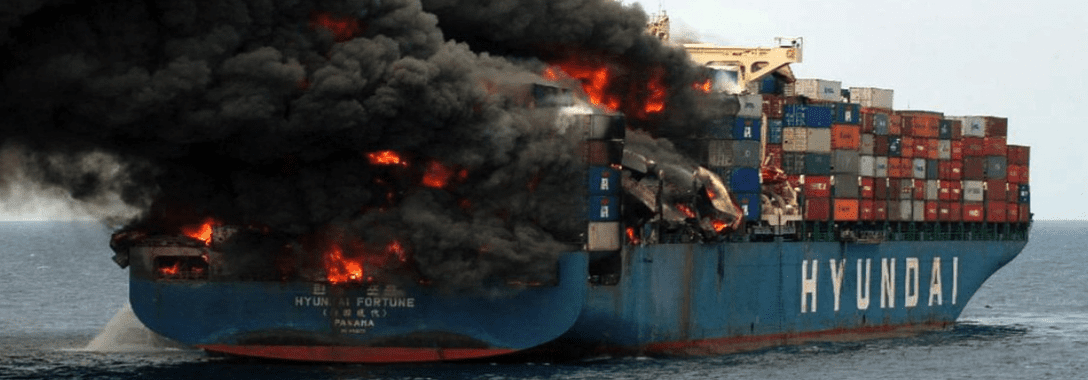
Cargo ship fires are uncommon, but they can be serious when they happen. Fires may be caused by misdeclared hazardous cargo, lithium batteries, chemicals, machinery issues, container contents, or other onboard risks.
A major vessel incident can result in damaged cargo, lost containers, delayed delivery, salvage costs, General Average claims, investigations, and long recovery timelines. Even cargo that is not directly burned may be affected by smoke, water, handling, delay, or access restrictions.
Importers of electronics, batteries, medical goods, auto parts, apparel, consumer products, or temperature-sensitive products should review their packaging, documentation, hazardous classification, and insurance options carefully before shipping.
What Goods Can Be Insured?
Many types of commercial goods can be insured, but the policy terms and cost depend on the cargo, value, route, packaging, mode, and risk profile.
Goods that may be insured include:
- Consumer products
- Apparel and textiles
- Auto parts
- Medical supplies and devices
- Electronics
- Industrial machinery
- Raw materials
- Food and beverage products
- Temperature-sensitive cargo
- High-value goods
Some goods may require special underwriting, higher premiums, deductibles, temperature-control instructions, inspection records, or additional documentation. This is especially true for frozen cargo, pharmaceuticals, high-value electronics, fragile goods, hazardous materials, or goods moving through higher-risk regions.
Dedola supports industry-specific freight needs for medical supplies and devices freight shipping, aftermarket auto parts imports, and sustainable fashion and apparel freight shipping.
When Should You Buy Cargo Insurance?
Importers and exporters should review cargo insurance before the shipment moves. Waiting until cargo is already damaged, delayed, or missing is too late.
Cargo insurance is especially important when:
- The shipment value is high
- Replacement lead time is long
- The cargo is fragile or theft-sensitive
- The goods are seasonal or tied to a launch date
- The shipment involves multiple handling points
- The goods are temperature-sensitive
- The buyer or seller is unclear about risk responsibility
- The cargo is moving through a higher-risk route or region
- A loss would affect production, cash flow, or customer commitments
Importers should also review Incoterms because they can affect which party is responsible for risk at different points in the shipment. If you are unsure whether the buyer or seller is responsible for insurance, Dedola’s article on FOB vs. CIF and related shipping terms can help clarify the issue.
How Cargo Insurance Supports Supply Chain Resilience
Cargo insurance does not prevent accidents, but it can help reduce the financial impact when loss or damage occurs. That makes it part of a broader supply chain risk strategy.
A stronger risk strategy may include:
- Proper packaging and palletization
- Accurate cargo descriptions
- Clear commercial invoices and packing lists
- Correct hazardous materials declarations when required
- Temperature-control instructions for sensitive goods
- Reliable carrier and routing selection
- Shipment visibility and milestone tracking
- Marine cargo insurance for financial protection
Insurance works best when the shipment is also well planned. A policy may not help if the loss is caused by excluded conditions, poor packaging, misdeclared cargo, or missing documentation.
Marine Cargo Insurance Checklist
Use this checklist before deciding whether to insure your next shipment:
- Cargo value: What is the commercial value of the goods?
- Replacement cost: How much would it cost to replace and reship the goods?
- Lead time: How long would it take to reproduce or reorder the cargo?
- Shipment mode: Will the cargo move by ocean, air, truck, rail, or multiple modes?
- Transit scope: Does coverage apply door-to-door, warehouse-to-warehouse, or only port-to-port?
- Packaging: Is the cargo packed for the full route and expected handling?
- Special risks: Is the cargo fragile, high-value, hazardous, temperature-sensitive, or theft-sensitive?
- Exclusions: What is not covered by the policy?
- General Average: Does the policy cover General Average contribution?
- Claims process: What documentation is needed if loss or damage occurs?
How Dedola Helps Importers Protect Shipments
Dedola Global Logistics helps importers and exporters think through cargo risk as part of the larger shipment plan. Insurance is only one piece. Packaging, documentation, carrier selection, routing, visibility, and communication all affect how well a shipment is protected.
Dedola can support shipment protection with:
- Ocean freight planning and coordination
- Air freight options for urgent cargo
- Cargo insurance guidance
- Commercial invoice and packing list review
- Supplier and purchase order coordination
- Shipment milestone tracking
- Routing and timing recommendations
- Warehouse and delivery planning
- Support for recurring and specialized shipments
Whether your cargo moves by ocean, air, truck, or multiple modes, the goal is the same: reduce preventable risk and make sure your business has a plan if something goes wrong.
Need Help Reviewing Cargo Insurance Options?
Marine cargo insurance can be a valuable safeguard for importers and exporters. It helps protect against financial loss when cargo is damaged or lost during covered transit, and it can also help with ocean-specific risks such as General Average when included in the policy.
If you are unsure whether your next shipment should be insured, Dedola can help you review the cargo value, route, mode, handling requirements, and potential risk exposure.
Contact Dedola Global Logistics
Frequently Asked Questions About Marine Cargo Insurance
What is marine cargo insurance?
Marine cargo insurance helps protect goods against covered physical loss or damage while they are in transit. Depending on the policy, it may apply to ocean freight, air freight, trucking, rail, terminal handling, or warehouse-to-warehouse movement.
Is cargo insurance required for ocean freight?
Cargo insurance is not always legally required, but it is strongly recommended for many shipments because carrier liability is often limited and may not cover the full value of the goods.
What does cargo insurance usually cover?
Cargo insurance may cover physical loss or damage from covered events such as theft, fire, vessel incidents, severe weather, loading or unloading damage, and certain transit risks. Coverage depends on the policy terms.
What is not covered by marine cargo insurance?
Common exclusions may include poor packaging, inherent vice, delay-only losses, customs rejection, abandoned cargo, improper temperature instructions, or war and strike risks unless special coverage applies.
What is General Average in ocean shipping?
General Average is a maritime principle where cargo owners may share certain emergency losses or expenses incurred to save the voyage. Cargo insurance can help cover this exposure when the policy includes General Average protection.
Can Dedola help with cargo insurance?
Yes. Dedola can help importers and exporters review shipment risks, cargo value, freight mode, routing, and insurance options as part of the larger logistics planning process.