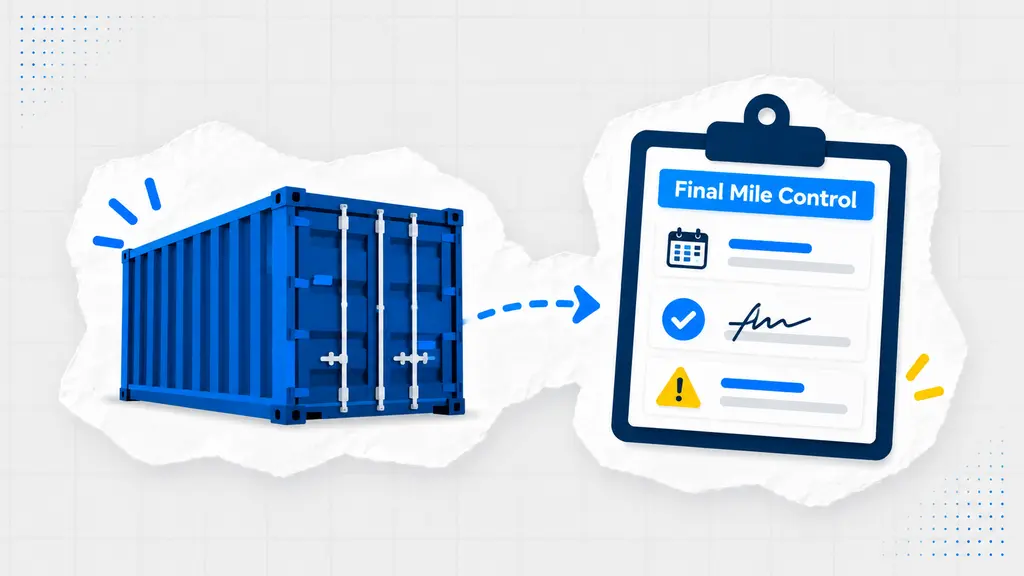
A freight terminal is a logistics facility where cargo is received, sorted, consolidated, stored temporarily, transferred, or dispatched during transportation. Freight terminals connect different parts of the supply chain and may support truck, rail, air, ocean, or intermodal freight. They are commonly used by carriers, freight forwarders, 3PLs, and distribution networks to route shipments efficiently, combine smaller loads, separate cargo by destination, and prepare freight for final delivery or onward transport. For example, LTL carriers operate hub-and-spoke terminal networks, ocean freight uses port terminals, and air freight uses cargo terminals at airports. Terminals stack and move boxes with equipment such as a transtainer, the rubber-tyred gantry crane that lifts containers in the yard.
Types of Freight Terminals
- LTL terminal: receives freight from local pickups, consolidates for line-haul, redistributes at destination terminal
- Port terminal: container yard and vessel berth where ocean containers are loaded and discharged
- Air cargo terminal: facility at an airport for receiving, screening, building ULDs, and releasing air freight
- Intermodal terminal: rail yard where containers transfer between rail and truck
Learn more about Dedola’s ocean freight shipping services. Related terms: CFS, Drayage, Intermodal Shipping.