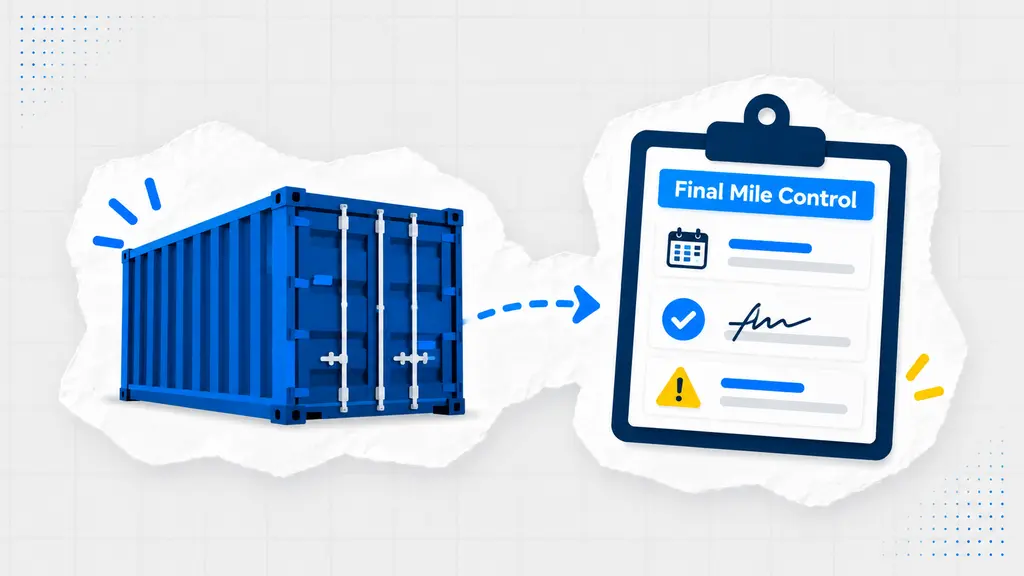
Detention is a logistics charge applied when a shipper, consignee, or trucker keeps carrier-owned equipment beyond the allowed free time outside a port, terminal, rail ramp, or container yard. It commonly applies to containers, trailers, or chassis that are not returned by the deadline. Detention is different from demurrage, which usually applies while cargo or equipment remains inside the terminal. Avoiding detention requires careful tracking of free time, delivery appointments, unloading schedules, and empty return requirements. A related but separate charge, the trucking wait fee, applies when a truck driver is delayed at pickup or delivery beyond the allowed free waiting time.
Demurrage vs. Detention
- Demurrage: container inside the terminal not picked up within free time
- Detention: container outside the terminal not returned within free time
- Both are per diem charges that escalate in tiers
- Combined demurrage and detention policies exist at some carriers
How to Avoid Detention
- Plan warehouse capacity before picking up the container
- Coordinate delivery and unloading to minimize dwell time
- Return empty containers promptly after unloading
- Monitor detention free time in your drayage contracts
Learn more about Dedola’s ocean freight shipping services. Related terms: Per Diem Charge, Chassis Fee, Last Free Day.