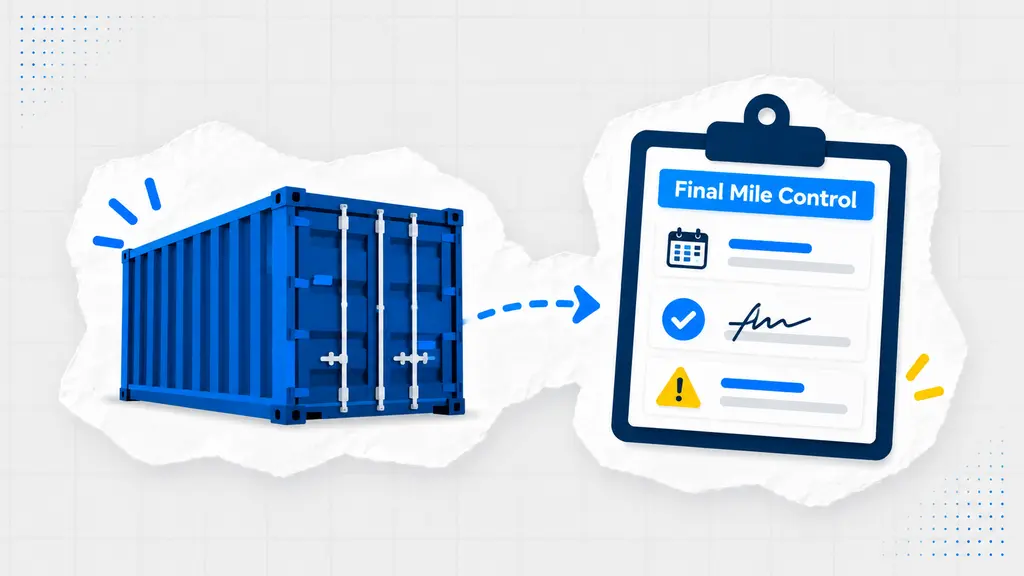
Drayage is a short-distance freight movement that plays a big role in global logistics. It is the link that helps containers move between ports, rail terminals, warehouses, and inland transportation networks.
Drayage definition
Drayage is the short-distance transportation of freight, usually shipping containers, between ports, rail terminals, warehouses, and other nearby logistics facilities. In simple terms, drayage is the local container move that connects one stage of the supply chain to the next, especially in ocean freight and intermodal shipping.
What does drayage mean in shipping?
In shipping, drayage means moving cargo a relatively short distance as part of a larger logistics journey. It often happens when containers need to be transferred from a port to a rail ramp, from a marine terminal to a warehouse, or from one nearby logistics node to another.
Even though the distance is short, drayage is a critical part of freight flow because delays at this stage can disrupt the entire shipment timeline.
How drayage works
Drayage usually begins when a container arrives at a port, terminal, or rail facility and needs to be moved to the next point in the supply chain. A drayage carrier or trucker handles that transfer so the shipment can continue toward transloading, warehousing, rail movement, or final delivery. The cost of these land moves is often billed as inland haulage charges (IHC), separate from the main ocean freight charge.
- Container arrives: cargo reaches a port, rail ramp, or terminal.
- Pickup is scheduled: drayage is arranged to move the container locally.
- Short-haul transfer happens: the container moves to the next facility.
- Supply chain continues: cargo proceeds to warehouse, rail, transload, or delivery.
Why drayage is important
Drayage is important because container shipping does not end when a vessel arrives at port. Cargo still needs to move through terminals, inland hubs, and warehouse networks before it reaches its next destination.
- Connects ocean freight to inland transport
- Supports intermodal shipping efficiency
- Helps reduce bottlenecks between transport modes
- Can affect storage costs, pickup timing, and container availability
- Plays a major role in port and rail terminal operations
For importers moving containerized freight, Dedola’s ocean freight services can help connect port arrivals with smoother inland container movement.
Common types of drayage
Drayage can take several forms depending on where the container starts and where it needs to go next.
- Port drayage: moving containers from a port to a nearby warehouse, rail ramp, or logistics facility.
- Rail drayage: moving containers between rail terminals and nearby destinations.
- Shuttle drayage: short transfers from one congested terminal or staging point to another.
- Inter-carrier drayage: moving freight between different carriers or transportation providers.
- Expedited drayage: priority container movement when time is especially important.
Drayage vs intermodal shipping
Drayage and intermodal shipping are related, but they are not the same thing. Drayage is the short local move between transportation points, while intermodal shipping is the broader freight strategy that uses multiple transportation modes such as ocean, rail, and truck.
In other words, drayage is often one part of an intermodal shipment, not the whole shipment itself.
What causes drayage delays?
Drayage delays often happen when the handoff between port, terminal, trucking, rail, customs, and warehouse operations is not tightly coordinated.
- Port congestion
- Chassis shortages
- Container availability issues
- Terminal appointment limits
- Customs or documentation delays
- Warehouse scheduling problems
How to improve drayage performance
Better drayage performance usually comes from better visibility, timing, and coordination. Importers that align ocean schedules, pickup windows, container status, and warehouse readiness tend to avoid more delays and extra costs.
That is why many companies pair container movement with broader supply chain planning instead of treating drayage as a standalone trucking task. When a driver drops a container and moves the tractor alone to the next pick-up, truckers may bill a bobtail fee for the empty tractor movement.
Common drayage terms importers should know
- Intermodal: freight movement using more than one transportation mode.
- Chassis: the wheeled frame used to move shipping containers by truck.
- Container yard: the area where containers are stored before pickup or transfer.
- Demurrage: charges that can apply when containers remain too long at the terminal.
- Rail ramp: the rail terminal where containers are loaded, unloaded, or transferred.
Drayage FAQ
What is drayage in simple terms?
Drayage is the short-distance movement of shipping containers between ports, rail terminals, warehouses, and nearby logistics facilities.
Why is drayage important in shipping?
Drayage is important because it connects major freight modes like ocean and rail to the next step in the supply chain.
Is drayage the same as intermodal shipping?
No. Drayage is usually one short segment within a larger intermodal shipping process.
What are common examples of drayage?
Common examples include moving a container from a port to a warehouse, from a marine terminal to a rail ramp, or between nearby logistics facilities.