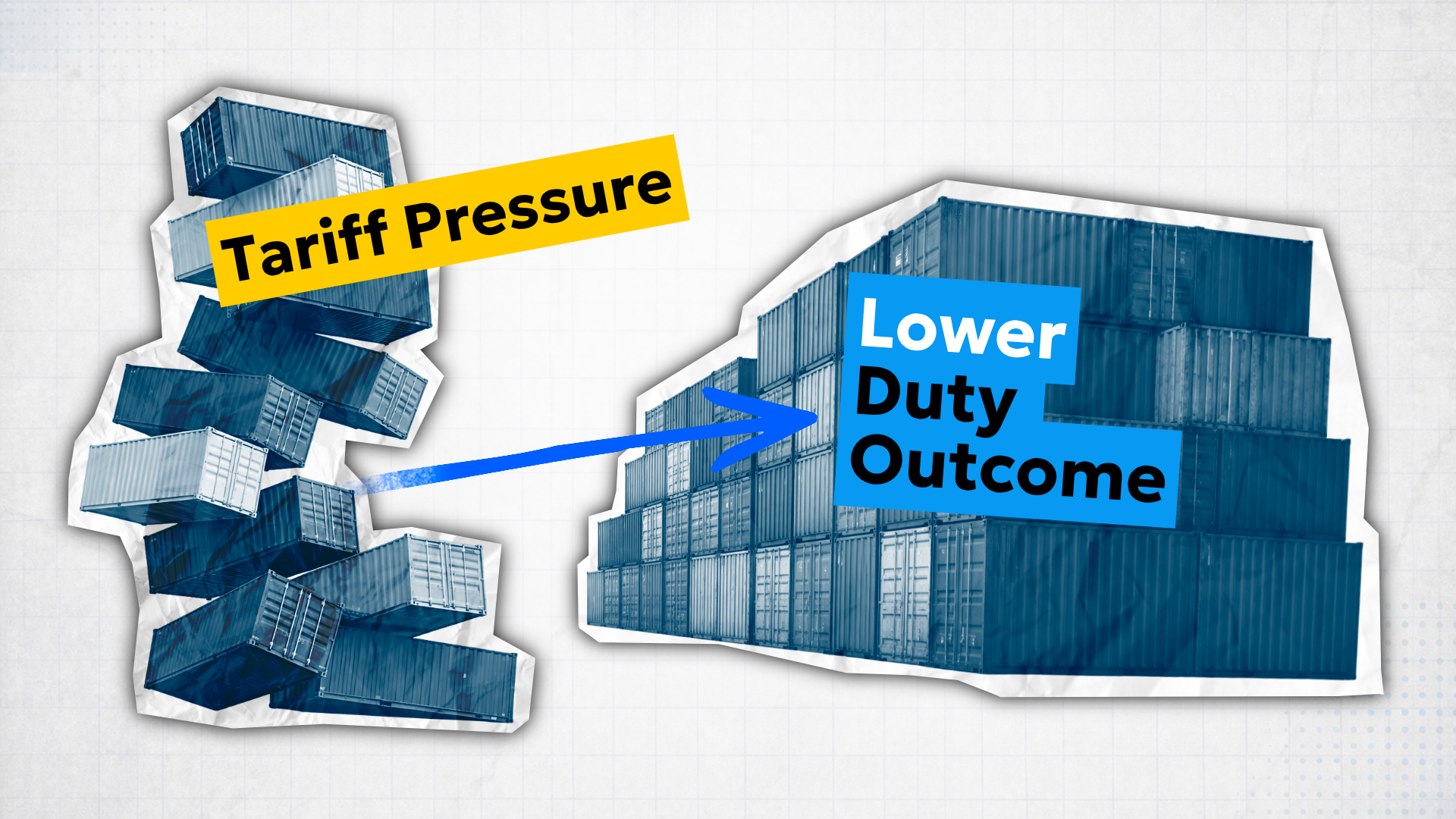
The current trade environment is putting real pressure on importers. A 10% flat surcharge on most U.S. imports is active through July 24 under Section 1221 and USTR launched sweeping Section 301 investigations in March, covering 16 major economies, with new tariffs potentially landing as early as mid-year.2 For importers with significant duty exposure, waiting to see how these policies shake out is not a reliable or recommended strategy.
Tariff engineering can be one of the most effective (and legal) tools available for reducing that exposure and protecting margins.3 This article explores what tariff engineering is, how importers can use it without violating customs regulations, why working with an experienced and knowledgeable logistics partner is critical to the process.4
What Is Tariff Engineering?
Tariff engineering is the legal practice of modifying a product’s physical characteristics, manufacturing process, or supply chain structure so that it qualifies for a more favorable HTS classification and a lower duty rate.3 It changes what a product is or how it is made, not just how it is described on a customs form.8
This is a proactive, structural strategy. It requires substantial changes upstream, whether in product design, assembly, sourcing, or supply chain configuration, and those changes have to be legitimate. CBP audits classifications and can inspect goods at the border, so ensuring products meet new class requirements is essential.5
Tariff Engineering vs. Tariff Misclassification: What’s the Difference?
Misclassification means declaring a product under an HTS code it does not qualify for, with no underlying change to the product or process. That is customs fraud, and CBP penalizes it with fines, additional duties, and in serious cases, criminal referral.6
Tariff engineering, on the other hand, means the product or process materially changes so that a different HTS classification applies. The test is simple: does the product genuinely meet the criteria for the new code? If yes, the lower duty rate is legitimate. If a classification change happens without a real underlying modification, it is likely a misclassification.3,4
Knowing where that line between the two is important, but what importers actually want to know is where the opportunities are.
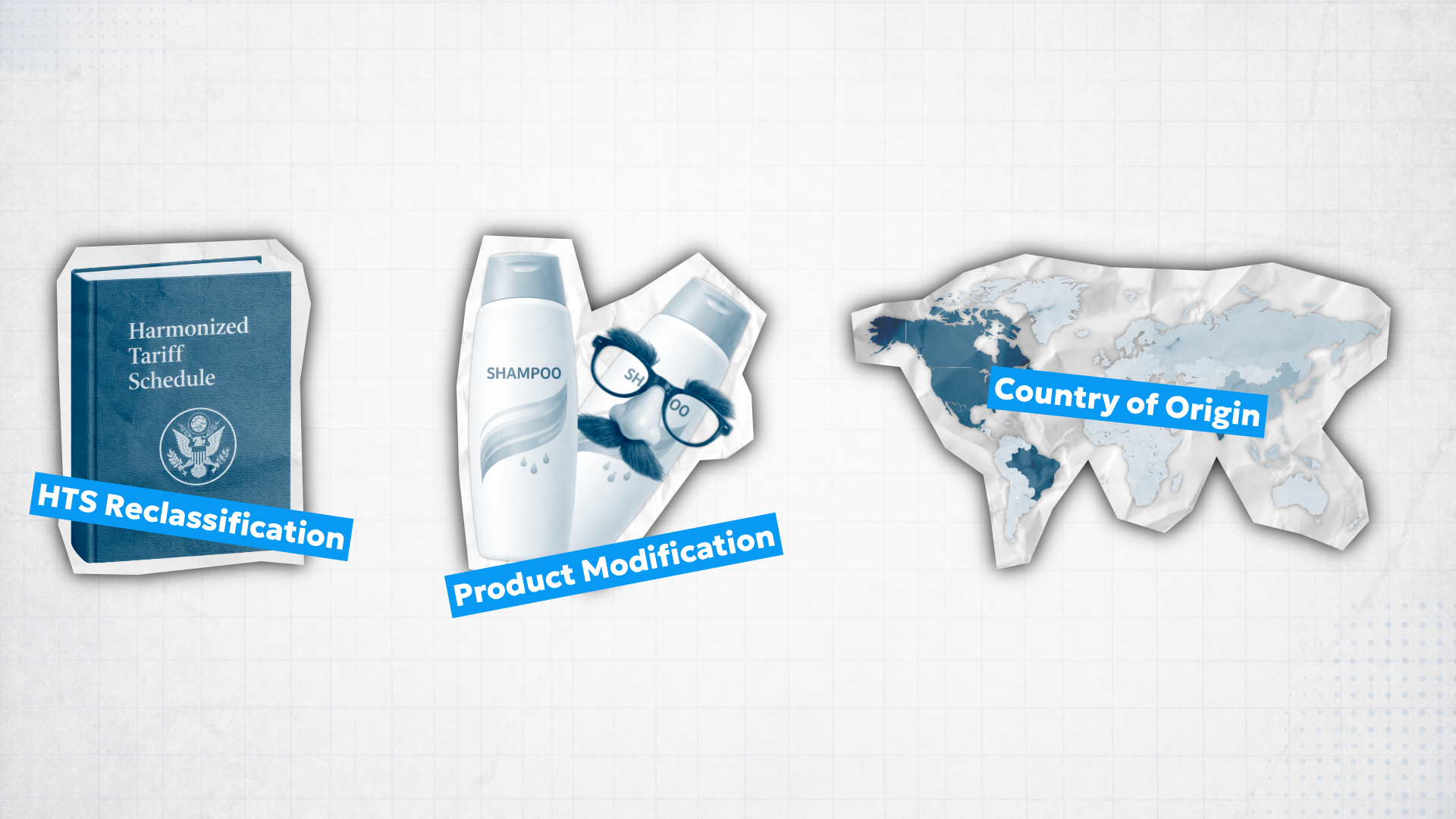
Tariff Engineering Strategies: What Can Actually Change
Tariff engineering requires actual process change. The strategy that makes sense depends on what you import, where it comes from, and how it’s manufactured. Here are the primary approaches.3,4
1. HTS Code Reclassification
This is the most straightforward starting point for many importers. HTS codes are often assigned once and never revisited, even as products evolve and the schedule itself changes. The HTS is updated more frequently than most importers realize — the 2026 Basic Edition was published December 31, 2025, and Revision 4 followed on February 25, 2026.7 A code that was accurate two years ago may no longer be the best or most defensible classification for your product today.
A thorough HTS review examines item descriptions1,3 to potentially identify a more accurate code that carries a lower rate, with no changes to the product itself. Any reclassification should be supported by a CBP binding ruling or written legal opinion before it is applied. The ruling confirms the classification in advance and creates a documented basis that holds up if CBP questions it later.4,8
2. Product Modification
Altering a product’s physical characteristics can shift it into a different HTS classification with a lower duty rate. But remember, the change has to be real and consistently applied. CBP evaluates whether modifications are substantive, not whether they look good on paper.3,12 Modification might take several forms:
- Material composition. The materials a product is made from often determine its HTS classification more than its function does. Switching from one material to another (like metal components to engineered polymer) can move a product into an entirely different category with a lower duty rate.8
- Functional scope. A product with fewer features or capabilities may be classified differently than a fully-featured version. In some categories, removing a component or capability can lead to a substantially lower rate on the base product.8,3
3. Kits, Sets, and Components
How a product is configured when it enters the country affects how it is classified, and the difference in duty rates between a finished set and its individual components can be significant. Some complete goods carry a lower rate than their components would individually. In other cases the opposite is true, and importing components separately is the more favorable structure. A few scenarios worth evaluating:8
- Import components separately, assemble domestically. If the components of a product each carry lower duty rates than the finished good, importing them unassembled and completing production in the U.S. can reduce duty exposure while also potentially qualifying the finished product for domestic origin status.9
- Avoid set classification. CBP can classify a group of products imported together as a “set” under a single HTS heading, which may carry a higher rate than the items would warrant individually. Adjusting how goods are packaged or presented at entry can sometimes avoid that outcome.8,11
- Leverage complete goods classification. In categories where the finished product carries a lower rate than its components, importing fully assembled is the better call. The analysis runs in both directions and is worth checking before you lock in an import structure.8
4. Country of Origin Engineering
Duty rates vary by country of origin, so shifting where a product is considered to originate can significantly reduce what you pay. The governing standard is “substantial transformation” — a product must undergo processing in the new country that fundamentally changes its character, name, or intended use. It is not enough to route goods through a lower-tariff country for finishing, labeling, or minor assembly.9
CBP looks at whether the manufacturing performed in that country would cause a reasonable person to consider the final product meaningfully different from the one that went in.9
Moving components sourced in China for final assembly in Vietnam or Mexico will not automatically change the product’s origin for customs purposes. What can qualify is a manufacturing operation that takes intermediate inputs and produces something with a distinct commercial identity, like a different end use or a fundamentally different form. The bar is high, and CBP scrutiny on origin claims is growing as “tariff jumping” has become more common in the wake of U.S. retaliatory tariffs.9,5
Any origin engineering strategy should be reviewed by a customs attorney before implementation, and detailed transaction records need to support the claim.12,4
5. First Sale Valuation (Bonus Strategy)
First sale valuation does not change an HTS classification, but it reduces the value on which duties are calculated and pairs well with a classification review. In most multi-tier supply chains, duties are assessed on the price the importer paid the intermediary. First sale valuation uses the earlier price paid by the intermediary to the manufacturer instead.10
For importers buying through trading companies or sourcing agents where the margin between those two prices is wide, the duty savings can be meaningful. It requires documentation of the full transaction chain and is a valuable option for companies that qualify.10
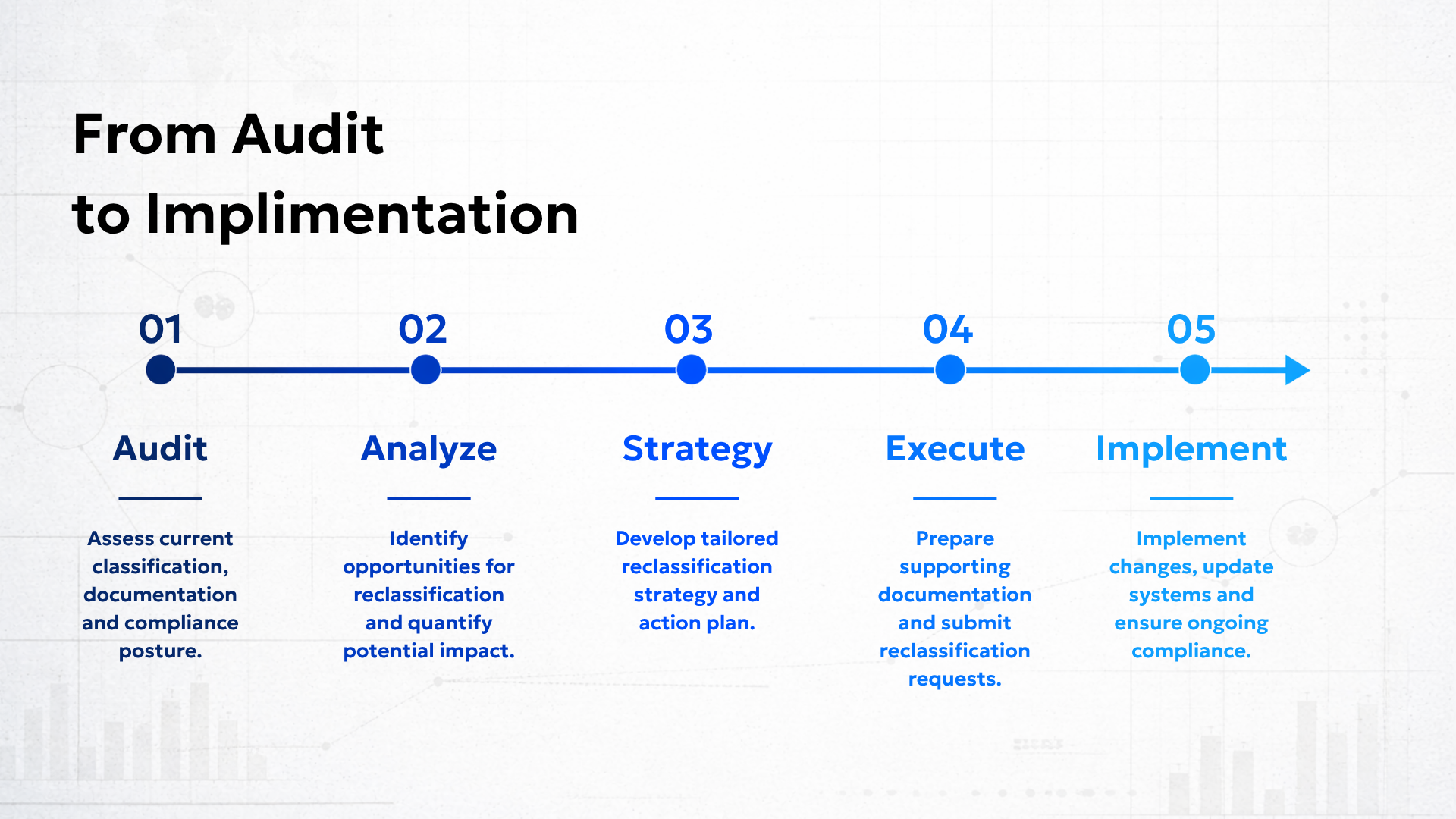
How to Conduct an HTS Reclassification Review: Step by Step
A tariff engineering strategy is only as good as the review process behind it. Most importers have never done a formal HTS audit, which means the starting point is usually simpler than expected.12,5
- Audit your current HTS codes. Pull your import records and identify your top duty-paying product categories. These are your highest-priority targets.5
- Evaluate classification accuracy. Assess whether current codes reflect the most accurate and defensible classification, or whether they were assigned without rigorous analysis.8,12
- Identify engineering opportunities. Determine whether product design, assembly configuration, or sourcing can be legitimately modified to qualify for a lower rate.3
- Research alternative classifications. Cross-reference the HTS schedule and CBP rulings database. Your customs broker’s experience with similar products is an important input here.8,11
- Seek a binding ruling where appropriate. Before making structural changes, a CBP binding ruling locks in the classification and eliminates ambiguity at the border.4
- Implement with documentation. Every change needs a paper trail. CBP can audit at any time, and organized records are your first line of defense.5,12
- Review periodically. Duty rates, exclusion lists, and the HTS schedule itself change. Classification is not a one-time exercise.7
Most importers can run this process annually at best. But keeping up with it as trade policy evolves and the HTS schedule changes requires a dedicated partner with their finger on the pulse of U.S. imports.1,2,7
Tariff Engineering Only Works When It’s Done Right
Identifying a classification opportunity is one thing. Implementing it accurately and in a way that holds up under CBP review is another — and that is where most importers need support.5,12
HTS classification involves judgment calls that automated tools alone can’t make. An experienced customs team knows where CBP draws the line, which classification arguments hold up under scrutiny, and what documentation needs to be in place before a change is applied. They also know what to avoid, like classification patterns or inconsistencies across entry types that raise flags upon arrival.4,5,12
As a full-service logistics provider with deep customs expertise, Dedola helps importers identify, implement, and document tariff engineering strategies while keeping their programs on the right side of CBP. Connect with us to find out where your program stands.
Tariff Engineering FAQs
Is tariff engineering legal?
Yes — when done correctly. Tariff engineering is a recognized, legal practice under U.S. customs law. It involves making meaningful changes to a product, its manufacturing process, or supply chain structure so that it legitimately qualifies for a different HTS classification. It is not legal to misrepresent a product’s classification without actually changing the product.3,6
What’s the difference between tariff engineering and customs fraud
Can CBP challenge a tariff engineering strategy?
Yes. CBP can audit classifications, request documentation, and issue penalty notices for anything it flags as a potential misclassification. This is why defensible documentation, binding rulings, and expert guidance are critical. Working with a knowledgeable customs broker and logistics partner significantly reduces this risk.5,6,4
How do I know if my products are good candidates for tariff engineering?
Sources
- Federal Register — Imposing a Temporary Import Surcharge to Address Fundamental International Payments Problems
- Federal Register — Initiation of Section 301 Investigations: Acts, Policies, and Practices of Certain Economies Relating to Structural Excess Capacity
- Merritt v. Welsh, 104 U.S. 694 (1881)
- 19 CFR Part 177 — Administrative Rulings
- U.S. Customs and Border Protection — Audits
- 19 U.S.C. § 1592 — Penalties for Fraud, Gross Negligence, and Negligence
- United States International Trade Commission — HTS Announcements
- Harmonized Tariff Schedule of the United States
- International Trade Administration — Rules of Origin: Substantial Transformation
- U.S. Customs and Border Protection — First Sale Declaration
- CBP CROSS — Customs Rulings Online Search System
- U.S. Customs and Border Protection — Reasonable Care
- Dedola Global Logistics — Item Descriptions Are the First Line of Defense in Avoiding Tariffs