 Stephen Dedola
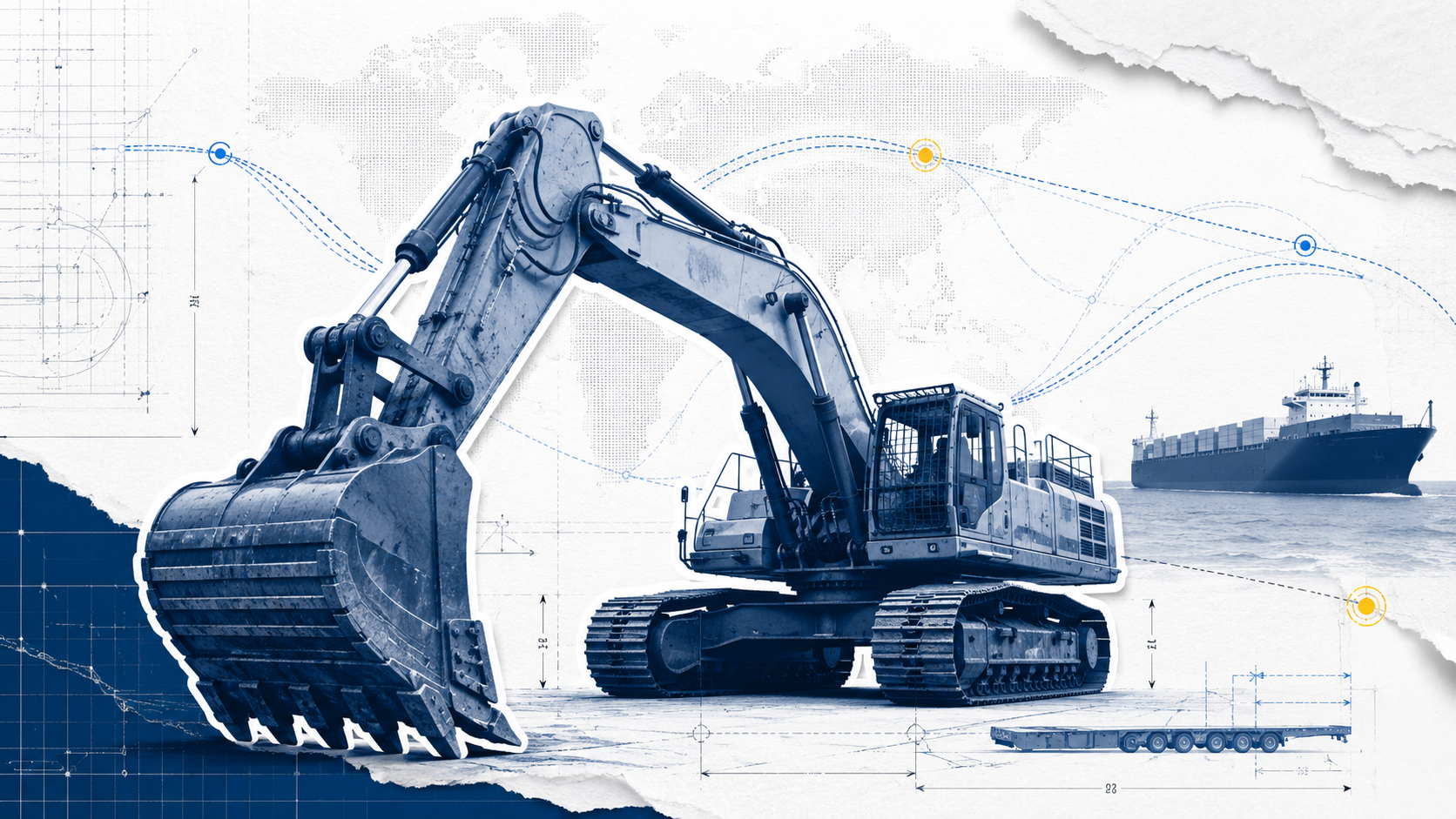
Shipping heavy machinery overseas demands precision at every stage. Cargo classification, inland transport, customs documentation, port handling, and vessel selection all have to be right. One misstep in any of these areas can mean costly delays, compliance issues, or damage to equipment that took years to acquire. This guide covers the full process from site to destination so you can plan and execute your next international shipment without surprises.
What You Need to Know Before Shipping Heavy Equipment Overseas
Cargo characteristics drive every decision that follows: method selection, routing, documentation, and cost. Before anything else, make sure you have complete and accurate details on your freight.
- Exact dimensions and gross weight: Length, width, height, and weight need to be precise. These figures determine mode eligibility, permit requirements, and vessel booking. Estimates create problems at origin and can result in rebooking fees or port holds.
- OOG (out-of-gauge) status: Equipment that exceeds standard container dimensions is classified as out-of-gauge cargo. That designation changes your mode options, documentation requirements, and port handling procedures.
- Wheeled/self-propelled vs. static cargo: Whether your equipment moves under its own power determines whether roll-on/roll-off (RoRo) is a viable option. A bulldozer and an industrial crusher may have a similar footprint, but they ship very differently.
- Fluid and fuel status: Most carriers require that fuel tanks be drained and hydraulic fluid be neutralized before loading. Confirming this early prevents delays at origin that can push back your shipping timeline.
Choosing the Right Ocean Freight Method for Your Machinery
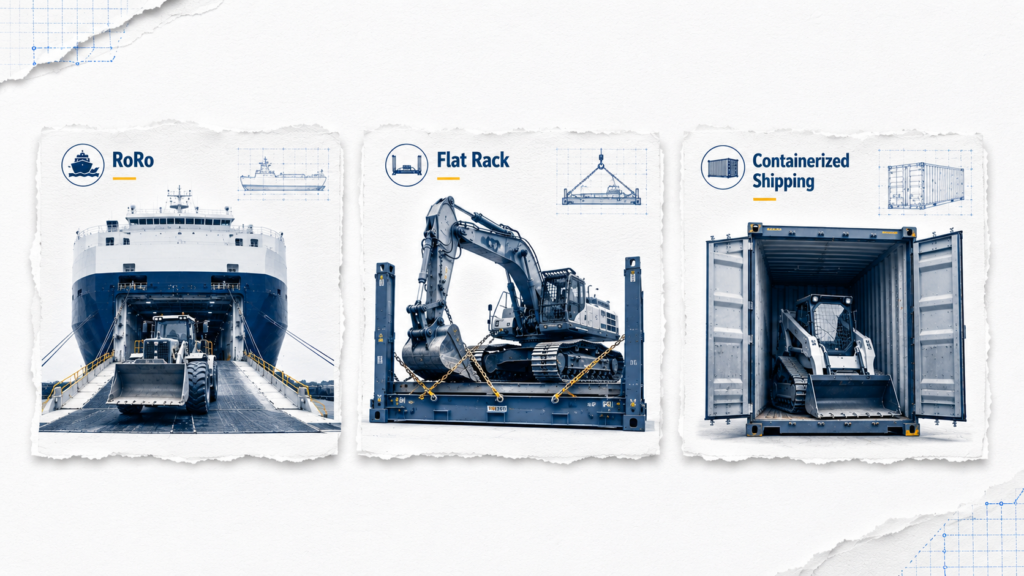
Method selection comes down to three things: whether your equipment is self-propelled, whether it fits standard container dimensions, and how much protection it needs in transit. Here is how each option works and when it makes sense.
| Shipping Method | Ideal For | Benefits | Considerations |
|---|---|---|---|
| RoRo | Wheeled/Tracked vehicles (Dozers, Trucks) | Easiest loading, lower port handling fees | Equipment must be self-propelled or towable |
| Flat Rack | Static, oversized components (Boilers, Crushers) | Accommodates out-of-gauge (OOG) dimensions | Exposed to ocean elements during transit |
| Containerized | Equipment that can be disassembled | Lowest ocean freight rates, best protection | Requires mechanical labor to dismantle/reassemble |
Roll-On/Roll-Off (RoRo) Shipping
RoRo vessels are purpose-built for wheeled and tracked cargo. Equipment drives or tows directly onto the vessel via a built-in ramp and is secured to the deck.1 No crane is required at the port, which keeps handling fees lower and reduces the risk of lift-related damage during loading and offloading.
The hard requirement is that equipment must be operational or towable. Machinery that cannot move or be towed under its own power does not qualify.
RoRo capacity is measured in lane meters (LMs) rather than metric tonnes or TEUs, calculated by multiplying the cargo’s length by its width across the total number of vessel decks.2 For shippers moving multiple machines, it’s also worth noting that RoRo vessels do not stack cargo, so per-unit costs run higher than containerized shipping.
Flat Rack and Open Top Containers
Flat rack and open top containers are the standard solutions for static, oversized cargo that cannot be containerized and is not self-propelled.
Flat rack containers have fixed or collapsible end walls but no sides or roof.3 Cargo loads from the top or sides and can legally overhang the frame for out-of-gauge shipments, provided proper lashing and flagging requirements are met.4 Flat racks are well-suited for large static components: industrial boilers, crushers, heavy structural assemblies, and similar equipment.
Open top containers follow standard 20′ and 40′ dimensions, but replace the solid roof with a removable tarpaulin cover.5 They load from the top via crane and provide better protection than a flat rack since the side walls remain intact. Open tops work well for equipment that exceeds standard container height but fits within container width and length.
The tradeoff for both options is exposure. Tarping provides a degree of protection, but neither method offers the same level of security against sea conditions as a sealed container. Cargo insurance and proper securing are particularly important here.
Breakdown Shipping (Standard Containerization)
When equipment can be disassembled to fit standard container dimensions, containerized shipping is worth serious consideration. Sealed 20′ and 40′ containers offer the best protection against weather, moisture, and theft, and ocean freight rates for standard containers are lower than for OOG cargo.
The tradeoff is labor. Disassembly and reassembly require qualified mechanical personnel, and that cost needs to be factored into the overall shipping budget. There is also a customs consideration worth flagging: disassembled equipment can sometimes be classified under different HTS codes than assembled machinery, which may affect duty rates at the destination port.6 A knowledgeable freight forwarder can identify whether disassembly creates a customs advantage or exposure before you commit to the method.
How Much Does It Cost to Ship Heavy Equipment? Factors and Considerations
There is no standard rate for international heavy equipment shipping. Costs vary based on cargo dimensions, destination, method selection, and how the shipment is structured. Knowing what drives the final number helps you budget accurately and avoid surprises.
Major Cost Drivers: Inland Transport, Ocean Freight, and Port Fees
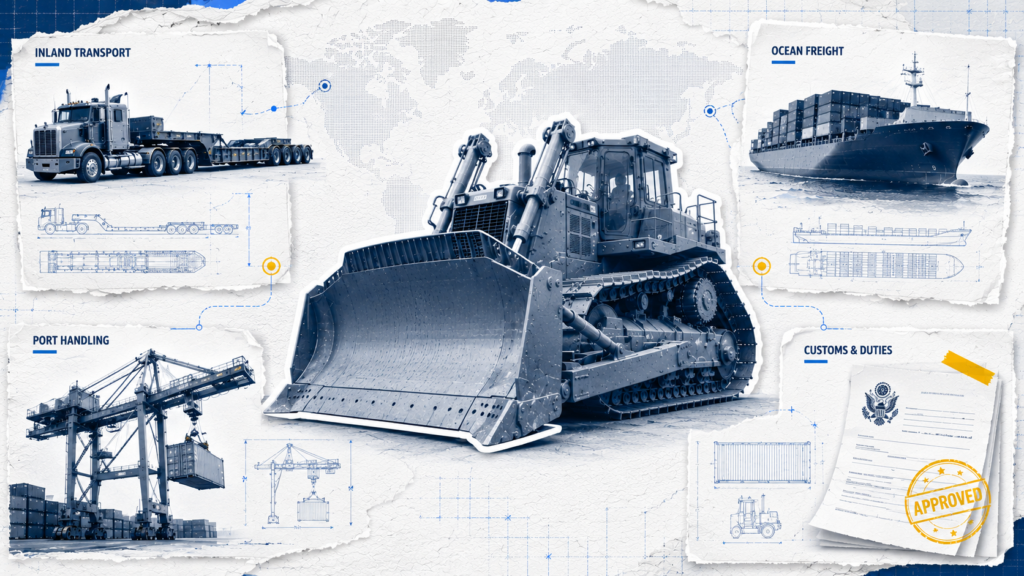
Most shippers focus on the ocean freight rate, but that isn’t the only expense to consider. Moving heavy equipment via ocean often involves costs across three distinct categories:
- Inland transport covers moving equipment from its current location to the load port and to its final destination from the discharge port. For OOG cargo, this means specialized heavy-haul trucking, which has its own cost structure based on distance, route complexity, and equipment size. Multi-axle lowboys, route surveys, and escort vehicles all add to the price.
- Ocean freight is determined by your cargo’s dimensions and weight, the shipping method selected, and the trade lane. OOG cargo on flat racks commands a premium over standard containerized freight. RoRo rates are calculated per lane meter rather than by weight, so a wide or long machine can cost more than a heavier one with a smaller footprint.
- Port fees include terminal handling charges at both origin and destination, any crane or specialized equipment fees required for loading, and storage if your cargo sits at the port before vessel departure. These charges vary by port and can be substantial for OOG shipments that require dedicated handling.
How Disassembly Can Drastically Reduce Your Customs Duties
Disassembly isn’t just a shipping consideration —it can also be a meaningful customs strategy. Heavy machinery shipped as a complete, assembled unit is typically classified under a single HTS code that carries a specific duty rate.6 When the same equipment is broken down into components, individual parts may qualify for lower duty rates under separate HTS codes.6
The savings potential depends on the equipment type, the destination country’s tariff schedule, and how the components are classified. This is not a strategy to approach without expertise. Misclassification of components poses a compliance risk, and customs authorities in many markets closely scrutinize disassembled machinery. A freight forwarder with deep tariff engineering knowledge can model the duty exposure for both scenarios before you commit to a method.
Step-by-Step Logistics: Moving Machinery From US Site to Overseas Port
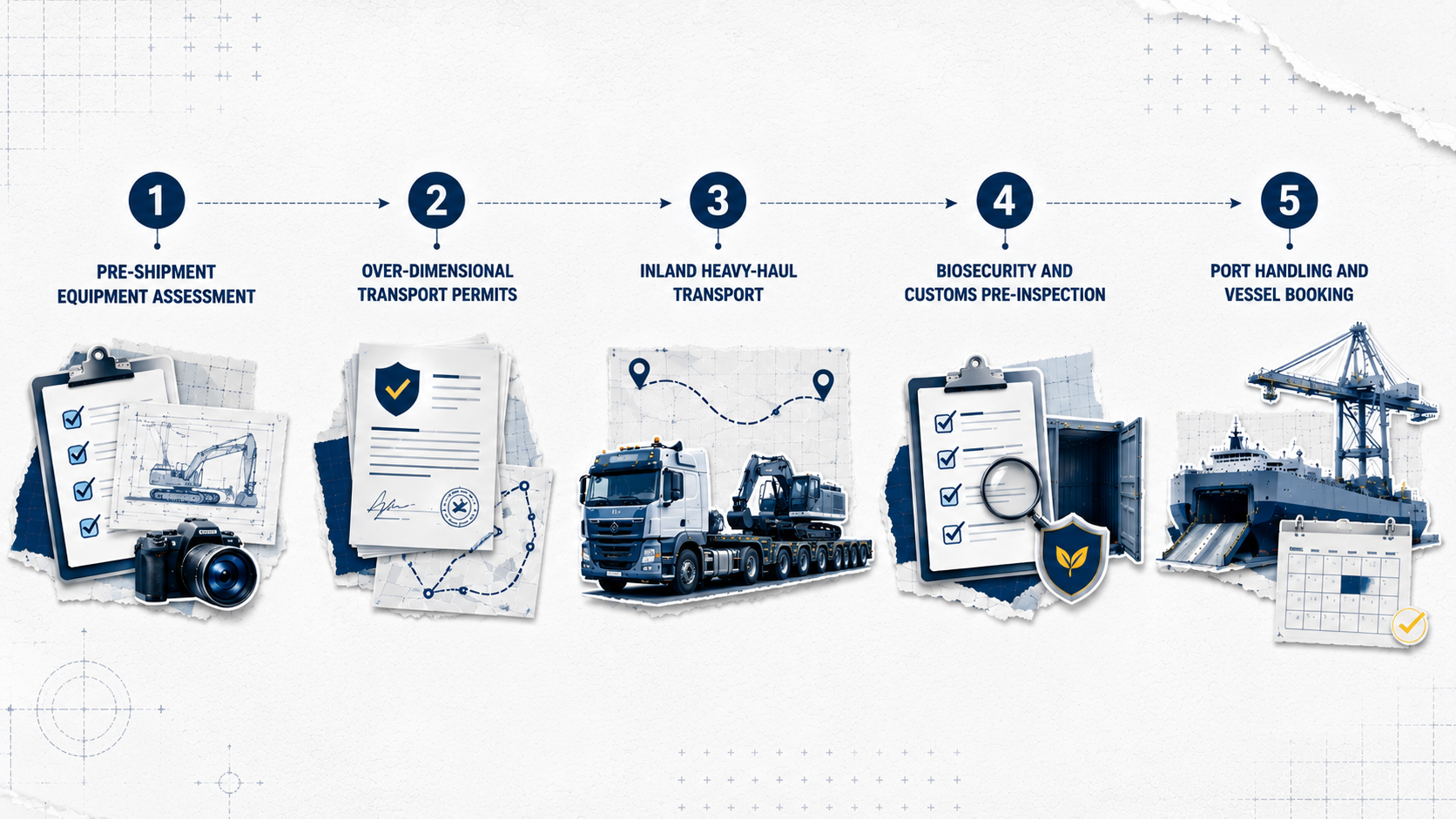
Getting heavy equipment from a domestic job site to an overseas port involves more coordination than a standard export. Here is how the process unfolds from start to finish.
- Conduct a pre-shipment equipment assessment. Before anything moves, document your equipment completely. Confirm exact dimensions and gross weight, check fluid and fuel levels against carrier requirements, and photograph the machinery from multiple angles. This record serves as your baseline for insurance purposes and gives your freight forwarder the accurate specs needed to book the right vessel and method.
- Secure state-level over-dimensional transport permits. OOG equipment moving by road requires over-dimensional permits, which are issued at the state level. A cross-country move may require permits from multiple states, each with its own application process, fees, and lead times.7 Some states also mandate route surveys and escort vehicles for loads above certain dimensions.7 These permits need to be in hand before inland transport is scheduled.
- Arrange inland transport. Moving OOG equipment to or from port requires specialized heavy-haul trucking. Depending on your cargo, that may mean a multi-axle lowboy, a stretch trailer, or a modular transport configuration. Route planning matters here: bridge weight limits, overhead clearances, and road restrictions can all affect the viable path to port. Coordinate inland transport and vessel bookings in parallel to avoid port storage fees.
- Prepare for biosecurity and customs pre-inspection. US Customs and Border Protection requires an Electronic Export Information (EEI) filing through the Automated Export System (AES) for most heavy machinery exports.8 Beyond export documentation, many destination countries enforce biosecurity requirements. Equipment arriving with soil, organic material, or plant matter can be quarantined or turned back at the destination port.9 Clean your equipment thoroughly before it reaches the port of loading.
- Coordinate port-of-loading handling and vessel booking. Port handling for heavy equipment is critical. Confirm in advance what equipment the terminal has available for your cargo type: crane capacity, RoRo ramp access, flat rack handling. Make sure your freight forwarder has communicated your cargo’s exact specs to the terminal operator. Vessel bookings for OOG cargo often require carrier approval, so build lead time into your schedule accordingly.
Essential Documentation for International Heavy Equipment Freight
Missing or incorrect documentation is one of the most common causes of delay in heavy equipment exports. Make sure the following are prepared and accurate before your cargo reaches the port:
- Commercial Invoice: Must reflect the accurate value of the equipment, buyer and seller details, and a precise description of the machinery including make, model, and serial number.
- Packing List: Details the physical characteristics of the shipment including dimensions, weight, and any disassembled components.
- Bill of Lading (BOL): The primary contract between shipper and carrier. For OOG cargo, confirm that the BOL accurately reflects the shipping method and any special handling requirements.
- Electronic Export Information (EEI): Filed through the Automated Export System (AES) with CBP prior to export. Required for most heavy machinery shipments valued over $2,500.8
- Certificate of Origin: Required by many destination countries to determine applicable duty rates and trade agreement eligibility.10
- Import Permits and Destination Country Requirements: Many countries require advance approval to import heavy machinery. Requirements vary significantly by market and equipment type.
- Insurance Certificate: Documents the cargo coverage in place for the shipment. Carrier liability for heavy equipment is limited, and a standalone cargo insurance policy is strongly recommended.
Why Heavy Equipment Shippers Work With a Specialist Freight Forwarder
International heavy equipment shipping requires a freight forwarder who understands the full scope of what’s involved, from OOG classification and permit coordination to customs strategy and port handling. The variables are significant, and the cost of getting it wrong is expensive. Dedola Global Logistics has been managing complex international freight for over 50 years. We work as an extension of your logistics operation, not a vendor you hand off to and hope for the best. If you’re moving heavy machinery overseas, connect with our team for expert guidance on your next shipment.
FAQs
Do you need a freight forwarder to ship heavy equipment internationally?
Technically, no. Practically, yes. International heavy equipment shipping involves OOG classifications, over-dimensional permits, biosecurity requirements, destination country import regulations, and customs documentation that vary by market. An experienced freight forwarder manages that complexity, identifies compliance risks before they become problems, and coordinates every party in the chain from inland transport to final delivery.
What documents are required to export heavy machinery?
Requirements vary by destination, but most international heavy equipment exports require the following:
- Commercial invoice
- Packing list
- Bill of lading
- Electronic Export Information (EEI) filing via the Automated Export System (AES)
- Certificate of origin
- Import permits (destination-dependent)
- Cargo insurance certificate
Confirm destination-specific requirements with your freight forwarder before booking.
Does heavy equipment need to be cleaned before shipping?
Yes. Most carriers require fuel tanks to be drained and hydraulic fluids neutralized before loading. Beyond carrier requirements, many destination countries enforce strict biosecurity regulations. Equipment arriving with soil, organic material, or plant matter risks quarantine or rejection at the destination port.9 Clean your equipment thoroughly before it reaches the port of loading.
How are customs duties calculated for heavy machinery imports?
Duties are calculated based on the equipment’s HTS code classification and declared customs value at the destination port.6 The applicable rate depends on the destination country’s tariff schedule and any trade agreements in effect between the US and that market. Disassembled equipment may be classified under different HTS codes than assembled machinery, which can affect the duty rate.6 A freight forwarder with customs expertise can model both scenarios before you commit to a shipping method.
What insurance do I need when shipping heavy equipment overseas?
Carrier liability for heavy equipment is limited and rarely covers the full value of the cargo. A standalone cargo insurance policy is strongly recommended for any international heavy equipment shipment. Coverage should account for the full replacement value of the machinery, including any specialized components. Your freight forwarder can advise on appropriate coverage levels and connect you with marine cargo insurance providers.
Sources
- Marine Insight — “What are RoRo Ships?”: RoRo vessels defined as purpose-built for wheeled cargo loaded via built-in ramps, with no crane required for loading or offloading.
- Logisoft — “Linear Meters vs Lane Meters: Calculate RoRo Freight Costs”: RoRo cargo measured in lane meters (LMs) rather than weight, calculated by cargo length divided by standard lane width; carriers price by lane meters because deck space is the binding constraint.
- Allison Shipping — “What Is a Flat Rack Container?”: flat rack defined as a container with no side walls and fixed or collapsible end walls.
- TraceContainer — “Flat Rack Container Dimensions, Payload & OOG Specs”: cargo overhang and lashing/flagging requirements for flat rack OOG shipments.
- DSV — “20′ & 40′ open top container dimensions for shipping”: open top container defined as having a tarpaulin in place of a solid roof, available in standard 20′ and 40′ sizes.
- U.S. International Trade Administration — “Harmonized System (HS) Codes”: HTS classification principles for assembled vs. component goods and how classification determines duty rates.
- GAO Report (FHWA) — “Transportation Safety: Federal Highway Administration Should…”: confirms oversize/overweight permits are state-issued, vary by state, and that escort vehicle requirements are state-determined.
- U.S. Customs and Border Protection (CBP) — “How to submit an Electronic Export Information (EEI)”: EEI filing through AES required for exports valued over $2,500 per Schedule B number.
- USDA APHIS — “APHIS Core Message Set Questions and Answers”: unclean farm and heavy machinery arriving with soil or organic material is subject to APHIS/CBP quarantine restrictions at the destination port; used equipment from certain countries also requires cleaning certificates.
- U.S. International Trade Administration — “FTA Certificates of Origin”: certificate of origin used to claim preferential (reduced or eliminated) duty rates under free trade agreements.