

Last week’s news from Washington has fundamentally changed the outlook for U.S. importers. With the Supreme Court ruling that the administration overstepped its authority regarding broad emergency tariffs, businesses are facing a situation we haven’t seen before: the potential for retroactive tariff recovery.
If you are an importer, you likely have two immediate questions: When do I get my money back? And how will these new tariff developments impact my bottom line?
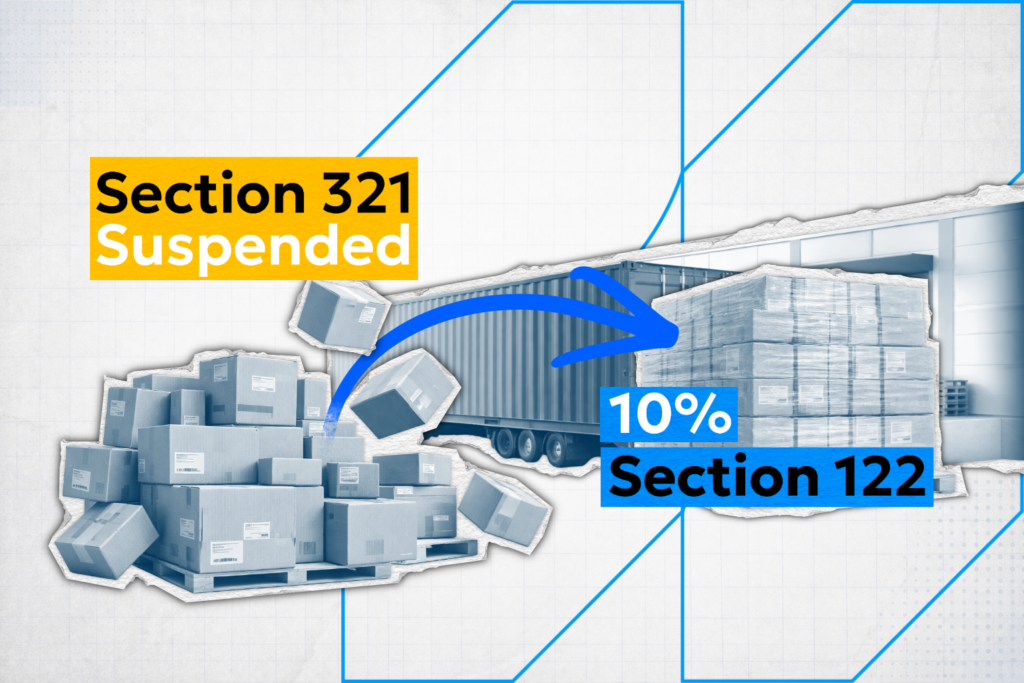
At Dedola, our phones have been ringing since the decision was announced. It’s a lot to process, especially with the administration already activating a temporary 10% tariff using its Section 122 authority, which went into effect on February 24 and is authorized for 150 days pending submission to Congress. While the headlines are focused on large refund figures, the real challenge for your business is getting clarity. You need to understand what’s happening today so you’re better prepared for what’s next – whether that’s a potential refund process or a new set of tariffs to navigate.
Our goal is to give you the facts, help you get your documentation in order, and make sure you’re ready for however this unfolds. Here is what we know so far and the steps you can take today to protect your interests.
Understanding the Supreme Court Ruling on Emergency Tariffs
On February 20, 2026, the Supreme Court ruled 6-3 that the administration overstepped its constitutional authority by using the International Emergency Economic Powers Act (IEEPA) to impose broad import tariffs.
In simpler terms: the Court decided that the power to tax imports belongs to Congress, not the President. This ruling invalidates the emergency tariffs imposed under IEEPA authority.
While this ruling creates a possible pathway for recovery of duties paid under IEEPA, it is far from a settled matter. U.S. Customs and Border Protection (CBP) has not issued formal guidance on how refunds will be handled, whether interest will apply, or what the procedural timeline will be. At the same time, the administration has implemented a 10% global tariff under Section 122, which is currently in effect for up to 150 days.
For importers, this ruling may affect past entries, but it also introduces new compliance considerations for future shipments.
Is Your Business Eligible for a Tariff Refund?
With significant tariff revenue now tied to duties imposed under IEEPA, the question of recovery is top of mind.
The reality is that we are in uncharted territory. The Supreme Court’s decision did not establish a refund mechanism. While legislation such as the proposed Tariff Refund Act of 2026 has been introduced, nothing has been enacted into law. There is currently no official CBP guidance outlining how refunds will be processed.
Here is what we know right now:
Refunds Are Not Automatic: There is no confirmed refund program in place. Importers should not assume payments will be issued automatically or on a defined timeline.
Liquidation Matters: Many entries filed on or after April 5, 2025 have not yet liquidated. Under U.S. customs law, an importer cannot file a protest until an entry has liquidated. Monitoring liquidation dates is critical because the protest window begins at liquidation.
ACE Setup Is Required: CBP does not issue paper checks automatically. Importers must have their financial information properly established in ACE (Automated Commercial Environment) to receive refunds if and when they are approved.
Interest Is Not Confirmed: There has been discussion about whether refunds could include interest, but nothing has been approved. No assumptions should be made until formal guidance is issued.
The most important takeaway is this: refunds, if they occur, will likely depend on procedural compliance. Waiting for a government announcement without organizing your data may create avoidable delays.
How to Prepare for Potential Tariff Refunds
Even though the final process is not defined, you should organize your files now. We are advising our clients to take these steps as soon as possible:
Audit Your HTS Codes: Identify every entry from the last year that was impacted by the emergency tariffs addressed in the ruling.
Monitor Entry Liquidation: Determine which entries have liquidated and which have not. The ability to file a protest depends on liquidation status.
Preserve Your Rights via Protests: Under current trade laws, a protest can only be filed after liquidation. Importers should closely monitor liquidation notices and be prepared to act within the statutory protest period. U.S. Customs has not issued specific guidance on protests related to this ruling, so working with a customs attorney is strongly recommended. A licensed attorney can evaluate eligibility and file protests on your behalf.
Centralize Your Documentation: You should have a complete digital paper trail, including:
- Commercial invoices
- Packing lists
- Bills of lading
- Entry summaries (Form 7501)
- Entry documents (Form 3461)
- Proof of duty payments
Most importantly, you must know when your entries liquidate, as that date determines your protest deadline.
Consult with Experts: Navigating potential federal duty recovery is a high-stakes compliance matter. Working with a licensed customs broker and experienced trade counsel will help ensure you follow the correct procedures and avoid unintended audit exposure.
The 10% Global Tariff Under Section 122 and Continued Volatility
In response to the ruling, the administration has moved to implement a 10% global tariff under Section 122. This measure went into effect on February 24 and is authorized for up to 150 days.
Unlike the invalidated IEEPA tariffs, Section 122 is an established statutory authority. However, it is temporary in nature and subject to further legislative action.
The current environment remains fluid. While volatility is high, we advise against drastic supply chain decisions based solely on headlines. The focus should remain on maintaining flexibility and closely monitoring regulatory developments as Washington determines next steps.
Navigating Trade Uncertainty with Dedola
Dedola has been family-owned and operated for over 50 years. In that time, we’ve seen trade regulations undergo major shifts, but the current situation is unique in both scale and legal complexity. Despite that, our role remains the same: we are here to be your expert logistics department.
Whether you’ve been a partner for decades or you’re trying to make sense of recent developments, we are here to help you navigate the compliance requirements and operational risk tied to these changes.
If you’re unsure how the latest tariff ruling affects your specific freight, reach out to us. We can help you review your entries, monitor liquidation timelines, and stay informed as formal guidance develops.

About the Author
Corina Meono
Director of Operations, Dedola Global Logistics
Corina has over 20 years of experience in international freight forwarding and client logistics management. She oversees Dedola’s operational strategy and ensures clients receive the highest level of care—from shipment coordination to claims support and cargo insurance guidance.