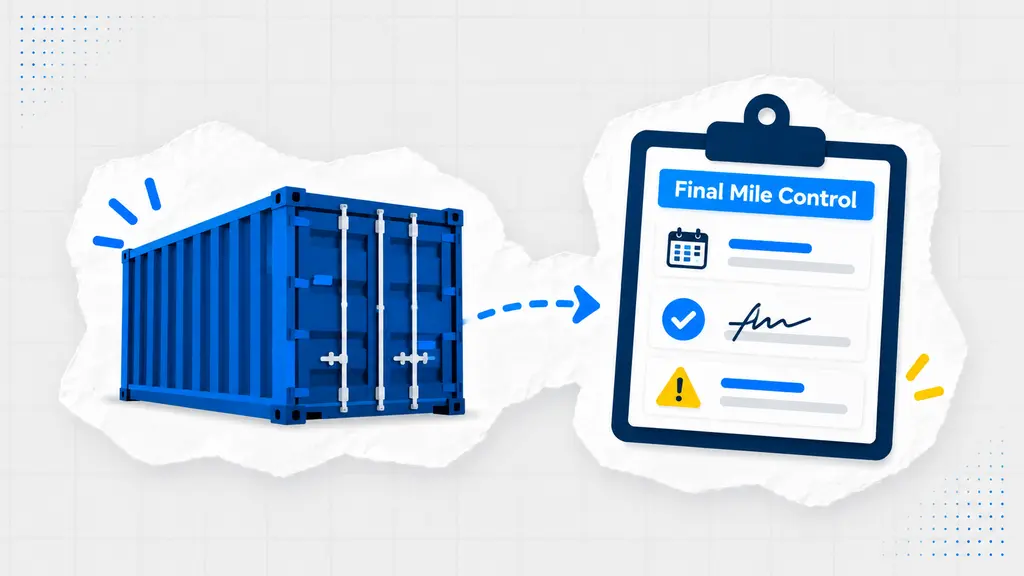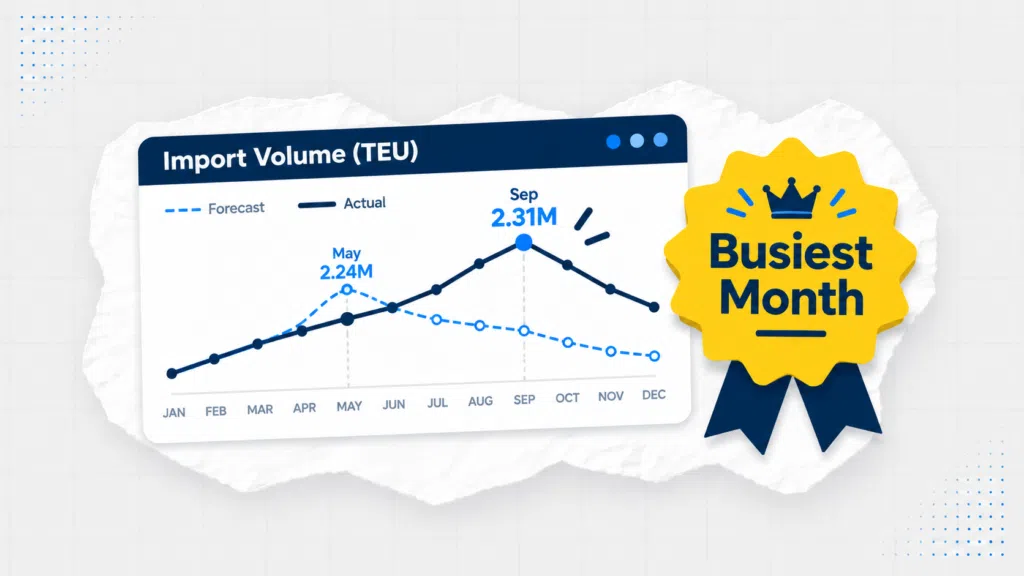
TEU is one of the most common measurements in ocean shipping and container logistics. It is used to describe container capacity, vessel size, and port throughput using a shared industry standard.
TEU definition
TEU stands for twenty-foot equivalent unit, the standard measurement used in container shipping to represent the capacity of one 20-foot container. In simple terms, TEU is the common unit used to compare how much cargo a ship can carry, how much volume a port handles, and how much containerized freight is moving through the supply chain.
What does TEU mean in shipping?
In shipping, TEU means twenty-foot equivalent unit. It is not a cargo type or a shipping service. It is a measurement standard used to make container volume easier to compare across carriers, ports, vessels, and freight plans.
Because containers come in different sizes, TEU gives logistics teams one common language for capacity. That is why the term shows up in shipping quotes, carrier capacity discussions, port statistics, and supply chain planning.
How TEU is used in ocean freight
TEU is mainly used in two ways: to describe vessel capacity and to measure container port throughput. In both cases, the goal is the same: creating a single unit that makes global freight volume easier to understand.
- Ship capacity: carriers use TEU to show how many standard container units a vessel can carry.
- Port activity: ports use TEU to report how much containerized freight they handle over time.
- Shipment planning: importers and logistics teams use TEU to interpret scale, capacity, and container utilization.
For businesses moving containerized imports, Dedola’s ocean freight services help connect capacity planning with real shipment execution.
TEU vs FEU: what is the difference?
The difference between TEU and FEU comes down to container length. A TEU represents one 20-foot container, while an FEU represents one 40-foot container.
- 1 TEU = one 20-foot container
- 1 FEU = one 40-foot container
- 1 FEU = 2 TEU
This is one of the most important container measurements to understand when comparing ocean freight options, vessel space, and shipment size.
Why TEU matters in global logistics
TEU matters because it gives importers, exporters, carriers, and ports a standard way to talk about container capacity. Without a shared unit like TEU, it would be much harder to compare ship size, terminal throughput, and container volume across different trade lanes and shipping partners.
For importers, understanding TEU can also make conversations about ocean freight rates, congestion, available capacity, and container planning much easier to follow.
When importers need to understand TEU
Importers do not need to calculate TEUs every day to benefit from understanding the term. But TEU becomes especially useful when reviewing ocean freight strategies, evaluating capacity limits, or discussing large-volume shipping programs.
- Comparing container capacity across carriers
- Understanding ship size and port congestion discussions
- Planning larger-volume ocean shipments
- Reading freight market reports and industry data
- Communicating more clearly with logistics providers
Companies managing larger import programs may also benefit from stronger supply chain planning so freight capacity, inventory flow, and delivery timing work together more efficiently.
Common TEU terms importers should know
- TEU: twenty-foot equivalent unit, the standard unit based on one 20-foot container.
- FEU: forty-foot equivalent unit, equal to two TEUs.
- Container throughput: the number of containers or TEUs a port handles over a given time period.
- Vessel capacity: the amount of container volume a ship can carry, often measured in TEUs.
- Containerized freight: cargo moved in standard shipping containers.
Why TEU became the standard container measurement
TEU became the standard because containerization transformed global shipping by making cargo handling more uniform, scalable, and efficient. Once container sizes became standardized, TEU gave the industry a practical way to compare capacity across ships, ports, and logistics networks using one consistent benchmark.
TEU FAQ
What is a TEU in simple terms?
A TEU is a shipping measurement equal to one standard 20-foot container.
What does TEU stand for?
TEU stands for twenty-foot equivalent unit.
What is the difference between TEU and FEU?
A TEU is one 20-foot container, while an FEU is one 40-foot container. One FEU equals two TEUs.
Why is TEU important in shipping?
TEU is important because it gives carriers, ports, and shippers a standard way to measure container capacity and freight volume.