 Stephen Dedola
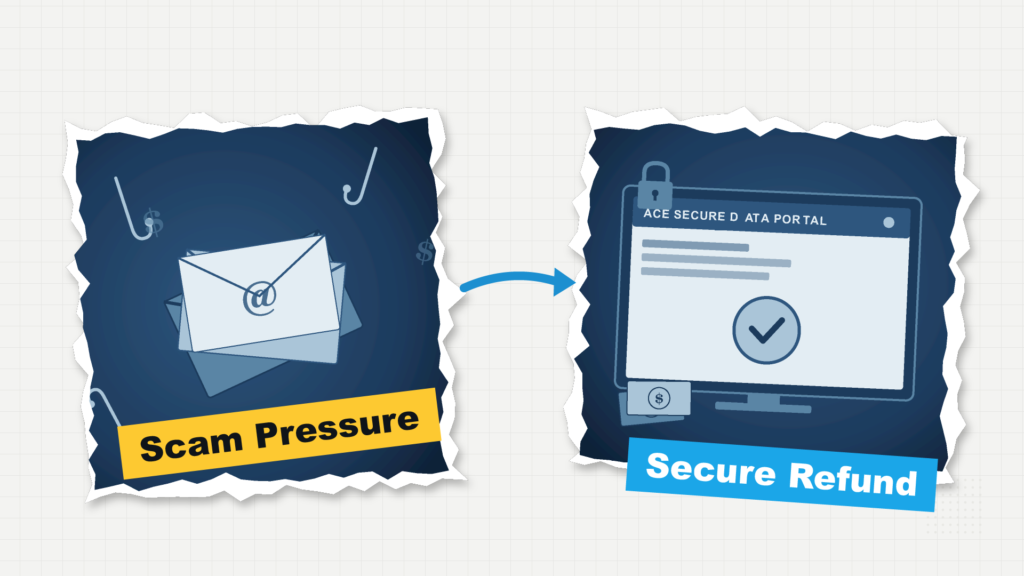
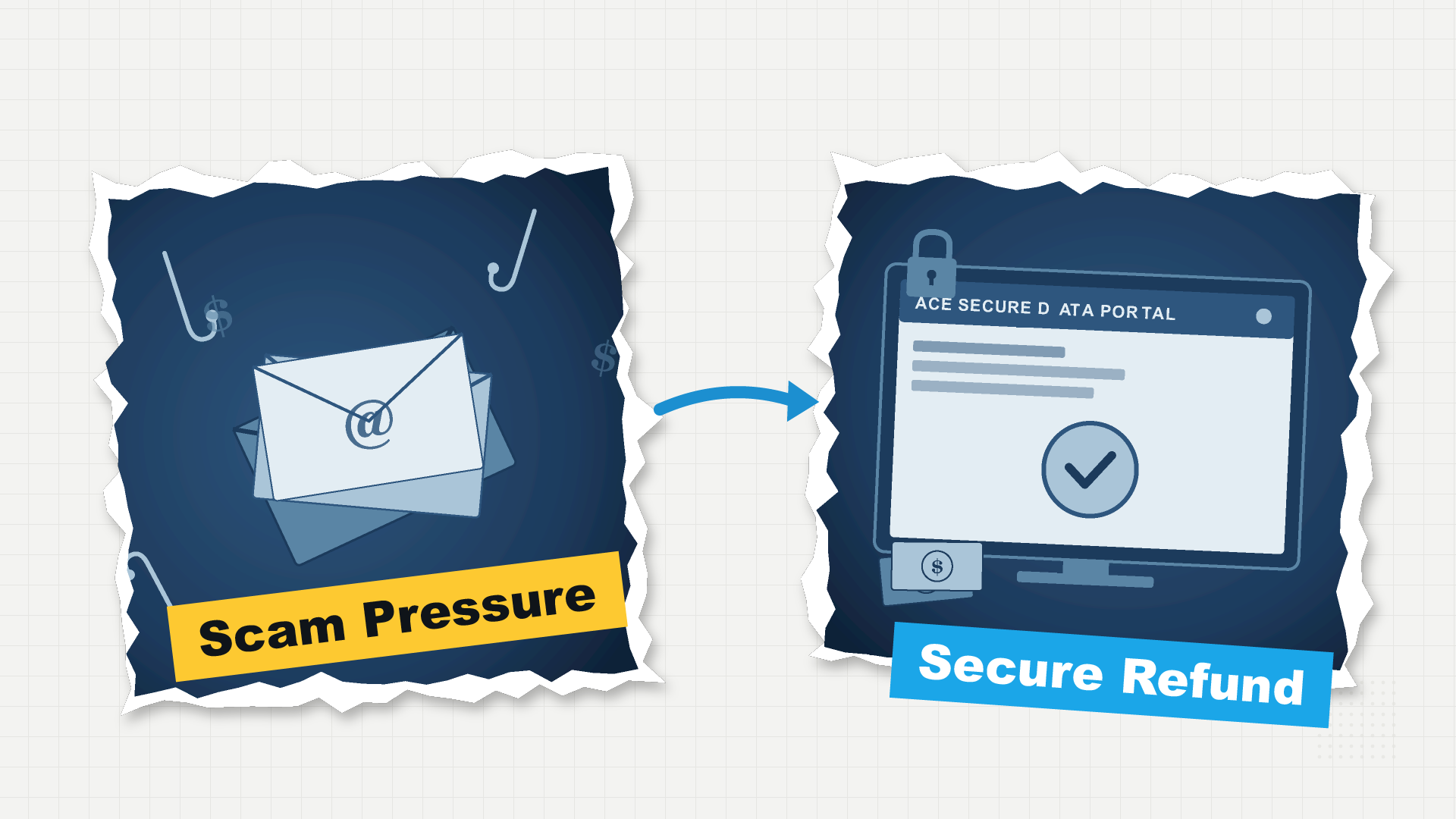
CAPE has opened the door for IEEPA tariff refunds, and that’s real money for a lot of U.S. importers. It also creates a perfect target for scammers who want your ACE credentials, banking details, or other sensitive company information.
CBP has been clear on one point: only verified workflows inside the ACE Secure Data Portal count. If someone reaches out offering to “file your IEEPA refund” in exchange for data, treat it like a threat until you prove otherwise. cbp.gov
What scammers are trying to do right now
Expect outreach through email, social media, and phone —often with urgency and “limited-time refund” language. The goal is usually one of these:
- Get you to share credentials (ACE logins, passwords)
- Get you to send banking info for “refund deposits”
- Get you to click links that mimic CBP/ACE pages
- Get you to upload entry data to a third-party site
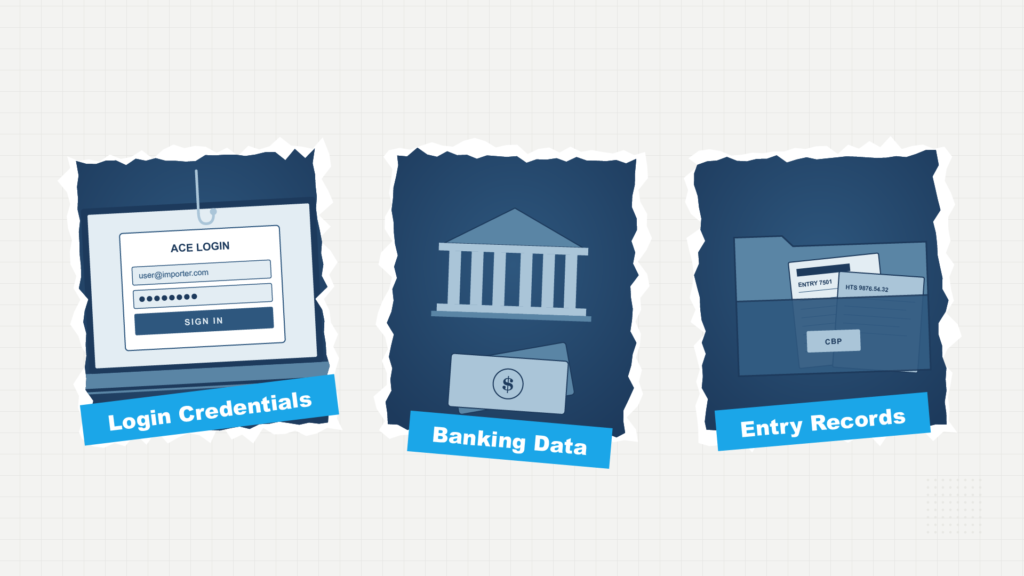
CBP has also published repeated guidance around protecting ACE Portal data and accounts, which is especially relevant as more trade users log in to prepare filings and reporting. cbp.gov
The baseline rule: only ACE + CAPE counts
If you remember one thing, make it this: Submitting a CAPE Declaration through a verified ACE account is the path CBP recognizes for IEEPA refunds. Anything outside of ACE that “processes refunds” is not the official channel. cbp.gov
If you’re still getting your internal data organized for CAPE, Dedola has been advising clients to clean up entry data now — because CAPE success depends on clean, upload-ready records. dedola.com
Red flags CBP wants importers to watch for
Use this as a quick gut-check before you reply to anyone:
- Requests for personal, company, or financial information
- Offers of refunds in exchange for data
- Unsolicited emails, calls, or texts
- Pressure to act quickly
- Poor grammar, spelling errors, or suspicious links/attachments
Practical steps to protect your refund —and your business
Here’s what we recommend clients do immediately:
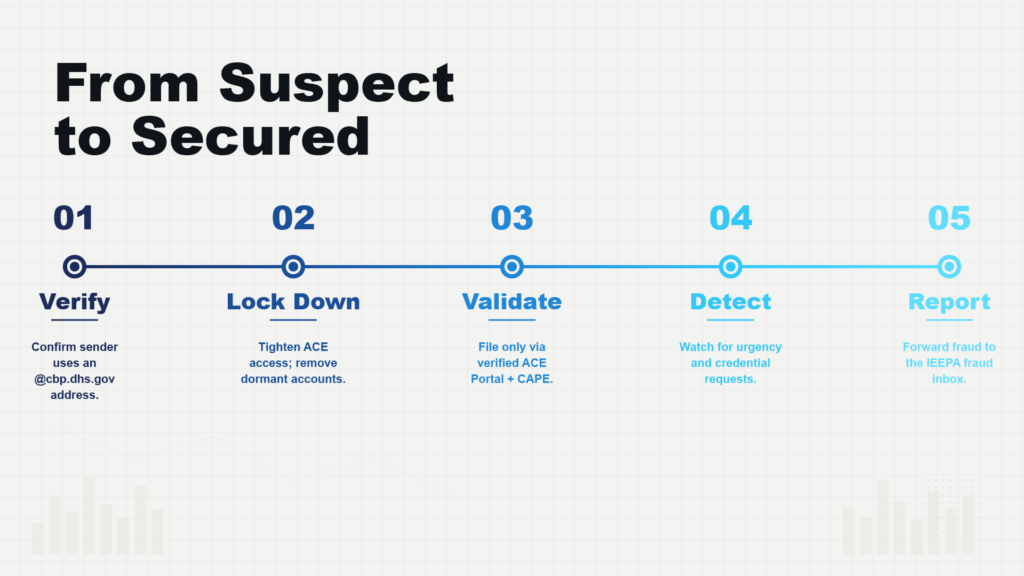
Keep ACE account ownership current
- Confirm your ACE account owner details are accurate and up to date.
- Tighten user access and remove dormant accounts. This is a common weak point. cbp.gov
Don’t engage with “refund helpers” you can’t validate
- Don’t respond to unsolicited outreach about filing or “speeding up” IEEPA refunds.
- Don’t enter data into any website claiming to process IEEPA refunds unless it’s the official ACE environment. cbp.gov
Treat unexpected CBP emails as suspect until proven otherwise
- CBP generally does not ask for sensitive information (SSNs, bank details, passwords) over email or text.
- If you receive a request for more information, verify the sender uses an official @cbp.dhs.gov address.
- Avoid clicking unexpected links or opening attachments until you validate the message through official channels. help.cbp.gov
Report suspicious activity
- CBP has directed trade users to report suspected IEEPA refund fraud to: IEEPAFraud@cbp.dhs.gov. help.cbp.gov
Where Dedola fits in
CAPE and IEEPA refunds are operational work, not just “trade headlines.” Clients need clean data, correct entry details, and a secure process —without handing sensitive information to unknown third parties.
If you have questions about CAPE filings, refund readiness, or whether a message you received looks legitimate, reach out to your Dedola representative. We’ll help you pressure-test the request and keep your process moving safely. dedola.com
FAQ: CAPE, IEEPA Refunds, and Staying Secure
What is CAPE, and what does it do?
CAPE (Consolidated Administration and Processing of Entries) is CBP’s functionality inside the ACE Secure Data Portal used to submit and process IEEPA duty refund requests. It’s designed to streamline and consolidate refund processing instead of handling refunds entry-by-entry. cbp.gov
Where do I file an IEEPA duty refund request?
Through a verified ACE Portal account using a CAPE Declaration. CBP’s IEEPA Duty Refunds page is the best official starting point. cbp.gov
Who can file CAPE Declarations?
CBP guidance indicates importers and authorized brokers can file CAPE Declarations via their ACE Portal accounts (depending on account type and authorization). content.govdelivery.com
How long do refunds usually take after a CAPE Declaration is accepted?
CBP’s guidance says valid IEEPA refunds will generally be issued within 60–90 days following acceptance of a CAPE Declaration, unless a compliance concern requires further review. cbp.gov
What if my entry has a special status (extended, suspended, “under review,” warehouse entries)?
Certain scenarios may maintain their liquidation status and validated refunds may be issued at liquidation, per CBP’s IEEPA Duty Refunds guidance. cbp.gov
Where can I find the CAPE filing instructions and common error definitions?
CBP has published an ACE Portal guide specifically for CAPE Declarations and error definitions. cbp.gov
Do I need to set up ACH to receive refunds?
CBP issues refunds electronically via ACH with limited exceptions and provides dedicated ACE/ACH FAQs and refund enrollment guidance for ACE Portal accounts. cbp.gov
How do I lock down my ACE Portal access so scammers can’t exploit it?
Start with ACE user management: validate your Trade Account Owner controls, ensure account owner information is current, and remove/disable unneeded users. CBP’s ACE Portal user management guidance is a solid checklist. cbp.gov
How can I tell if a “CBP” email or message is fake?
CBP has published scam guidance stating legitimate CBP employee emails end in @cbp.dhs.gov, and warns against unsolicited requests for payment or sensitive data. If the message pushes urgency, asks for credentials/banking details, or includes suspicious links, assume it’s malicious until verified. help.cbp.gov
Where do I report suspected fraud tied to IEEPA refunds?
Report suspected IEEPA refund-related fraud to IEEPAFraud@cbp.dhs.gov (per CBP guidance). help.cbp.gov