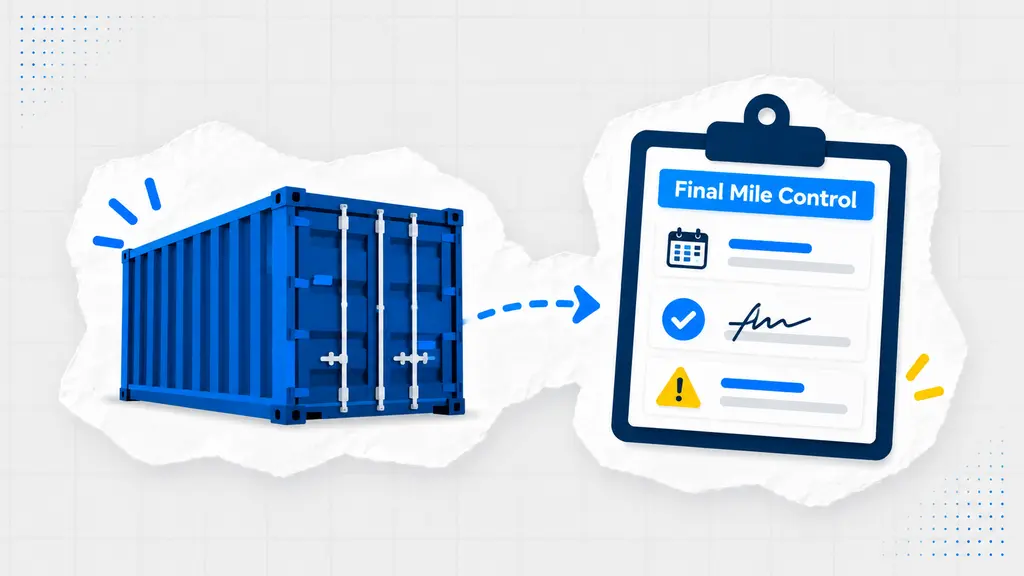

On October 8, the U.S. Court of International Trade (CIT) certified a class action covering importers who paid IEEPA tariffs but never filed their own refund lawsuits. 1 The same week, U.S. Customs and Border Protection (CBP) started paying refunds on older, finally liquidated entries, though only for importers who had sued. 2
If you paid IEEPA duties, both developments affect you. They also raise new questions about who gets paid, when, and through which process. Since the Supreme Court struck down the IEEPA tariffs in February, we’ve watched the refund updates closely. Here’s where things stand now and what we’re advising importers to do next.
Quick Reference
What the Class Action Ruling Means for IEEPA Tariff Refunds
The October 8 order matters most for importers who never filed a lawsuit. The CIT grouped those importers into one class so a single future order could cover all of them, without thousands of separate court filings. Importers have already filed more than 4,000 individual suits, and the class leaves those plaintiffs out. 1
The court’s reasoning shows who it had in mind. It said the importers who haven’t used CBP’s refund system are most likely small businesses that either didn’t know about it or found the filing too costly or complicated. Without the class, the court estimates about $30 billion in IEEPA duties would stay with the government. 1
Here’s what the ruling doesn’t do yet:
- The order doesn’t pay anyone. It opens a possible path to a refund for importers who didn’t sue, but the court still has to issue further orders before CBP processes any class claims.
- The schedule is still open. The court set a closed conference for October 13 and gave the parties until October 22 to propose a schedule for next steps.
- The government’s appeal continues. The Justice Department is appealing the court’s earlier order requiring refunds on finally liquidated entries for importers who didn’t sue. It argues the court can order those refunds only for plaintiffs. 1
Meanwhile, the refund system keeps running. As of October 2, CBP had accepted about $136.6 billion in potential and certified refunds, including interest, and sent $126 billion to the Treasury for payment. 3
How the Tariff Refund Process Works
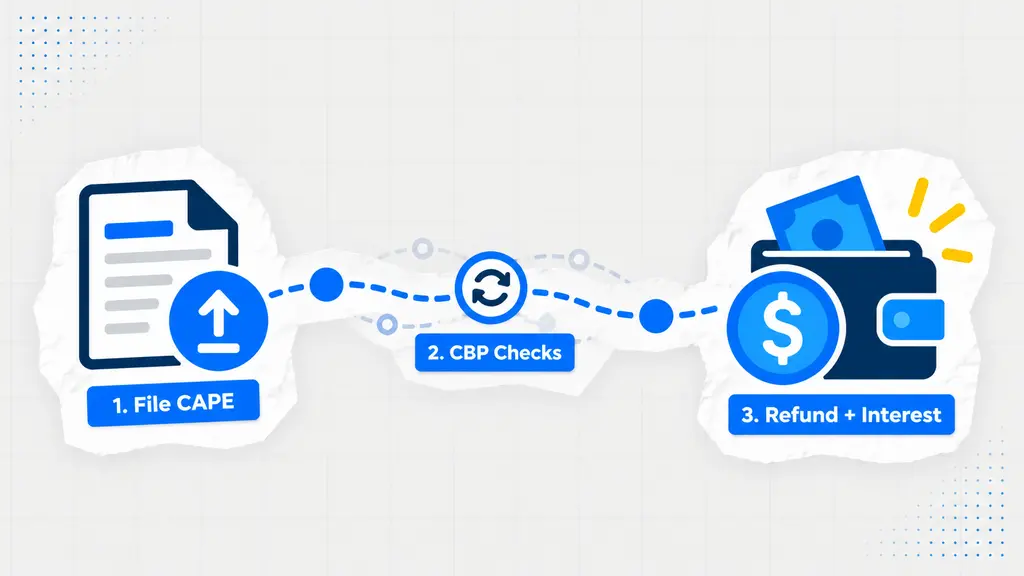
Many importers may have read the Supreme Court’s February decision as a refund order. 4 But the ruling said nothing about refunds. CBP pays an IEEPA refund only after an importer of record, or its customs broker, files a declaration asking for one.
To handle those requests, CBP built the Consolidated Administration and Processing of Entries (CAPE) system, inside its Automated Commercial Environment (ACE). 5 Here’s how the tariff refund process works:
- You file a CAPE declaration. The importer of record or a licensed customs broker submits a file listing the entries that carried IEEPA duties. One declaration can hold up to 9,999 entries, and you can file more than one. 6
- CBP validates and recalculates. The system checks each entry, removes the IEEPA duties, and liquidates or reliquidates the entry without them.
- CBP issues one consolidated refund. The payment goes to the importer of record, or to a third party the importer designated on CBP Form 4811, and it includes interest. 6, 7
CBP opened CAPE in phases, and each phase covered a different group of entries. That phased rollout explains why two importers who paid the same duties can sit at very different points today.
IEEPA Tariff Refund Recovery: Four Paths Based on Your Entry Status
Your path to IEEPA tariff refund recovery depends on where each entry sits in the liquidation cycle. Most importers have entries in more than one group, so expect to work through more than one path at the same time.
1. Unliquidated and Recently Liquidated Entries
This path covers entries that haven’t liquidated yet or liquidated within the last 80 days.
- You can file these through CAPE now. Phase 1 opened on April 20 and covers both groups.
- Timing still matters. Once an entry passes 80 days after liquidation, it falls outside Phase 1, and the refund path for that entry runs through the courts. Filing sooner keeps more of your entries on the simplest path. 7
2. Reconciliation Entries
This path covers entries flagged for reconciliation, which lets an importer file an entry before details like the final value are settled and finalize them later.
- Phase 2 covers these entries. Since June 29, CAPE has accepted reconciliation-flagged entries that are unliquidated or within 80 days of liquidation. 7
- Filing order matters. Once you file the reconciliation entry itself, the underlying entries lose their Phase 2 eligibility. Coordinate the timing with your customs broker before you file.
3. Finally Liquidated Entries With a Pending Court Case
This path covers older entries for importers that have filed suit at the CIT.
- Phase 3 opened on October 6. It lets plaintiffs request refunds on entries liquidated more than 80 days ago, once the court has ordered CBP to reliquidate them. 8
- The July 30 cutoff still applies. Plaintiffs who gave CBP a valid importer of record number by July 30 can file now. CBP hasn’t said when later filers can start.
- Payments have started. As of October 6, CBP had accepted 477 Phase 3 declarations covering more than 425,000 entries. 2
4. Finally Liquidated Entries With No Lawsuit Filed
This path covers older entries for importers that never went to court. It’s the group the class action targets.
- You’re likely part of the new class. Unless you filed your own suit, the class covers you, but any refund depends on further court orders and the outcome of the government’s appeal.
- A filing deadline may be approaching. Lawsuits of this kind generally carry a two-year limit, and many trade attorneys read the clock as starting when you paid the duties. That reading puts the earliest deadlines in early February 2027. 9
- This decision belongs with trade counsel. Some importers will rely on the class, and others will file suit to protect their claims. An attorney can weigh your refund amount against the cost and timing of a lawsuit.
Tariff Refund Checks: How and When CBP Pays
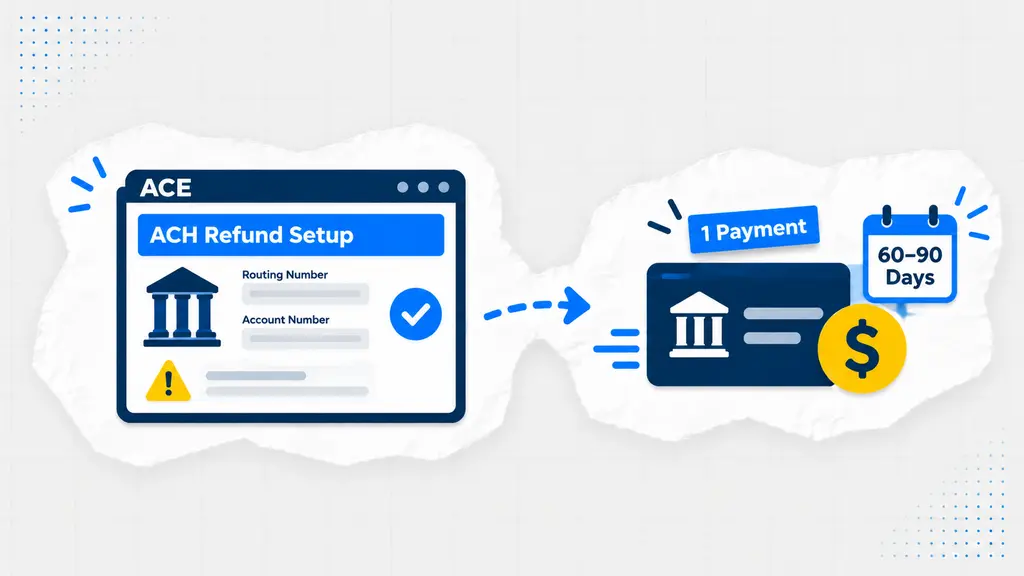
Many importers expect a tariff refund check in the mail, which makes sense given how CBP handled refunds in the past. However, CBP stopped issuing paper refund checks on February 6 and now only pays refunds electronically through ACH. 10
- You need a refund account in ACE. Even if you pay CBP by ACH, it doesn’t automatically enroll you to receive refunds. You need to enroll for refunds through the ACH Refund Authorization tab in your ACE portal account, even if you use the same bank account. 11
- Refunds arrive as one payment. CBP combines the refunds for all validated entries into a consolidated payment to the importer of record or its Form 4811 designee.
- Expect 60 to 90 days. CBP generally issues valid refunds within that window after it accepts a CAPE declaration. 6
- Missing ACH information stops payment. As of September 11, CBP was holding about $1.3 billion in refunds because importers hadn’t provided their ACH information. 8
How Importers Should Plan Now
Whatever path your entries are on, the same groundwork applies. We’re advising clients to take these steps now:
- Confirm your importer of record number is active. Since September 18, CBP has voided importer of record numbers when the company information on CBP Form 5106 is inaccurate or incomplete. A voided number can stall a refund. 7, 12
- Enroll a refund account in ACE. Setting up an ACE account can take up to six weeks, so start before you file. That way, CBP can pay as soon as it validates your entries. 7
- Sort your entries by liquidation status. Place every entry that carried IEEPA duties into one of the four paths above. Your customs broker can pull the ACE reports that show liquidation dates.
- Keep your protests in place. Don’t withdraw a protest on an IEEPA entry until trade counsel confirms you no longer need it.
- Decide on litigation with counsel. If you have finally liquidated entries and haven’t sued, talk with an attorney well before February 2027.
- Plan for the money. Decide how your accounting team will book refunds and interest, and review whether any customer or supplier contracts call for sharing them.
Stay Ahead of IEEPA Tariff Refunds With Dedola
If the tariff refund process feels hard to follow, you’re not alone. CBP has opened it in three phases since April, and the courts have redrawn the rules along the way. If you haven’t recovered your IEEPA duties yet, timing and changing rules likely explain more than anything you missed.
Dedola has been family-owned and operated for more than 50 years, and we’ve helped importers through plenty of regulatory change in that time. We’re tracking the class action and the next CAPE updates closely. If you’re unsure where your entries stand, reach out to our team. We can help you review your entries, check liquidation dates, and get your records in order for whatever the court decides next.
FAQs
Will I receive a tariff refund check in the mail?
No. CBP issues IEEPA refunds electronically through ACH to a refund account enrolled in ACE. If CBP doesn’t have your ACH information, it holds the refund until you provide it.
Do I need to file a lawsuit to get an IEEPA tariff refund?
Not for most entries. Unliquidated entries and entries within 80 days of liquidation go through CAPE without a lawsuit. Finally liquidated entries currently require a court order, so talk with trade counsel about whether to file suit or rely on the class action.
How long does the IEEPA tariff refund process take?
CBP generally pays valid refunds 60 to 90 days after it accepts a CAPE declaration. Refunds on finally liquidated entries depend on court orders, so their timing is harder to predict.
Who receives the tariff refund if a customs broker paid the duties?
CBP pays the importer of record, or a third party the importer designated on CBP Form 4811. A customs broker can file the CAPE declaration for you, but the refund goes to the party on record for the entry.
Does the class action ruling mean my refund is guaranteed?
No. The certification opens a possible path for importers who didn’t sue, but the court still needs to issue further orders, and the government’s appeal is pending. Keep your records current and stay in touch with counsel as the case moves forward.
Sources
- U.S. Court of International Trade, Freestyle World, Inc. v. United States, Court No. 26-01088, order certifying class (Oct. 8, 2026)
- Supply Chain Dive, “CBP starts paying out IEEPA tariff refunds for finally liquidated entries”
- American Action Forum, “Higher Prices and Growing Disapproval”
- U.S. Supreme Courte, Learning Resources, Inc. v. Trump, No. 24-1287 (U.S. Feb. 20, 2026)
- U.S. Customs and Border Protection, “IEEPA Duty Refunds”
- Holland & Knight, “CAPE Has Arrived: A Guide to Navigating the Next Phase of IEEPA Duty Refunds”
- Baker Tilly, “IEEPA refunds: Latest CBP guidance for importers”
- Declaration of Brandon Lord, Freestyle World, Inc. v. U.S. Customs and Border Protection, Court No. 26-01088, ECF No. 50
- Davis Wright Tremaine, “IEEPA Duty Update: Trade Court Orders Refunds to Litigants on Finally Liquidated Entries”
- Sheppard Mullin, “Refund Rollout: Getting Your House in Order”
- Perkins Coie, “The Launch of CAPE Phase 1: Essential Guidance for IEEPA Duty Refunds”
- Federal Register notice on CBP Form 5106 and importer of record number voiding, Aug. 19, 2026