 Stephen Dedola
Peak Season Supply Chain Planning
Peak season can challenge even well-managed import programs. Carrier space may tighten, ocean and air freight costs can shift quickly, warehouse appointments may become limited, and customs or documentation issues can create delays when importers have the least room for error.
For U.S. importers, peak season usually builds from summer into fall as companies prepare inventory for back-to-school, holiday, and year-end demand. But today’s peak season is not just a calendar event. It can also be affected by tariffs, trade policy uncertainty, blank sailings, port conditions, labor availability, equipment shortages, supplier delays, and changing consumer demand.
The importers that perform best during peak season are rarely the ones that wait for a perfect market. They are the ones that plan early, understand their freight options, prioritize critical cargo, and work with a logistics partner that can adjust when conditions change.
What Is Peak Season in Global Supply Chains?
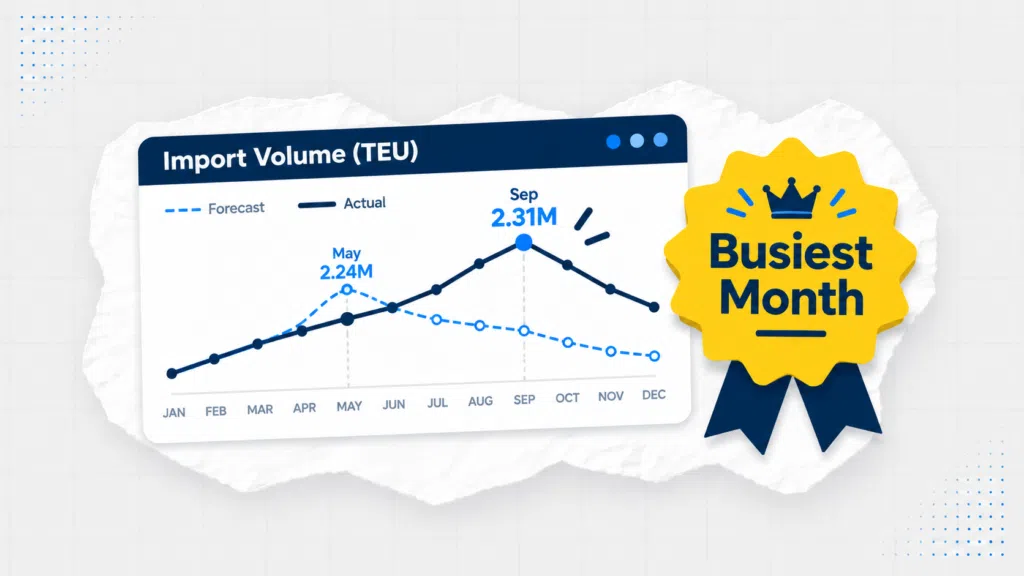
Peak season is the period when demand for freight capacity, containers, trucking, warehousing, and delivery appointments increases. In the U.S. import market, this often happens from July through October as retailers, manufacturers, and distributors bring in goods ahead of major sales periods and year-end demand.
During peak season, importers may face higher costs, longer timelines, and fewer easy options. Even if ocean freight capacity looks available early in the year, conditions can change quickly once bookings increase, carriers adjust schedules, or importers rush shipments ahead of tariff or inventory deadlines.
A strong peak season strategy should cover the full shipment path, not just the vessel or flight. Supplier readiness, export documents, freight mode, customs clearance, inland delivery, warehouse receiving, and cash-flow planning all matter.
Why Peak Season Planning Looks Different Now
Peak season planning has become less predictable. Importers can no longer rely only on last year’s rates, timelines, or routing patterns. Trade policy changes, shifting sourcing regions, carrier capacity decisions, and consumer demand swings can change the market before the traditional peak season even begins.
For example, some importers may pull cargo forward to avoid tariff exposure or delivery risk. Others may delay orders because demand is uncertain. Carriers may respond with blank sailings, surcharges, service adjustments, or revised routing. The result can be a market that feels soft in one month and tight in the next.
That is why importers should build a plan that answers three practical questions:
- Which shipments are truly time-sensitive?
- Which products can move earlier or through alternate routing?
- Which freight, customs, warehouse, and delivery risks could affect landed cost?
If your business depends heavily on ocean imports, Dedola’s ocean freight services can help you evaluate timing, capacity, routing, and delivery options before the market becomes more difficult.
Common Peak Season Challenges for Importers
Peak season problems often come from several points in the supply chain at once. A shipment can be booked on time and still run into delays if documents are incomplete, cargo misses a cutoff, warehouse space is unavailable, or inland transportation becomes constrained.
Importers should prepare for these common challenges:
- Limited capacity: Vessel space, air freight space, trucking, rail, and warehouse appointments may become harder to secure.
- Rising freight rates: Rates and surcharges can increase when demand rises or carriers manage capacity.
- Extended transit times: Congestion, blank sailings, port delays, and inland bottlenecks can add time to the shipment cycle.
- Demurrage and detention risk: Delays in pickup, unloading, or equipment return can create avoidable charges.
- Limited warehouse space: High inventory volume can reduce appointment availability and slow receiving.
- Reduced trucking options: Drayage and final delivery capacity may tighten during busy periods.
- Documentation issues: Incomplete commercial invoices, packing lists, or product descriptions can slow customs clearance.
For a deeper look at timing variables, Dedola’s guide to key factors that affect freight transit time explains why shipment schedules depend on more than the ocean or air portion of the move.
How to Prepare for Peak Season Before Capacity Tightens
The best time to prepare for peak season is before cargo is ready. Once production is complete and delivery deadlines are close, importers have fewer options and less negotiating room.
1. Review Forecasts and Purchase Orders Early
Start with purchase orders, sales forecasts, inventory targets, and supplier production schedules. Identify which shipments are tied to customer commitments, retail deadlines, production requirements, or seasonal demand.
This review helps separate urgent cargo from flexible cargo. Not every shipment needs premium service, and not every product should move at the same speed.
2. Confirm Supplier Readiness
Supplier delays can create freight problems quickly during peak season. Confirm production completion dates, cargo-ready dates, packaging requirements, carton counts, weights, dimensions, and export document timing before you book.
If supplier communication has been inconsistent, address it early. Dedola’s guide on effective communication with Chinese suppliers can help importers reduce confusion before cargo is ready to ship.
3. Book Freight Earlier Than Usual
Early booking gives your logistics partner more time to compare schedules, secure space, monitor changes, and create backup options. Waiting until cargo is ready may leave you with fewer choices, higher rates, or less flexible routing.
Importers should also confirm quote validity, sailing schedules, cutoff dates, origin handling requirements, and delivery timing. A good freight plan should include what happens if cargo is delayed, rolled, or rerouted.
4. Compare Ocean, Air, and Hybrid Options
Ocean freight is usually the most cost-effective option for larger planned shipments. Air freight may make sense for urgent, high-value, lightweight, or production-critical cargo. In some cases, a hybrid strategy works best.
For example, an importer may send the most urgent portion of an order by air while moving the balance by ocean. This can protect customer deadlines without paying air freight rates for the entire shipment.
5. Review Customs Documents Before Cargo Ships
Peak season is not the time to discover that product descriptions are vague, values are incorrect, country-of-origin details are missing, or packing lists do not match the shipment. Review documents before cargo departs.
Importers should confirm commercial invoices, packing lists, HTS classifications, country of origin, Incoterms, and any product-specific import requirements. For broader compliance context, Dedola’s Supply Chain Compliance 101 guide is a useful resource.
6. Plan Warehousing and Final Delivery
Peak season pressure does not end when cargo arrives at the port or airport. Importers still need drayage, rail, transloading, warehouse receiving, storage, and final delivery. If warehouse appointments are limited, cargo can sit even after international transit is complete.
Importers using Asian sourcing networks may also benefit from reviewing origin-side warehousing and consolidation options. Dedola’s article on DGL Asia warehousing offerings explains how origin support can help improve timing and coordination.
Peak Season Shipping Options to Consider
There is no single best freight mode for every peak season shipment. The right choice depends on cargo size, value, urgency, destination, customer expectations, and budget.
Ocean Freight
Ocean freight is often the best fit for larger, less urgent, or planned inventory shipments. It allows importers to move volume cost-effectively, but it requires earlier planning around sailing schedules, port handling, customs clearance, and inland delivery.
During peak season, importers using ocean freight should watch for blank sailings, rate changes, rolled cargo, equipment issues, and destination congestion. Dedola’s guide to FCL shipping can help importers understand full-container planning when shipment volume justifies it.
Air Freight
Air freight is faster but usually more expensive. It can be valuable when delivery speed protects revenue, prevents a stockout, supports production, or keeps a customer commitment.
Air freight should be used strategically. Moving every shipment by air can strain margins, but moving the most critical portion of an order by air can keep operations moving while the rest ships by ocean. Dedola’s article on what shippers should consider before using air freight can help importers decide when speed is worth the cost.
Consolidation
Consolidation may help importers manage smaller shipments from one or more suppliers. It can reduce inefficiency when a shipment does not fill a container, but it requires accurate cargo details, clear timelines, and careful coordination.
Consolidation can be especially helpful when importers need to move smaller replenishment orders without waiting too long to build a larger shipment.
Split Shipments
A split-shipment strategy can balance cost and urgency. Critical SKUs can move through a faster service, while less urgent goods move through standard ocean freight. This approach can reduce risk without applying premium transportation to every unit.
Peak Season Checklist for Importers
Use this checklist before peak season pressure builds:
- Forecast demand: Review sales projections, inventory needs, and customer deadlines.
- Prioritize products: Identify which SKUs are most important to revenue, production, or customer commitments.
- Confirm supplier dates: Verify production completion, cargo-ready dates, and export document timing.
- Book early: Give your forwarder enough lead time to secure space and compare routing options.
- Review freight modes: Compare ocean freight, air freight, consolidation, and split-shipment options.
- Check documents: Review invoices, packing lists, HTS codes, origin details, and shipment descriptions.
- Plan inland movement: Confirm drayage, rail, warehouse receiving, transloading, and final delivery needs.
- Build buffer time: Add extra time for production, loading, transit, customs, and delivery.
- Monitor market changes: Watch for surcharges, blank sailings, port congestion, policy changes, and carrier updates.
- Align internal teams: Keep finance, operations, sales, warehouse, and purchasing teams informed.
How Tariffs and Cash Flow Affect Peak Season Decisions
Peak season planning is not only about moving cargo. It is also about protecting working capital. Tariffs, duties, freight rates, storage charges, and delivery delays can all affect cash flow.
Importers should estimate duty exposure before cargo ships and review how payment timing affects finance teams. If duty payments are becoming a larger part of landed cost planning, Dedola’s guide to ACH and Periodic Monthly Statement for duty payments explains how importers can think about customs payment workflows.
Some importers may also benefit from reviewing duty-reduction opportunities where appropriate. Dedola’s article on how the First Sale Rule can help importers explains one strategy that may reduce duty exposure when the transaction structure qualifies.
Common Peak Season Mistakes to Avoid
Peak season challenges are easier to manage when importers avoid preventable mistakes. Watch for these issues:
- Waiting until cargo is ready to book: Late planning can limit available space and increase costs.
- Relying only on spot rates: The lowest quote may not provide the best reliability, visibility, or service.
- Ignoring inland delivery: Port arrival does not guarantee warehouse delivery.
- Using incomplete documents: Customs issues can delay cargo and increase storage exposure.
- Treating all shipments the same: Critical cargo and flexible cargo should not always use the same mode.
- Forgetting warehouse capacity: Receiving appointments and storage space should be planned before cargo arrives.
- Not communicating internally: Freight changes affect finance, warehouse, sales, and customer service teams.
Importers should also be careful with quotes that seem too good to be true. Dedola’s guide to red flags associated with unbelievably low freight rates explains why a bargain rate can become expensive if service fails.
How Dedola Helps Importers Navigate Peak Season
Dedola Global Logistics helps importers build practical freight strategies before peak season pressure creates avoidable problems. The goal is not just to move cargo. The goal is to help importers align supplier readiness, freight mode, customs documents, shipment visibility, and final delivery.
Dedola can support peak season importers with:
- Ocean freight planning and coordination
- Air freight options for urgent cargo
- Supplier and purchase order coordination
- Shipment timing and routing recommendations
- Customs documentation review
- Warehouse and delivery planning
- Shipment milestone tracking through TrakItPRO
- Support for importers managing recurring or specialized shipments
Dedola also supports industry-specific freight needs where timing, compliance, and handling requirements matter, including medical supplies and devices freight shipping, aftermarket auto parts imports, and sustainable fashion and apparel freight shipping.
Plan With Confidence Before Peak Season Begins
Peak season will always bring some uncertainty, but importers do not have to wait for disruption before taking action. A better plan starts with early forecasting, clear supplier communication, flexible freight options, accurate documents, and realistic delivery timelines.
If your business expects higher import volume, tighter deadlines, changing tariffs, or warehouse constraints, Dedola can help you review your freight strategy and build a more reliable plan before your cargo is already at risk.
Contact Dedola Global Logistics
Frequently Asked Questions About Peak Season Supply Chain Planning
When is peak season for U.S. importers?
Peak season for U.S. importers often runs from July through October as companies bring in goods for back-to-school, holiday, and year-end demand. The exact timing can vary by industry, trade lane, and market conditions.
Why do freight rates rise during peak season?
Freight rates may rise during peak season when demand for vessel space, air cargo capacity, trucking, warehousing, or equipment exceeds available supply. Surcharges, blank sailings, fuel costs, and congestion can also affect rates.
How can importers prepare for peak season?
Importers can prepare by forecasting demand early, confirming supplier cargo-ready dates, booking freight ahead of time, reviewing customs documents, comparing freight modes, and planning inland delivery before cargo arrives.
Should importers use air freight during peak season?
Air freight can be useful for urgent, high-value, lightweight, or production-critical shipments. Many importers use air freight selectively for critical products while moving less urgent inventory by ocean freight.
What causes peak season delays?
Peak season delays can be caused by supplier production issues, limited freight capacity, blank sailings, port congestion, customs documentation errors, trucking shortages, warehouse constraints, or late booking.
Can Dedola help with peak season freight planning?
Yes. Dedola can help importers compare ocean and air freight options, coordinate supplier communication, review documentation, monitor shipment milestones, and plan delivery during peak season.