South China Ocean Freight Gateway
Port of Shenzhen: South China Ocean Freight, YANTIAN Shipping, and Pearl River Delta Logistics
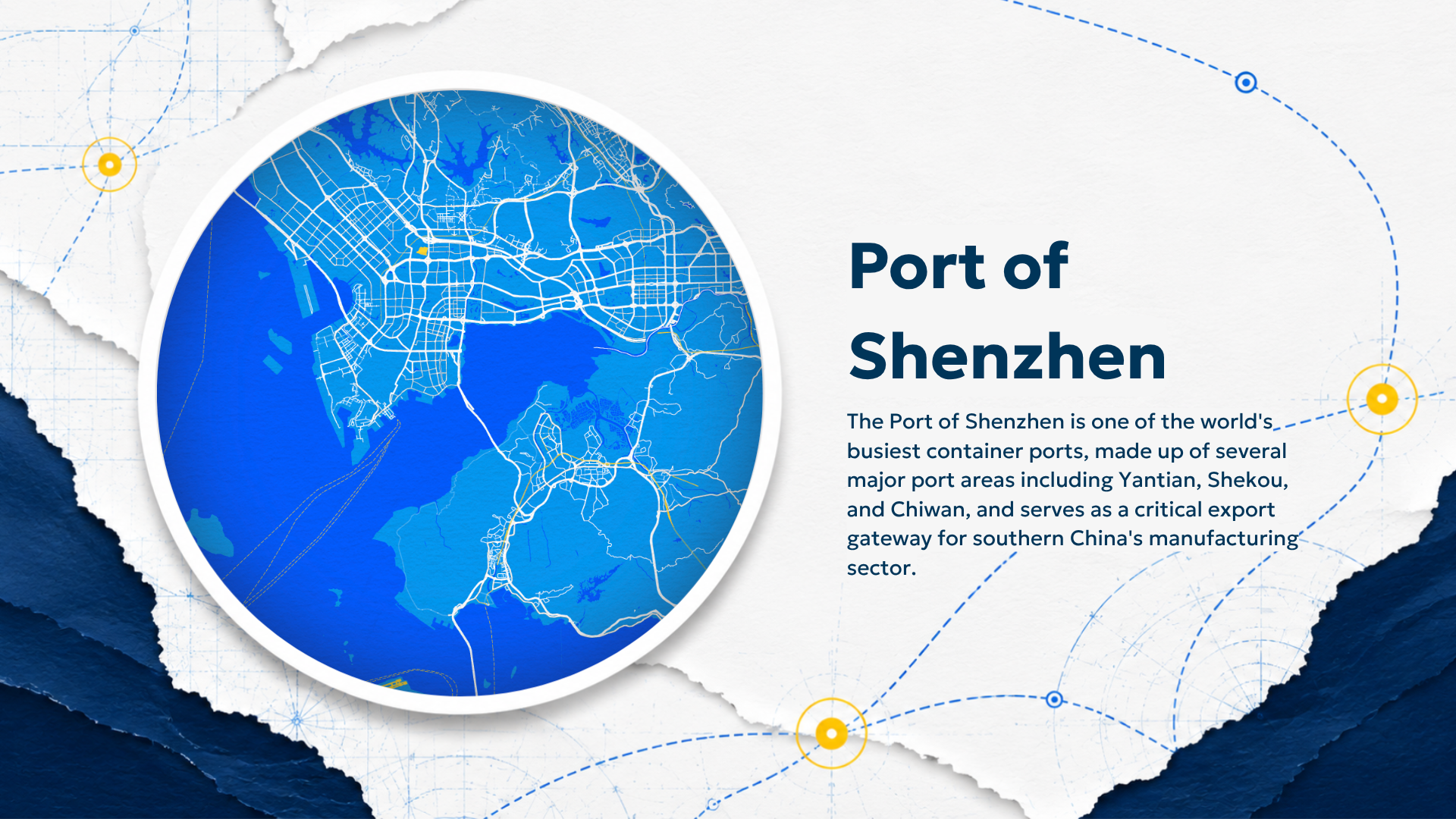
The Port of Shenzhen is one of the world’s busiest container ports and a critical gateway for freight moving through South China, the Pearl River Delta, and the Greater Bay Area. Located in Guangdong Province next to Hong Kong, Shenzhen connects manufacturers, exporters, importers, retailers, apparel brands, electronics companies, medical suppliers, automotive parts shippers, and e-commerce businesses with major ocean trade lanes across North America, Europe, Southeast Asia, the Middle East, and global markets.
Shenzhen is especially important for companies sourcing from Guangdong, Dongguan, Shenzhen, Huizhou, Foshan, Guangzhou, and surrounding manufacturing clusters. Its major port areas, including YANTIAN, Shekou, Chiwan, Dachan Bay, and other terminals, support high-volume container shipping, feeder services, regional distribution, customs processes, and multimodal supply chain planning.
Dedola Global Logistics helps importers and exporters evaluate Shenzhen routing, coordinate ocean freight, compare South China gateways, support customs documentation, arrange inland delivery, assess air freight alternatives, and maintain shipment visibility from supplier pickup to final destination.
Explore Ocean Freight Services
Port of Shenzhen Quick Facts
- Port name: Port of Shenzhen
- Location: Shenzhen, Guangdong Province, China
- Region served: Pearl River Delta, Greater Bay Area, and South China manufacturing zones
- Primary role: Major China container port, South China export gateway, and global ocean freight hub
- 2024 container throughput: Approximately 33.38 million TEUs
- Global ranking: Fourth-busiest container port in the world
- Major port areas: YANTIAN, Shekou, Chiwan, Dachan Bay, Mawan, and related Shenzhen port zones
- YANTIAN role: Major deep-water container terminal and preferred port of call for mega-vessels in South China
- Key cargo types: Containers, electronics, consumer goods, apparel, medical supplies, automotive parts, e-commerce freight, machinery, industrial components, refrigerated cargo, and high-value goods
- Common trade lanes: Shenzhen to Los Angeles/Long Beach, Shenzhen to U.S. East Coast ports, Shenzhen to Europe, Shenzhen to Southeast Asia, and Shenzhen to Middle East transshipment hubs
Why the Port of Shenzhen Matters for Global Freight
Shenzhen is one of the most commercially important ports for companies importing from China because it sits directly inside one of the world’s largest manufacturing regions. For many U.S. and European importers, Shenzhen is closely tied to finished goods, electronics, apparel, consumer products, medical components, automotive parts, packaging, machinery, and e-commerce inventory sourced from South China.
The port’s location gives shippers access to factories and consolidation points throughout Guangdong and the Pearl River Delta. This can reduce inland pickup distance when compared with using ports farther north, while also giving businesses access to frequent vessel services and a wide carrier network.
Dedola helps shippers determine whether Shenzhen is the right gateway for a specific shipment or whether another China port, air freight option, or multimodal route would reduce cost, improve timing, or lower supply chain risk.
YANTIAN, Shekou, and the Structure of Shenzhen Port
Shenzhen is not a single terminal. It is a port system made up of several major port areas, each serving different cargo flows, shipping lines, and logistics needs. The eastern port area is anchored by YANTIAN, while the western port area includes Shekou, Chiwan, Mawan, and related terminals.
YANTIAN for Deep-Water Container Shipping
YANTIAN International Container Terminals is one of the most important deep-water container gateways in South China. It is regularly used by major shipping lines and large container vessels, making it especially relevant for high-volume exports moving to North America, Europe, and other long-haul markets.
For U.S.-bound cargo, YANTIAN is often a key port to evaluate when suppliers are located in Shenzhen, Dongguan, Huizhou, or other South China manufacturing areas. Shipment planning should account for supplier pickup, cargo-ready date, terminal cutoff, customs documents, container loading, vessel schedule, and destination-side delivery.
Shekou and Western Shenzhen Port Areas
Shekou, Chiwan, and other western Shenzhen terminals can be useful when cargo is located closer to the western Pearl River Delta, or when specific carriers, schedules, feeder services, or regional routes make the western port area more practical. These terminals can support containerized freight, regional shipping, South China distribution, and multimodal connections.
Shenzhen and Hong Kong Gateway Selection
Older port profiles often treated Hong Kong as the natural Pearl River Delta gateway. Today, many shippers compare Hong Kong directly against Shenzhen because more mainland China cargo can move through Shenzhen-area ports without being routed through Hong Kong first. This comparison can affect inland cost, transit time, customs handling, carrier service, and final landed cost.
What Cargo Moves Through the Port of Shenzhen?
Shenzhen is primarily a containerized freight gateway. Its strongest cargo categories reflect South China’s manufacturing base, including electronics, consumer goods, apparel, medical products, automotive parts, industrial components, e-commerce goods, and high-value products.
Containerized Freight
Containerized cargo is the core of Shenzhen’s port activity. Shippers may use Shenzhen for full-container load, less-than-container load, consolidated cargo, factory-direct exports, supplier-managed shipments, and regional feeder movements.
Dedola’s ocean freight services can support FCL, LCL, expedited LCL, deferred ocean freight, multimodal routing, documentation coordination, shipment tracking, and final delivery planning for cargo moving through Shenzhen or nearby China gateways.
Electronics, Technology, and High-Value Cargo
Shenzhen is one of the world’s most important manufacturing regions for electronics, devices, components, accessories, consumer technology, smart products, and high-value goods. These shipments often require accurate documentation, strong shipment visibility, secure routing, and careful coordination around production and export deadlines.
Retail, E-commerce, and Consumer Goods
Retailers and e-commerce companies often use Shenzhen for South China-origin goods moving to U.S., European, and global distribution networks. These shipments can include home goods, accessories, packaging, toys, small appliances, electronics, fixtures, and marketplace inventory.
Fashion and Apparel
Apparel, footwear, accessories, textiles, and retail-ready goods may move through Shenzhen when suppliers are located in Guangdong or nearby South China production regions. These shipments are often sensitive to seasonal launches, replenishment cycles, production delays, and warehouse appointment windows.
Dedola helps brands compare fashion and apparel freight shipping options across ocean, air, multimodal, and regional distribution routes so cost, delivery timing, and inventory risk are considered together.
Medical Supplies and Devices
Medical supplies, healthcare products, diagnostic components, devices, and regulated goods require accurate product descriptions, tariff classification, documentation, customs readiness, and reliable visibility. Shenzhen can be a practical gateway when cargo originates in South China and the shipment timeline allows for ocean freight.
Dedola supports medical supplies and devices freight shipping with documentation review, routing support, customs coordination, tracking, and final delivery planning.
Automotive Parts and Industrial Components
Shenzhen can support shipments involving automotive parts, aftermarket components, machinery parts, tools, equipment, and manufacturing inputs. These shipments often need predictable timing because delays can affect production, service schedules, repairs, or customer fulfillment.
Dedola supports aftermarket auto parts imports with routing, customs support, documentation, shipment visibility, and final delivery coordination.
Refrigerated and Temperature-Sensitive Cargo
Some food products, pharmaceuticals, specialty goods, ingredients, and healthcare products may require reefer equipment or temperature-sensitive handling. These shipments should be planned around equipment availability, customs documents, inspection risk, terminal handoffs, and delivery timing.
How Dedola Supports Freight Through Shenzhen
Dedola Global Logistics is a freight forwarder and logistics partner. Dedola does not operate the Port of Shenzhen, own the terminals, or run the vessels serving the port. Instead, Dedola helps businesses coordinate shipments through carrier, broker, customs, warehouse, port, airport, rail, truck, and inland transportation networks.
China Ocean Freight Coordination
Dedola helps shippers coordinate ocean freight through Shenzhen when the gateway fits the shipment’s supplier location, destination, timing, and cost profile. Depending on the cargo, Dedola can compare FCL, LCL, expedited LCL, deferred ocean, consolidated cargo, trans-Pacific routing, Asia-Europe routing, and multimodal options.
YANTIAN and South China Trade Lane Planning
For cargo moving from South China to North America or Europe, YANTIAN may be one of the first terminal options to review. Dedola helps compare YANTIAN, Shekou, Hong Kong, and other regional gateways based on carrier service, terminal cutoff, inland pickup distance, supplier location, container availability, and destination-side delivery requirements.
Supplier and Origin Coordination
South China shipments often involve multiple factories, vendors, pickup locations, or consolidation points. Dedola helps coordinate supplier communication, cargo-ready dates, document timing, container loading, warehouse handoffs, and carrier cutoffs so freight is prepared before key deadlines.
Customs and Documentation Support
Shipments moving through Shenzhen require accurate commercial invoices, packing lists, bills of lading, tariff classifications, product descriptions, valuation details, certificates when required, and customs-ready shipment data. Dedola helps coordinate documentation review and customs brokerage support to reduce avoidable clearance delays.
Air Freight and Multimodal Alternatives
Ocean freight through Shenzhen is often practical for planned inventory, but some shipments need faster recovery. Dedola can compare ocean freight, air freight, deferred air, sea-air, split shipments, and multimodal routing when speed, cost, and risk need to be balanced.
Destination-Side Delivery and Inland Planning
The ocean leg is only one part of the shipment. Dedola helps coordinate drayage, warehousing, transloading, rail or truck delivery, customs milestones, destination-side release, and final delivery depending on where cargo needs to go after arrival.
Shipment Visibility and Communication
Shenzhen trade lanes can involve many handoffs, especially when suppliers, warehouses, port cutoffs, customs, transshipment, and final delivery are all involved. Dedola helps monitor shipment milestones, carrier updates, customs status, warehouse activity, port movement, and delivery progress so logistics teams have better visibility before problems escalate.
When Shenzhen May Be the Right Gateway
The Port of Shenzhen can be a strong fit when cargo is connected to South China manufacturing, the Pearl River Delta, U.S.-bound ocean freight, Asia-Europe routes, or global container networks. Businesses may consider Shenzhen when they need to:
- Move containerized freight from Shenzhen, Dongguan, Huizhou, Guangzhou, Foshan, or nearby South China suppliers
- Use YANTIAN for deep-water container services and major long-haul vessel calls
- Ship electronics, consumer goods, apparel, medical supplies, automotive parts, machinery, or industrial components
- Coordinate high-volume FCL, LCL, consolidated cargo, or supplier-managed shipments
- Use trans-Pacific routes such as Shenzhen/YANTIAN to Los Angeles or Long Beach
- Use Asia-Europe routes serving Northern Europe, Mediterranean gateways, or transshipment hubs
- Compare Shenzhen against Hong Kong, Qingdao, Shanghai, Xiamen, or other China gateways
- Use air freight, ocean freight, or multimodal routing depending on urgency
Shenzhen may not be the best option for every China shipment. The best gateway depends on supplier location, carrier service, destination, cargo type, customs requirements, delivery deadline, container availability, and inland distance. Dedola helps compare those variables before freight is booked.
Industries That May Use Shenzhen Freight Routing
Electronics and Technology
Shenzhen is one of the world’s most important regions for electronics and technology manufacturing. Dedola helps technology shippers compare ocean, air, and multimodal options for components, devices, samples, prototypes, accessories, and high-value products.
Retail, E-commerce, and Consumer Goods
Retail and e-commerce companies may use Shenzhen for supplier consolidation, marketplace inventory, home goods, small appliances, consumer products, packaging, and accessories sourced from South China. Dedola helps coordinate ocean freight, documentation, customs, tracking, and destination delivery.
Fashion and Apparel
Fashion and apparel companies may use Shenzhen when suppliers are located in Guangdong or nearby production regions. Dedola helps compare standard ocean, expedited LCL, deferred air, air freight, and split shipment options when seasonal deadlines or inventory pressure affect the route.
Medical Supplies and Healthcare Products
Healthcare shippers may use Shenzhen when medical supplies, devices, or regulated products can move by ocean and still meet delivery requirements. Dedola helps coordinate documentation, customs support, routing, tracking, and delivery planning.
Automotive and Industrial Parts
Automotive and industrial shippers may use Shenzhen for parts, components, tools, machinery inputs, replacement products, and manufacturing supplies. Dedola helps connect the international transport leg with customs, inland delivery, and broader supply chain planning.
Food, Reefer, and Temperature-Sensitive Goods
Temperature-sensitive cargo requires planning around reefer equipment, inspections, customs readiness, and delivery timing. Dedola helps evaluate whether ocean, air, or multimodal routing is the best fit for each shipment.
Alternative Ports and Gateways to Compare
Shenzhen is often the strongest option for South China exports, but it should still be compared against other gateways before cargo is booked. Depending on supplier location, cargo type, urgency, and destination, Dedola may evaluate alternative routes.
- Port of Qingdao, China for northern and eastern China container, bulk, and industrial freight
- Port of Mundra, India for India-origin container, bulk, and project cargo
- Port of Marseille-Fos, France for Mediterranean and European ocean freight routing
- Liège Airport (LGG) for European air cargo and time-sensitive freight
- Dubai International Airport (DXB) for Middle East air cargo and global connecting routes
- Memphis International Airport (MEM) for U.S. express air cargo and urgent freight
- Port of Galveston for Gulf Coast Ro-Ro, breakbulk, vehicles, and project cargo
- Port of South Louisiana for Mississippi River, Gulf Coast, grain, energy, and bulk cargo connections
Gateway comparison is especially important when cargo has tight delivery timing, high value, customs complexity, multiple supplier origins, transshipment risk, or changing carrier availability.
Planning a Shipment Through Shenzhen
Before choosing Shenzhen, shippers should prepare a detailed cargo profile. This helps Dedola compare Shenzhen, YANTIAN, Shekou, Hong Kong, other China ports, air freight, ocean freight, and multimodal alternatives before the shipment is booked.
- Cargo type: Confirm whether the shipment is FCL, LCL, consolidated cargo, retail goods, apparel, electronics, medical supplies, automotive parts, reefer cargo, high-value goods, machinery, e-commerce freight, or time-sensitive freight.
- Supplier location: Include factory address, pickup location, warehouse, consolidation point, port of loading, and nearby inland origin.
- Dimensions and weight: Provide package count, gross weight, volume, pallet details, container requirements, and handling requirements.
- Timing: Identify cargo-ready date, sailing window, carrier cutoff, required delivery date, and whether timing is flexible.
- Documentation: Prepare commercial invoice, packing list, bill of lading or airway bill instructions, tariff codes, product descriptions, certificates, and customs documents.
- Special handling: Note temperature control, high value, fragility, dangerous goods classification, inspection risk, oversized dimensions, or appointment delivery needs.
- Inland and destination needs: Confirm whether trucking, warehousing, consolidation, transloading, rail, air transfer, destination drayage, or final-mile delivery is required.
- Budget and urgency: Decide whether the priority is lowest landed cost, fastest delivery, reduced risk, reliable timing, or a flexible balance across modes.
With these details, Dedola can help determine whether Shenzhen is the right gateway or whether another China, Asia, air, ocean, or multimodal option would better fit the shipment.
Need Help Shipping Through the Port of Shenzhen?
If your business is moving freight through Shenzhen, YANTIAN, Shekou, South China, the Pearl River Delta, or trans-Pacific and Asia-Europe trade lanes, Dedola can help compare gateways and build a practical logistics plan.
Dedola supports ocean freight, air freight alternatives, customs coordination, documentation, supplier communication, regional distribution, shipment visibility, warehousing, and multimodal supply chain planning.
Contact Dedola Global Logistics
Frequently Asked Questions About the Port of Shenzhen
What is the Port of Shenzhen known for?
The Port of Shenzhen is known as one of the world’s busiest container ports and a major South China gateway for exports from the Pearl River Delta, including electronics, consumer goods, apparel, medical supplies, automotive parts, and e-commerce freight.
How many containers does the Port of Shenzhen handle?
The Port of Shenzhen handled approximately 33.38 million TEUs in 2024, making it the fourth-busiest container port in the world.
Why is YANTIAN important for Shenzhen freight?
YANTIAN is a major deep-water container terminal in eastern Shenzhen and a preferred South China port of call for mega-vessels. It is especially important for long-haul services to North America, Europe, and other global markets.
Can Dedola arrange ocean freight through Shenzhen?
Yes. Dedola can help coordinate ocean freight, customs documentation, supplier communication, shipment tracking, inland or regional delivery, air freight alternatives, and multimodal planning for cargo moving through Shenzhen when the route fits the shipment requirements.
Does Dedola operate the Port of Shenzhen or own vessels?
No. Dedola is a freight forwarder and logistics partner, not a port operator, terminal owner, or ocean carrier. Dedola coordinates shipments through carrier, broker, customs, warehouse, port, airport, truck, and inland transportation networks.
Should I use Shenzhen, YANTIAN, Shekou, or Hong Kong?
The best choice depends on supplier location, cargo type, carrier service, terminal cutoff, customs needs, delivery deadline, inland distance, consolidation requirements, and total landed cost. Shenzhen and YANTIAN may be strong fits for South China exports, while Shekou, Hong Kong, or another gateway may perform better for some routes.