 Stephen Dedola
Customs, Trade Compliance & Supply Chain Planning
Supply chain compliance can feel like a language of its own. Importers, exporters, logistics teams, purchasing departments, finance teams, warehouse managers, and suppliers often need to understand abbreviations, agencies, customs rules, security programs, product requirements, documentation standards, and filing deadlines before goods can move smoothly.
Compliance is not just paperwork. It affects whether goods are admissible, how much duty is owed, whether cargo is delayed, whether a shipment is examined, whether a product needs agency review, and whether a company can prove that it used reasonable care in its import process.
This guide explains essential supply chain compliance terms in plain language so importers can better understand what each term means, why it matters, and how it fits into freight planning.
Dedola Global Logistics helps importers and exporters coordinate the logistics side of compliance, including ocean freight, air freight, customs broker communication, supplier coordination, shipment visibility, documentation workflows, and broader supply chain management.
Contact Dedola Global Logistics
What Is Supply Chain Compliance?
Supply chain compliance is the process of making sure goods are sourced, documented, classified, transported, declared, cleared, stored, and delivered according to applicable laws, regulations, agency requirements, trade rules, and customer expectations.
For importers, compliance usually includes customs entry data, tariff classification, valuation, country of origin, product admissibility, documentation, forced labour risk, product safety, agency filings, security practices, and recordkeeping.
A compliant supply chain is not built at the port. It starts earlier, with supplier onboarding, product data, purchase orders, Incoterms, commercial invoices, packing lists, freight routing, and customs readiness.
Why Compliance Matters for Importers
Importers are responsible for more than choosing a freight rate. The importer of record is expected to provide accurate information for customs entry, including classification, value, country of origin, and other data needed to determine duties and admissibility.
Weak compliance can lead to:
- Customs delays or exams
- Incorrect duty payments
- Penalties or liquidated damages
- Seized, detained, or excluded cargo
- Supplier disputes
- Unexpected storage, demurrage, or detention
- Missed customer or warehouse delivery windows
- Difficulty proving origin, admissibility, or product claims
- Higher internal workload during audits or investigations
Strong compliance makes freight more predictable. When documentation, product data, and responsibilities are clear before cargo ships, logistics teams have fewer surprises at destination.
Essential Supply Chain Compliance Terms
The terms below are common in import, export, customs, and logistics workflows. Understanding them helps teams communicate more clearly with suppliers, freight forwarders, customs brokers, carriers, warehouses, and government agencies.
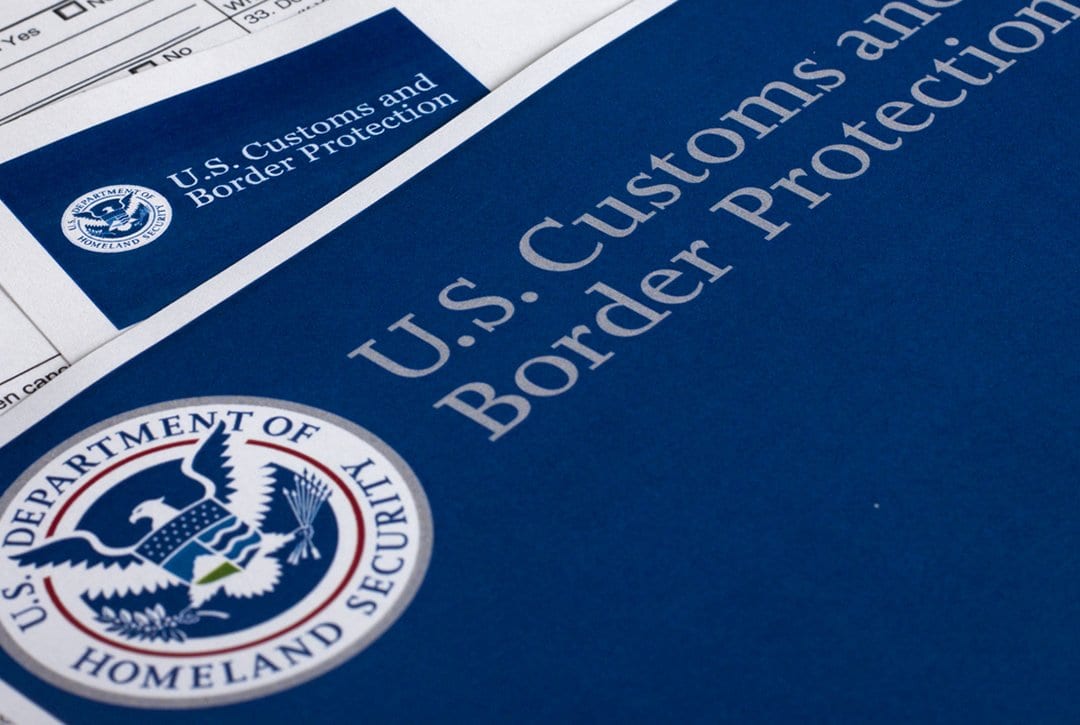
CBP: U.S. Customs and Border Protection
CBP is the U.S. agency responsible for enforcing customs laws at the border. CBP reviews import entries, assesses duties, enforces trade laws, processes admissibility requirements, and works with partner government agencies.
Importers interact with CBP through customs entries, inspections, entry summaries, rulings, bonds, cargo release, audits, and enforcement actions. Even when a customs broker files the entry, the importer still needs to provide accurate data and maintain records.
Importer of Record
The importer of record is the party legally responsible for ensuring that imported merchandise is entered correctly. This includes providing accurate classification, valuation, country-of-origin information, product descriptions, and other details needed for customs clearance.
Importers should not assume the supplier, forwarder, or broker owns every compliance responsibility. A freight forwarder can help coordinate documents, and a customs broker can file entries, but the importer must still use reasonable care when providing import information.
Reasonable Care
Reasonable care is the standard importers are expected to use when entering goods into the United States. In practical terms, it means importers should take appropriate steps to ensure customs information is accurate, complete, and supported by records.
Reasonable care may include:
- Reviewing HTS classifications
- Confirming country of origin
- Keeping commercial invoices and purchase records
- Checking customs value and assists
- Working with qualified customs professionals
- Maintaining product specifications and supplier records
- Responding promptly to document requests
- Keeping internal procedures for import review
The more complex the product or supply chain, the more important reasonable care becomes.
ACE: Automated Commercial Environment
ACE is CBP’s electronic system for processing import and export trade data. Customs brokers, importers, carriers, and partner agencies use ACE to transmit and review trade information.
Importers may use ACE reports to monitor import activity, entry data, duty payments, liquidation status, and compliance trends. Even if a broker manages filings, importers should understand that ACE is central to customs data and record visibility.
HTS Code
HTS stands for Harmonized Tariff Schedule. An HTS code is used to classify imported goods for duty rates, tariff treatment, statistical reporting, and sometimes product-agency review.
HTS classification affects:
- Duty rate
- Section 301 or other additional duties
- Trade program eligibility
- Partner government agency flags
- Quota or special requirements
- Drawback analysis
- Total landed cost
A vague product description is not enough for reliable classification. Importers should maintain product specifications, materials, function, use, composition, and technical data.
Country of Origin
Country of origin identifies where a product was made, produced, grown, or substantially transformed. Origin is important for marking, duty treatment, free trade agreement eligibility, forced labour review, and additional tariff exposure.
Importers should not rely only on where goods were shipped from. A product may ship from Vietnam but include components from China. A product may be assembled in one country but substantially transformed in another. Origin should be reviewed based on the product and applicable rules.
COO: Certificate of Origin
A Certificate of Origin is a document used to support where goods originate. It may be required by a customer, customs authority, trade agreement, bank, or destination country.
Importers should confirm whether a certificate is required before shipment. If a product is claiming preferential duty treatment under a trade agreement, the origin support must be accurate and retained.
Commercial Invoice
The commercial invoice is one of the most important import documents. It usually includes the seller, buyer, product descriptions, quantities, values, currency, Incoterms, country of origin, and shipment details.
A weak commercial invoice can delay customs clearance. Common problems include vague descriptions, missing origin details, incorrect values, inconsistent quantities, missing Incoterms, and product descriptions that do not match the packing list.
Packing List
The packing list describes how goods are packed. It may include cartons, pallets, weights, dimensions, SKU details, case counts, and container loading information.
Customs brokers, warehouses, carriers, and importers use packing lists to verify cargo, prepare entries, schedule receiving, and resolve discrepancies. A packing list should match the commercial invoice and the actual cargo.
Bill of Lading and Airway Bill
A bill of lading is used for ocean freight, while an airway bill is used for air freight. These documents identify parties, routing, cargo description, carrier details, and transport instructions.
Incorrect bill of lading or airway bill details can delay release, customs clearance, delivery, or payment. Importers should verify shipper, consignee, notify party, cargo details, and Incoterms before documents are finalized.
ISF: Importer Security Filing
ISF, often called “10+2,” is required for many ocean shipments entering the United States. It provides advance cargo security information before goods are loaded on the vessel overseas.
Importers should make sure suppliers provide the data needed for timely ISF filing. Late or inaccurate ISF information can create penalties, delays, or additional scrutiny.
Customs Bond
A customs bond is a financial guarantee required for many U.S. imports. It helps ensure payment of duties, taxes, fees, and compliance with customs requirements.
Importers may use a single-entry bond for occasional shipments or a continuous bond for recurring imports. Businesses importing regularly should review bond sufficiency, especially when duty exposure increases because of tariffs or higher import values.
Customs Broker
A customs broker is a licensed professional or company that files customs entries and helps importers navigate customs requirements. Brokers can assist with entry preparation, classification review, duty calculation, PGA coordination, and customs communication.
Importers should provide brokers with accurate product data and complete documents. A broker can help file and advise, but poor source data from the importer or supplier can still create compliance problems.
PGA: Partner Government Agency
A partner government agency is a U.S. agency other than CBP that may regulate imported goods. Depending on the product, importers may need additional data, permits, certifications, prior notice, or admissibility review.
Common agencies include:
- FDA for food, drugs, medical devices, cosmetics, and certain health-related products
- EPA for chemicals, pesticides, vehicles, engines, and environmental requirements
- USDA for agricultural products, plants, wood, and animal-related goods
- FTC for certain labelling and consumer protection rules
- CPSC for consumer product safety requirements
- DOT for certain vehicles, equipment, and transport-related goods
Product compliance should be checked before cargo ships, not after arrival.
FDA Prior Notice
FDA Prior Notice applies to food for humans and animals imported or offered for import into the United States. Importers of food products should confirm FDA requirements before shipment because missing or incorrect prior notice can delay cargo.
Food importers should coordinate product descriptions, manufacturer details, shipper details, country of origin, and shipment information early with their customs broker and logistics partner.
EPA and TSCA
EPA requirements may apply to chemicals, pesticides, engines, vehicles, and certain environmental product categories. TSCA, the Toxic Substances Control Act, is especially important for chemical imports and products containing certain chemical substances.
Importers should confirm whether a TSCA certification is needed before shipment. Chemical and hazardous product compliance should not be handled at the last minute because documentation mistakes can lead to holds or refusals.
UFLPA: Uyghur Forced Labor Prevention Act
UFLPA is a forced labour enforcement law affecting goods connected to the Xinjiang Uyghur Autonomous Region or certain listed entities. Under UFLPA, CBP applies a rebuttable presumption that covered goods are prohibited from entering the United States unless the importer can meet the required standard.
Importers should understand their upstream supply chain, not just their direct supplier. This may require supplier questionnaires, purchase records, production records, bills of material, raw material traceability, and documentation showing where goods and inputs were sourced.
CTPAT: Customs Trade Partnership Against Terrorism
CTPAT is a voluntary supply chain security program. Participants are expected to maintain strong security practices across areas such as business partner screening, container security, physical access controls, procedural security, cybersecurity, personnel security, and training.
Not every importer is a CTPAT member, and not every shipment requires the same level of review. However, CTPAT-aligned practices can help companies think more clearly about supply chain security, supplier controls, facility access, cargo integrity, and documentation.
Incoterms
Incoterms define responsibilities between buyer and seller for transportation, risk transfer, costs, export clearance, import clearance, and delivery points. Common terms include EXW, FCA, FOB, CIF, DAP, and DDP.
Incoterms affect compliance because they determine who arranges export documents, who controls freight, when risk transfers, and who is responsible for customs clearance. Importers should confirm Incoterms before purchase orders are finalized.
Denied Party Screening
Denied party screening is the process of checking customers, suppliers, consignees, and other trade parties against restricted party lists. This can help reduce sanctions, export control, and compliance risk.
Companies involved in global trade should screen business partners before shipping and maintain records showing that the screening process was completed.
FTZ: Foreign-Trade Zone
A Foreign-Trade Zone is a designated area in the United States where imported goods can be admitted under special customs procedures. FTZs may help with duty deferral, duty reduction, duty elimination on re-exports, inventory control, and manufacturing programs.
FTZs can be useful for certain importers, but they require operational discipline, recordkeeping, and customs oversight. They are not the right fit for every business.
Duty Drawback
Duty drawback allows eligible companies to recover certain duties, taxes, and fees paid on imported goods when those goods, or qualifying substitutes, are later exported or destroyed under CBP rules.
Drawback can be valuable for importers that re-export goods, manufacture goods for export, handle rejected merchandise, or operate global distribution programs. The process depends heavily on import records, export records, inventory tracking, and documentation.
Recordkeeping
Compliance does not end when cargo is released. Importers must maintain records that support customs entries, classification, valuation, origin, admissibility, and other trade requirements.
Useful records may include:
- Commercial invoices
- Packing lists
- Purchase orders
- Proof of payment
- Product specifications
- Supplier declarations
- HTS classification support
- Origin support
- Bills of lading and airway bills
- Customs entries and entry summaries
- Agency permits, certificates, or filings
- Warehouse and inventory records
Good records make it easier to respond to customs inquiries, audits, supplier disputes, and internal reviews.
How Freight Forwarding Fits Into Supply Chain Compliance
Freight forwarders do not replace customs brokers, legal counsel, product compliance experts, or trade advisors. However, freight forwarders play an important role in helping compliance workflows happen on time.
A logistics partner can help coordinate:
- Supplier communication and cargo-ready dates
- Commercial invoice and packing list collection
- Bill of lading or airway bill instructions
- Customs broker handoffs
- Ocean or air freight routing
- Shipment milestone visibility
- Delivery planning
- Warehouse appointment coordination
- Cargo insurance discussions
- Documentation workflows for recurring import programs
When freight and compliance teams work together early, shipments are less likely to be delayed by missing data or late documents.
Compliance Risks by Freight Mode
Ocean Freight
Ocean freight requires early planning around ISF, bills of lading, customs documents, container details, cargo availability, port deadlines, and destination delivery. FCL and LCL shipments both need accurate cargo and customs data before arrival.
Air Freight
Air freight moves quickly, which means compliance errors can become urgent problems. Importers should prepare documents before departure because there may be less time to correct errors before arrival.
Multimodal and Warehousing
Multimodal shipments may involve ocean, air, rail, truck, warehouses, and final delivery partners. Each handoff creates a need for accurate instructions, cargo details, appointment planning, and visibility.
Industry Examples: Where Compliance Matters Most
Fashion and Apparel
Apparel importers need to manage country of origin, labelling, fibre content, duty rates, forced labour risk, seasonal deadlines, and supplier documentation. Dedola supports fashion and apparel freight shipping with supplier coordination, ocean freight, air freight, documentation workflows, and shipment visibility.
Medical Supplies and Devices
Medical supplies and devices may involve FDA requirements, product documentation, accurate descriptions, and careful delivery planning. Dedola supports medical supplies and devices freight shipping with routing, customs coordination, documentation handoffs, and shipment visibility.
Automotive and Aftermarket Parts
Automotive and aftermarket parts importers may need to manage HTS codes, origin, EPA or DOT questions, product specifications, and delivery timing. Dedola supports aftermarket auto parts imports with freight planning, customs coordination, and final delivery visibility.
E-Commerce and Retail
E-commerce and retail companies often manage many SKUs, multiple suppliers, changing duty exposure, returns, fulfilment centers, and marketplace delivery rules. Compliance processes need to scale as shipment volume grows.
Industrial Goods and Chemicals
Industrial products, chemicals, machinery, parts, and raw materials may require technical product data, safety documents, TSCA review, country-of-origin support, and accurate classifications.
Supply Chain Compliance Checklist for Importers
Importers can use this checklist before booking freight:
- Confirm product data: Description, material, function, use, dimensions, and technical specifications.
- Review HTS codes: Make sure classifications are supported by product details.
- Verify country of origin: Do not rely only on shipping location.
- Check agency requirements: Review FDA, EPA, USDA, CPSC, DOT, or other PGA rules where applicable.
- Collect supplier documents: Invoices, packing lists, certificates, declarations, and product records.
- Confirm Incoterms: Align buyer and seller responsibilities before cargo moves.
- Coordinate customs broker handoff: Provide documents early, not at arrival.
- Review forced labour risk: Know upstream suppliers and materials where required.
- Plan freight mode: Compare ocean, air, and multimodal options based on timing and compliance needs.
- Maintain records: Store documents in a way that can support future audits, reviews, and claims.
Common Supply Chain Compliance Mistakes
Many compliance issues come from rushed or disconnected processes. Importers should avoid:
- Using vague product descriptions on commercial invoices
- Relying on supplier-provided HTS codes without review
- Assuming country of shipment equals country of origin
- Waiting until cargo arrives to involve a customs broker
- Ignoring product-agency requirements
- Failing to maintain origin and supplier records
- Not reviewing Incoterms before purchase orders are finalized
- Missing ISF deadlines for ocean freight
- Not tracking Section 301 or other additional duty exposure
- Failing to connect compliance data with freight planning
How Dedola Helps Support Supply Chain Compliance Workflows
Dedola Global Logistics helps importers and exporters organize the logistics steps that support a stronger compliance process. Dedola does not replace trade counsel, customs brokers, or product compliance experts. Instead, Dedola helps coordinate freight, documentation, communication, and visibility so compliance teams have the information they need earlier.
Dedola can support businesses with:
- Ocean freight and air freight coordination
- Supplier communication and cargo-ready tracking
- Commercial invoice and packing list collection
- Bill of lading and airway bill coordination
- Customs broker communication
- Shipment visibility and milestone tracking
- Warehouse and final delivery planning
- Cargo insurance option discussions
- Supply chain planning for recurring import programs
- Mode comparisons when compliance timing affects freight decisions
The goal is to help importers move from reactive compliance to better-planned logistics workflows.
Supply Chain Compliance Starts Before the Shipment Moves
A compliant shipment starts long before the container is loaded or the air cargo is tendered. Importers need accurate product data, supplier records, documents, classifications, origin support, agency review, and customs broker coordination before the freight is already in motion.
When compliance is treated as part of supply chain planning, companies can reduce avoidable delays, improve landed cost visibility, support customs reviews, and build stronger supplier processes.
Need Help Connecting Freight Planning With Compliance Workflows?
If your business needs better coordination between suppliers, freight forwarding, customs documentation, shipment visibility, and delivery planning, Dedola can help build a more organized import process.
Contact Dedola Global Logistics
Frequently Asked Questions About Supply Chain Compliance
What is supply chain compliance?
Supply chain compliance is the process of making sure goods are sourced, documented, classified, transported, declared, cleared, stored, and delivered according to applicable customs, trade, product, security, and agency requirements.
Who is responsible for import compliance?
The importer of record is responsible for using reasonable care when providing customs information, including classification, value, country of origin, and other data required for duties, admissibility, and legal requirements.
What documents are needed for supply chain compliance?
Common documents include commercial invoices, packing lists, bills of lading, airway bills, product specifications, origin support, certificates, permits, customs entries, and supplier records.
What is the difference between a freight forwarder and a customs broker?
A freight forwarder coordinates transportation and logistics. A customs broker files customs entries and helps with import clearance requirements. Many importers use both as part of the same shipment process.
Why is country of origin important?
Country of origin affects marking, duty rates, trade program eligibility, additional tariffs, forced labour review, and product admissibility. It should be supported by supplier and production records.
Can Dedola help with supply chain compliance?
Dedola can help coordinate the logistics side of compliance, including freight planning, supplier communication, document collection, customs broker handoffs, shipment visibility, and final delivery planning. Legal and regulatory advice should be handled by qualified compliance professionals.