UK Ocean Freight Gateway
Port of Felixstowe: UK Container Shipping, Ro-Ro Freight, Rail Logistics, and Customs Support
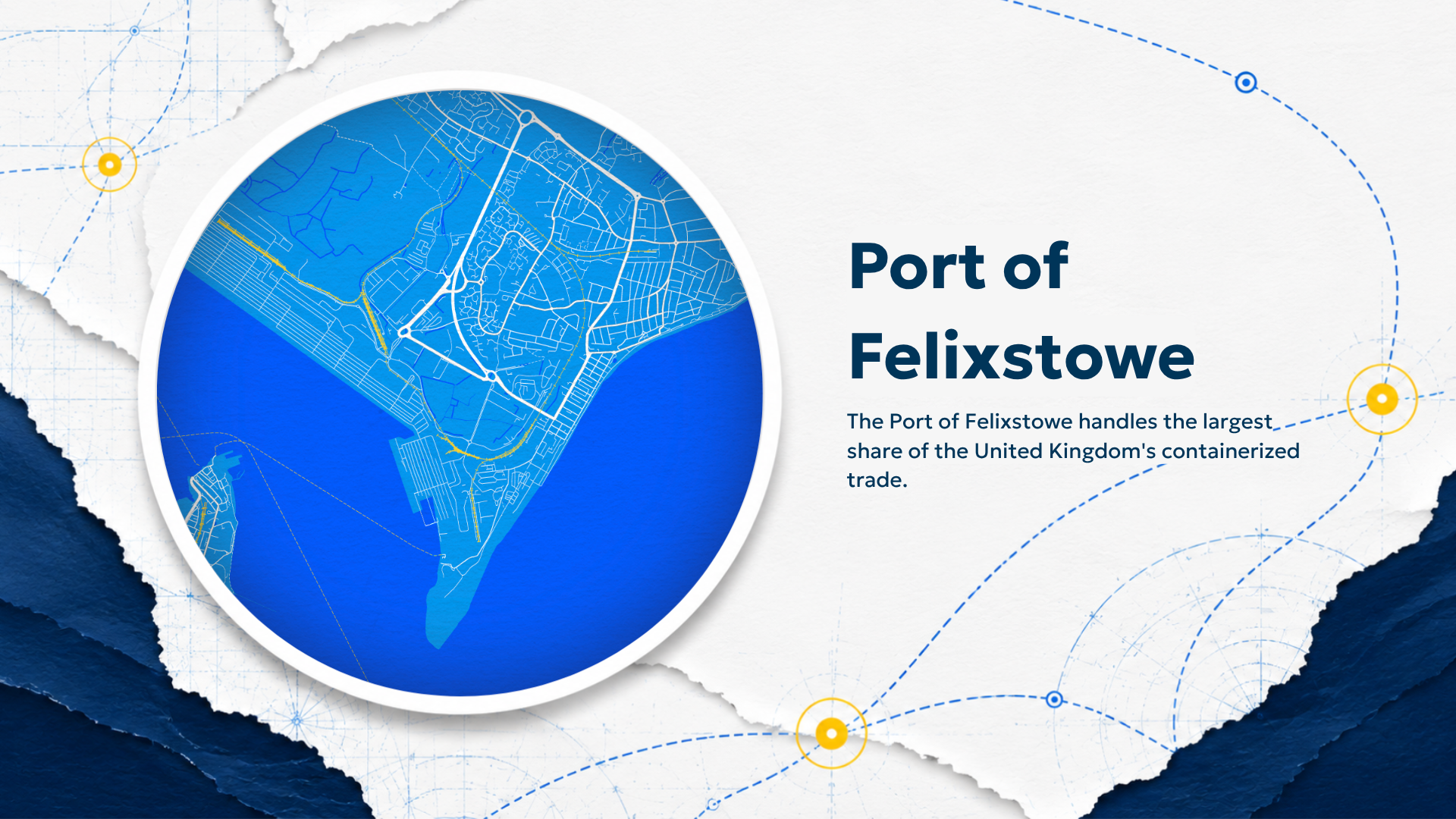
The Port of Felixstowe is the United Kingdom’s largest container port and one of the country’s most important gateways for international ocean freight. Located on the Suffolk coast, Felixstowe supports deep-sea container shipping, short-sea services, feeder operations, Ro-Ro freight, rail-connected inland distribution, and high-volume import and export supply chains serving the UK and wider European markets.
For companies importing into or exporting from the UK, Felixstowe can be a strategic gateway for containerized goods, retail inventory, apparel, medical products, automotive parts, electronics, industrial components, refrigerated cargo, and time-sensitive supply chains. Dedola Global Logistics helps businesses evaluate Felixstowe routing, coordinate ocean freight, manage customs documentation, plan inland delivery, compare air freight alternatives, and maintain shipment visibility from origin to final destination.
Explore Ocean Freight Services
Port of Felixstowe Quick Facts
- Port name: Port of Felixstowe
- Location: Felixstowe, Suffolk, United Kingdom
- Primary role: UK’s largest container port and a major North Sea ocean freight gateway
- Annual container volume: More than 4 million TEUs
- Annual ship calls: Approximately 2,000 ships per year
- Container berths: Nine berths across two container terminals
- Quayside: Approximately 3,773 metres
- Container cranes: 28 cranes
- Maximum draft alongside: Approximately 18 metres
- Rail connectivity: Three rail terminals, with up to 58 trains per day serving 15 destinations
- Ro-Ro capability: Two Ro-Ro bridges and approximately 260,000 Ro-Ro trailers per year
- Key cargo types: Containers, retail goods, apparel, medical supplies, automotive parts, electronics, machinery, food products, refrigerated cargo, Ro-Ro trailers, industrial goods, and consumer products
Why Felixstowe Matters for UK Importers and Exporters
Felixstowe is central to UK container shipping because it combines deep-water access, large-scale container terminal infrastructure, direct rail connections, road access, Ro-Ro capability, and regular global vessel services. For importers, it is often a key entry point for goods moving into UK warehouses, distribution centres, retail networks, factories, and fulfilment operations. For exporters, it provides access to international ocean freight lanes serving Europe, Asia, North America, the Middle East, and other global markets.
The port’s location also matters. Felixstowe sits on the UK’s southeast coast, close to major consumer markets, logistics parks, the Midlands distribution corridor, London-area demand, and North Sea shipping routes. This makes it especially relevant for shippers that need both ocean access and efficient inland movement by rail or truck.
Dedola helps businesses compare Felixstowe against other UK and European gateways based on cargo type, carrier schedules, customs requirements, inland delivery location, cost, timing, and supply chain risk.
Post-Brexit Customs and UK Compliance Considerations
UK port planning now requires more customs preparation than many older port profiles suggest. Since Brexit, shippers moving goods between the UK, the EU, and the rest of the world must pay closer attention to customs declarations, commodity codes, rules of origin, duties, VAT, EORI requirements, Customs Declaration Service processes, safety and security declarations, and whether duty deferment, customs warehousing, or Freeport customs site rules may apply.
For businesses using Felixstowe, this means documentation cannot be treated as an afterthought. A shipment can be delayed by incomplete invoices, inaccurate product descriptions, missing tariff classifications, incorrect valuation, unclear origin details, or failure to prepare the right import or export declaration data before arrival.
Dedola helps coordinate the freight-forwarding and documentation process so shippers can reduce avoidable customs delays, keep inland delivery schedules realistic, and understand when another UK port, air freight option, or multimodal route may be more practical.
What Cargo Moves Through the Port of Felixstowe?
Felixstowe is primarily a container gateway, but its rail, Ro-Ro, refrigerated cargo, and short-sea capabilities also make it useful for a wide range of freight profiles. The port is especially relevant for UK importers that depend on predictable container release, inland distribution, and customs coordination.
Containerized Imports and Exports
Containerized cargo is the port’s main strength. Felixstowe supports full-container load and less-than-container load freight, including consumer goods, electronics, machinery parts, packaging, furniture, apparel, retail inventory, automotive components, medical products, food items, and industrial supplies.
Dedola’s ocean freight services can support FCL, LCL, expedited LCL, deferred ocean freight, multimodal routing, documentation coordination, shipment tracking, and final delivery planning for cargo moving through Felixstowe.
Retail, E-commerce, and Consumer Goods
Retail and e-commerce shippers often use Felixstowe when inventory is destined for UK fulfilment centres, retail distribution networks, or national warehouse operations. These shipments require careful coordination around supplier readiness, sailing schedules, customs clearance, container release, warehouse appointments, and inland delivery.
Fashion and Apparel
Fashion and apparel brands may use Felixstowe for ocean freight arriving from Asia, the Mediterranean, and other sourcing regions. Apparel shipments often depend on seasonal timing, launch dates, replenishment cycles, and distribution centre appointments.
Dedola helps brands evaluate fashion and apparel freight shipping options across ocean, air, rail, truck, and multimodal routes so cost, timing, and sustainability goals are considered together.
Medical Supplies and Devices
Medical supplies, devices, healthcare products, and regulated components require accurate product descriptions, classification, documentation, and shipment visibility. Felixstowe can be a practical ocean gateway when the shipment timeline allows for ocean transit and UK customs clearance.
Dedola supports medical supplies and devices freight shipping with documentation review, customs coordination, routing support, tracking, and inland delivery planning.
Automotive Parts and Industrial Components
Felixstowe is relevant for automotive parts, replacement components, industrial goods, machinery parts, manufacturing inputs, and tools moving into or out of the UK. These shipments often require predictable inland delivery because delays can affect service, production, or customer fulfilment.
Dedola supports aftermarket auto parts imports with customs documentation, compliance support, route planning, shipment visibility, and final delivery coordination.
Refrigerated and Temperature-Sensitive Cargo
Food, ingredients, pharmaceuticals, healthcare products, and other temperature-sensitive goods may require reefer equipment, fast customs readiness, controlled handoffs, and reliable delivery timing. For these shipments, the freight plan should account for equipment availability, terminal handling, inspections, inland movement, and delivery appointments.
Ro-Ro and Short-Sea Freight
Felixstowe also supports Ro-Ro and short-sea movement, including trailer traffic connected to European trade lanes. This can be useful when cargo needs an alternative to standard deep-sea container movement or when the shipment benefits from trailer-based flexibility.
How Dedola Supports Freight Through Felixstowe
Dedola Global Logistics is a freight forwarder and logistics partner. Dedola does not operate the Port of Felixstowe, own the terminals, or run the vessels serving the port. Instead, Dedola helps businesses coordinate shipments through carrier, broker, customs, warehouse, port, rail, truck, and inland transportation networks.
Ocean Freight Coordination
Dedola helps shippers coordinate ocean freight through Felixstowe when the gateway fits the shipment’s origin, destination, timing, and cost profile. Depending on the cargo, Dedola can compare full-container load, less-than-container load, expedited LCL, deferred ocean, consolidated cargo, Ro-Ro, and multimodal options.
UK Import and Export Planning
Felixstowe shipments require planning across multiple stages: supplier pickup, document preparation, vessel booking, customs data, arrival monitoring, container release, port collection, drayage, rail handoff, warehousing, and final delivery. Dedola helps coordinate these handoffs so shippers have a clearer plan before cargo reaches the UK.
Customs and Documentation Support
UK imports and exports require accurate commercial invoices, packing lists, bills of lading, tariff classifications, product descriptions, origin details, valuation information, certificates when required, EORI details, and customs-ready shipment data. Dedola helps coordinate customs brokerage support and documentation review to reduce avoidable clearance delays.
Rail, Drayage, and Inland Delivery
Felixstowe’s rail connections make it an important gateway for containers moving beyond the port to inland UK destinations. Dedola can help coordinate drayage, rail movement, trucking, warehousing, transloading, distribution centre delivery, appointment scheduling, and final-mile requirements.
Air Freight and Recovery Options
Ocean freight through Felixstowe is often practical for planned inventory, but urgent shipments may need a faster option. Dedola can compare air freight, ocean freight, deferred air, split shipments, and multimodal alternatives when shippers need to recover time or protect a delivery deadline.
Shipment Visibility and Communication
UK ocean freight involves many handoffs, especially when customs, rail, drayage, and warehouse appointments are involved. Dedola helps monitor supplier status, vessel updates, customs milestones, port release, inland movement, warehouse delivery, and final delivery progress so logistics teams can make better decisions.
When Felixstowe May Be the Right Gateway
The Port of Felixstowe can be a strong fit when cargo is connected to UK container imports, exports, retail distribution, European short-sea movement, or inland rail logistics. Businesses may consider Felixstowe when they need to:
- Move containerized cargo into or out of the United Kingdom
- Serve UK warehouses, distribution centres, retailers, manufacturers, or fulfilment operations
- Use rail connections for inland movement from the port
- Coordinate retail, fashion, medical, automotive, electronics, food, or industrial cargo
- Plan around post-Brexit customs declarations and UK import/export requirements
- Compare Felixstowe against London Gateway, Southampton, Liverpool, Rotterdam, Antwerp-Bruges, or other European gateways
- Use Ro-Ro or short-sea services for European-linked freight
- Build a multimodal UK logistics strategy using ocean, air, rail, truck, and warehouse options
Felixstowe is not automatically the best choice for every UK shipment. The right gateway depends on supplier location, carrier service, cargo type, customs requirements, final destination, delivery deadline, port capacity, inland cost, and total landed cost. Dedola helps compare those factors before freight is booked.
Industries That May Use Felixstowe Freight Routing
Retail and E-commerce
Retailers and e-commerce companies may use Felixstowe for containerized imports moving to UK fulfilment centres, national distribution hubs, or store networks. Dedola helps coordinate supplier communication, ocean freight, customs documentation, port release, warehousing, and final delivery.
Fashion and Apparel
Apparel and footwear brands may use Felixstowe when ocean freight supports UK delivery timelines. Dedola helps compare standard ocean, expedited LCL, air freight, and multimodal options when production delays, seasonal demand, or warehouse appointments affect the plan.
Medical Supplies and Healthcare Products
Healthcare shippers may use Felixstowe when medical supplies, devices, or related products can move by ocean and still meet compliance and delivery requirements. Dedola helps coordinate documentation, customs support, routing, shipment visibility, and inland delivery.
Automotive and Aftermarket Parts
Automotive parts, replacement components, tools, machinery inputs, and aftermarket inventory may move through Felixstowe when UK distribution is required. Dedola helps connect ocean freight with customs clearance, inland movement, warehousing, and final delivery.
Food, Reefer, and Temperature-Sensitive Goods
Food products, ingredients, frozen goods, and temperature-sensitive products require careful equipment planning and customs readiness. Dedola helps evaluate reefer needs, timing, documentation, and delivery options.
Industrial and Manufacturing Cargo
Industrial shippers may use Felixstowe for machinery, components, tools, manufacturing inputs, raw materials, and finished goods. Dedola helps coordinate the international freight leg with port release, customs, rail, truck, warehouse, and final delivery requirements.
Alternative Ports and Gateways to Compare
Felixstowe is the UK’s leading container gateway, but route selection should still depend on cargo type, origin, destination, urgency, customs requirements, and inland delivery cost. Dedola may compare Felixstowe with other ports and airports when another gateway better supports the shipment.
- Port of Marseille-Fos, France for Mediterranean and Southern European ocean freight routing
- Liège Airport (LGG) for European air cargo and time-sensitive freight
- Dubai International Airport (DXB) for Middle East air cargo and global connecting routes
- Memphis International Airport (MEM) for U.S. express air cargo and urgent freight
- Port of Qingdao, China for China-origin container, bulk, and industrial freight
- Port of Mundra, India for India-origin container, bulk, and project cargo
- Port of Galveston for Gulf Coast Ro-Ro, breakbulk, vehicles, and project cargo
- Port of South Louisiana for Mississippi River, Gulf Coast, grain, energy, and bulk cargo connections
Gateway comparison is especially important when shipments have high value, strict delivery timing, post-Brexit customs complexity, changing carrier schedules, warehouse constraints, or significant inland delivery costs.
Planning a Shipment Through Felixstowe
Before routing freight through Felixstowe, shippers should prepare a detailed cargo profile. This helps Dedola compare ocean, air, rail, truck, warehouse, customs, and multimodal options before the shipment is booked.
- Cargo type: Confirm whether the shipment is FCL, LCL, Ro-Ro, retail, apparel, electronics, medical, automotive, food, reefer, industrial, hazardous, high-value, or time-sensitive.
- Supplier location: Include factory address, pickup location, consolidation point, port of loading, and cargo-ready date.
- Dimensions and weight: Provide package count, gross weight, volume, pallet details, container requirements, and handling requirements.
- Destination details: Include UK warehouse, distribution centre, rail terminal, consignee, final delivery address, and appointment requirements.
- Timing: Identify sailing window, arrival needs, delivery deadline, retail launch date, production schedule, or seasonal constraint.
- Customs documentation: Prepare commercial invoice, packing list, bill of lading instructions, tariff codes, EORI details, product descriptions, origin information, certificates, and import/export declaration data.
- Port and inland needs: Confirm whether drayage, rail, warehousing, transloading, truck delivery, Ro-Ro movement, or final-mile delivery is required.
- Budget and urgency: Decide whether the priority is lowest landed cost, fastest delivery, reduced risk, predictable timing, or a balanced multimodal plan.
With these details, Dedola can help determine whether Felixstowe is the right gateway or whether another UK, European, air, ocean, or multimodal option would better fit the shipment.
Need Help Shipping Through the Port of Felixstowe?
If your business is moving freight through the UK, Northern Europe, or global ocean trade lanes, Dedola can help build a practical logistics plan through Felixstowe or compare it against other gateways.
Dedola supports ocean freight, air freight alternatives, customs coordination, documentation, supplier communication, port release, drayage, rail, inland transportation, shipment visibility, warehousing, and multimodal supply chain planning.
Contact Dedola Global Logistics
Frequently Asked Questions About the Port of Felixstowe
What is the Port of Felixstowe known for?
The Port of Felixstowe is known as the United Kingdom’s largest container port and a major gateway for deep-sea container shipping, short-sea services, Ro-Ro freight, rail-connected distribution, and UK import/export logistics.
How many containers does Felixstowe handle?
Felixstowe handles more than 4 million TEUs annually and welcomes approximately 2,000 ships per year, including some of the world’s largest container vessels.
Why is Felixstowe important after Brexit?
Felixstowe is important after Brexit because UK importers and exporters must plan around customs declarations, commodity codes, origin rules, EORI details, duties, VAT, and documentation requirements when moving goods through UK ports.
Can Dedola arrange ocean freight through Felixstowe?
Yes. Dedola can help coordinate ocean freight, customs documentation, port release, drayage, rail, inland transportation, warehousing, shipment tracking, and multimodal planning for cargo moving through Felixstowe when the route fits the shipment requirements.
Does Dedola operate Felixstowe or own vessels?
No. Dedola is a freight forwarder and logistics partner, not a port operator, terminal owner, or ocean carrier. Dedola coordinates shipments through carrier, broker, customs, warehouse, port, rail, truck, and inland transportation networks.
Should I use Felixstowe or another UK port?
The best choice depends on cargo type, origin, carrier service, customs requirements, final UK destination, delivery deadline, rail or truck needs, and total landed cost. Felixstowe may be a strong fit for many containerized UK shipments, but another gateway may perform better for some routes.